Visual Arts / Liz Priestley, Elsewhere. Grainger Gallery, until June 7. Reviewed by KERRY-ANNE COUSINS.
Liz Priestley is an artist from Manilla near Tamworth in northern NSW.
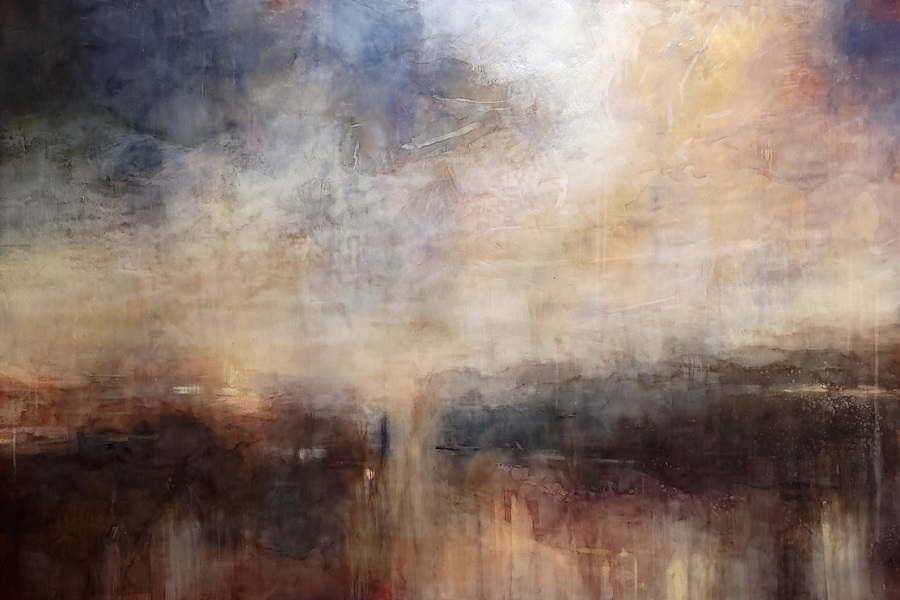
She has a well established art practice and has had several exhibitions at the Grainger Gallery. Her work is notable for her use of the ancient encaustic technique of building up layers of wax, pigments and resin to form multiple layers of colour and texture. The technique associated with late Roman and Egyptian funerary practices is exemplified by the survival of the Fayum mummy portraits.
However, Priestley uses this technique to create the soft tones and dissolving light more associated with 19th century British artist J.W.M. Turner (1775-1851) whose atmospheric landscapes of colour and light influenced artists of the late nineteenth and early twentieth century.
These artists were more concerned with creating the differing moods of the landscape as it dissolved into light rather than topographical descriptions.
Priestley builds up layers of wax on a birchwood board. These layers can be reheated, scraped back and rebuilt so that the aspects of the image can be reshaped allowing areas to recede or be highlighted. In some of the works, wax is allowed to remain as wax droplets or as in the work Pink Horizon as long streaks of wax on the surface. The effect is of misty romantic visions of a landscape in which the light reveals aspects of tree forms reflected in the luminous surfaces of pools and rivers.
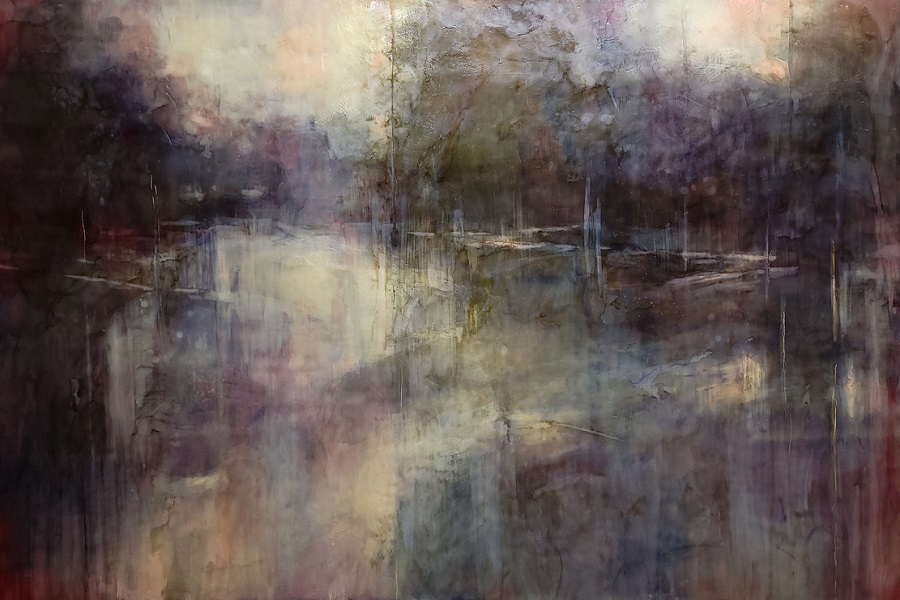
In some works the form of the landscape is more discernible and there is a sense of spatial depth as in Reflections Beyond 11 where the light reveals the suggestion of trees along a bank of a river. In other paintings such as Charon’s Way the more amorphous surface of earthy tones of browns and greens is given a focal point by the addition of small flashes of contrasting colour.
In Priestley’s works the images are not static. They change as the light falls on their uneven and polished wax surfaces and by the distance at which they are viewed, revealing and concealing different parts of the composition. The artist sees this individual and changing perception of the works as the recognition of the layers of memory of a landscape – its poetic realisation rather than its actuality. And therein lies their fascination.
News all day, every day at CityNewsQBN.com.au.


Leave a Reply