Dance / Djilba, Floeur Alder, Mirramu Arts Centre, May 2. Reviewed by SAMARA PURNELL.
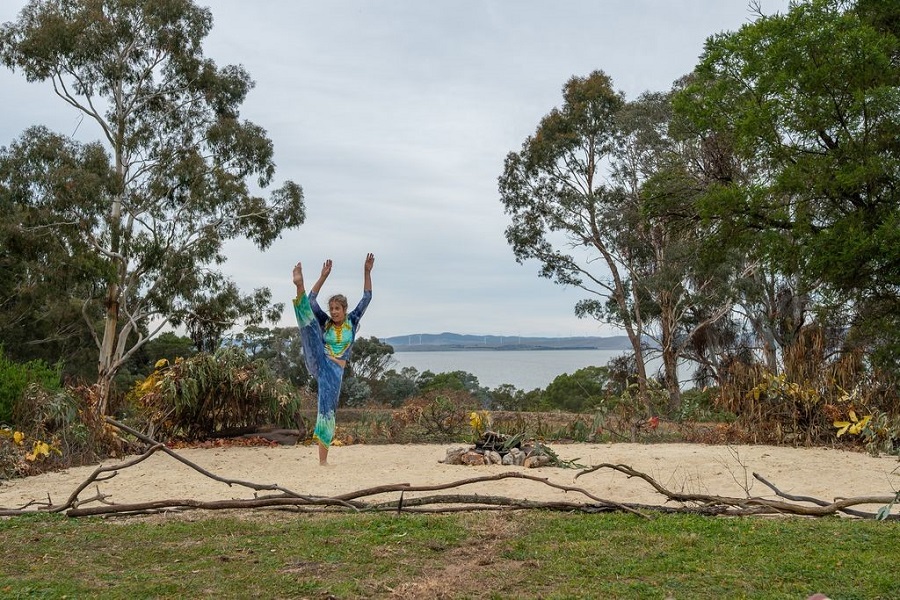
On a mild, still autumn afternoon, guests gathered at Mirramu, the property of Elizabeth Cameron Dalman on the edge of Lake George, to watch a performance of Djilba.
People lounged on picnic blankets and camp chairs, scattered around small fires in front of the dance area. A circle of sand was edged by branches and a fire burning gently, surrounded by sprigs of eucalyptus and rocks was in the middle of the sand.
The incredibly beautiful surrounds of the property, with Lake George as the backdrop induces an immediate sense of peace and calm.
Djilba was created by Floeur Alder in the months following the death of her father, Canberran Alan Alder, as a means of grieving, healing and of celebration.
Alder was dressed in a fitted long-sleeved top and pants, in the colours of sunrise over water – inky blue and aqua and edged in yellow. She walked on to the sand and sat cross-legged until the music (which had a small glitch in getting going), carried out over the garden.
Djilba was created with the influence of Alder’s indigenous connections and translates to “spring”, while incorporating her own style and practice.
The result was a blend of styles woven into each other, often within one movement of gesture.
Beginning with an “emergence”, which has recently been the overarching theme in many recent dance productions, Djilba moves through rituals of birth, grief and cleansing. Alder takes on the movements of animals such as the emu, lizard, kite, moving from playful exuberance, exploration and confrontation to rest, solitude, anguish and acceptance.
The indigenous movements blend with dance that appears drawn from tai chi and yoga, creating a hybrid style of choreography.
Descriptions of animals, the scars on trees and the rituals that take place on the sacred rocks are whispered over a beautiful, meditative soundtrack, and incorporated with an emphasis on the breath.
As Alder moves around the small fire and douses herself in the smoke from the burning leaves, it is easy to engage in her emotions and journey. At the completion of the dance, around 45 minutes, the only sounds were the birds, as Alder paid her respects to her host and the surrounding elements of water and fire, with the audience keen to remain imbued in the quietude and mood created by Alder’s dance and the magic of Mirramu.
Djilba was performed as part of Dance Week.
News all day, every day at CityNewsQBN.com.au.



Leave a Reply