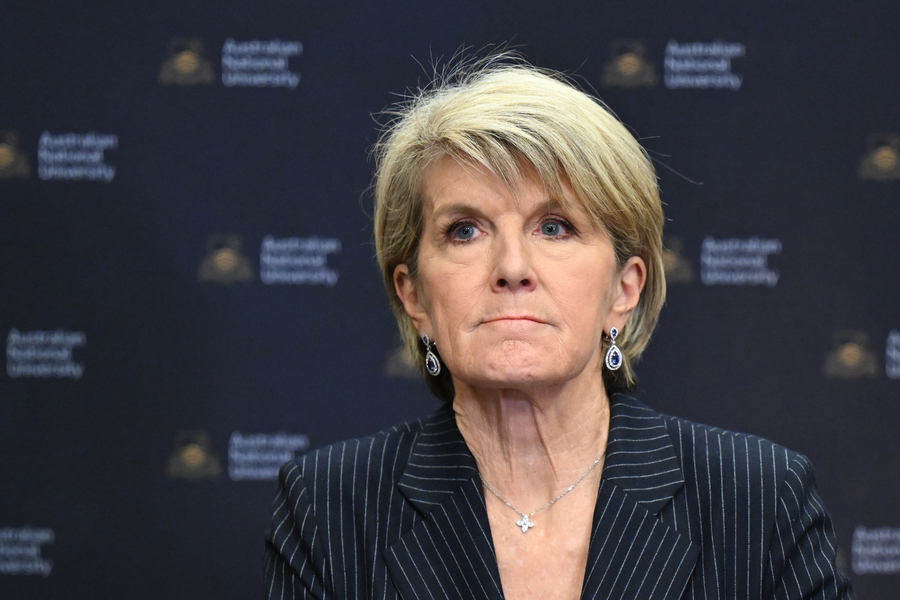
“The strife faced by tertiary institutions, as the example of the ANU has shown, indicates that there is something terribly wrong. The resignation of the chancellor, the vice-chancellor and University Council members will not solve the problems,” writes political columnist MICHAEL MOORE.
Future proofing our community may see some very different budget priorities.

The federal government has been keen on the idea of intergenerational equity and has injected money to address the issue. However, future proofing challenges remain.
Three examples illustrate these challenges. Our scientific organisations such as the CSIRO and the Australian Centre for Disease Preparedness (ACDP) did receive a significant boost of funding, but so much more remains to be done.
The crisis faced by the Australian National University is not dissimilar to other universities in Australia. And, like recent actions at the ANU, the CSIRO is now in the process of cutting 350 jobs despite the injection of funds.
All our universities are a key element of future proofing and intergenerational equity. Universities have been expanding over the years, but they have done so by becoming exponentially dependent on foreign students financing their expansion.
Scientific and medical research along with strong support for research and teaching in our universities prepares future generations for the challenges that they will have to face in a changing world.
The wide range of courses that are available at the ANU, the University of Canberra and other university campuses in Canberra provide examples of the sort of research and education that is needed for all of society to thrive into the future.
The strife faced by tertiary institutions, as the example of the ANU has shown, indicates that there is something terribly wrong. The resignation of the chancellor, the vice-chancellor and a number of the University Council members will not solve the problems.
There must be a significant shift in thinking within the universities – but also across the broader society.
The efforts regarding ANU that were led by independent Senator David Pocock and supported by our federal ACT representatives and members of the Legislative Assembly illustrate that it is time to consider these issues much more seriously.
The Australian Centre for Disease Preparedness (ACDP) is a high-containment laboratory in Geelong, Victoria, dedicated to protecting Australia’s livestock, wildlife, and public health from emerging infectious diseases.
We have seen the impact of bird flu, swine flu and covid on humans and should understand the risks of any future pandemic.
In the latest budget, the government injected ongoing funding of $38 million a year from 2030-31 for investment in the second stage of critical modernisation and refurbishment work for the facility.
It is not good enough to start the funding in the outyears rather than making a commitment for commencing sooner. Labor may well not be in government in 2030!
The government also made a commitment of an additional $387.4 million for CSIRO over the forward estimates, announced in the 2026-27 federal budget. This funding is on top of CSIRO’s existing annual appropriation of about $1 billion and the $278 million received from the government through 2025.
CSIRO responded arguing it will have the necessary funding over the next three financial years to support its sustainability and provide greater stability for its workforce. Why then is it still pursuing the cuts to around 350 jobs in the organisation?
The CSIRO argued as positively as it could by announcing “the funding increase will support investment in safe and fit-for-purpose sites, as well as the research equipment, infrastructure, cyber protection and technology that will best enable CSIRO’s talented researchers to make discoveries and turn them into real-world impact”.
Putting on a brave face when the government has just promised significant funds makes sense. However, the reality is that the CSIRO and the ACDP ought not have to make any comment. The approach the government has taken to increasing the defence budget is what should be expected of the research and education sectors.
In the early 1970s the Whitlam government was able to inject full funding for universities without the burden of HECS loans. This is an approach that has been adopted by the Scandinavian countries.
Budgets are about priorities. However, they are also about raising money. Comparing the Norwegian approach to the fossil fuel industry and that of Australia would have the government leaping at the opportunity to appropriately tax the fossil fuel industry. This is nowhere more important than stamping a revenue-raising measure on natural gas.
Framing a budget around how to best look after Australians in the future may well deliver some interesting insights. However, such a budget would also have to address conflicting interests within the major parties.
Michael Moore is a former member of the ACT Legislative Assembly and an independent minister for health. He has been a political columnist with “CityNews” since 2006.
News all day, every day at CityNewsQBN.com.au.





Leave a Reply