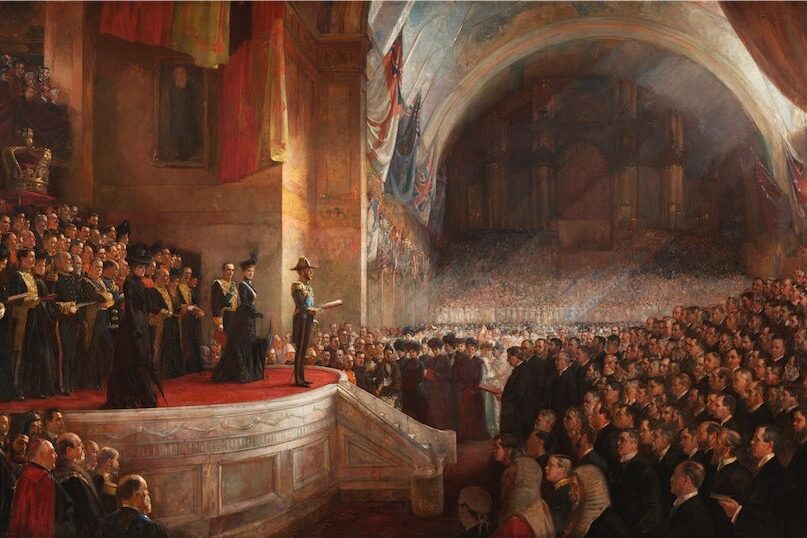
May 9 marks the 125th anniversary of the opening of Australia’s first parliament in Melbourne (and successively, in Canberra, the opening date of the Provisional Parliament House in 1927 and Parliament House in 1988). NICHOLE OVERALL reveals the little known ‘Father of Canberra’…
Melbourne’s Exhibition Building – a product of gold rush wealth – opened in 1880 (“Royal” added in 1980) to host a global showcase of modern progress.

Twenty-one years later it was the stage for a foundational moment in national politics: the first federal parliament on May 9, 1901.
The building accommodated some 12,000 guests for the occasion. This included most of the 75 newly elected federal members and 36 senators.
Among the faces was the suave Austin Chapman, Braidwood publican and inaugural MP for a seat that was to gain quite the reputation: Eden-Monaro.
Along with the 125th anniversary of federation, 2026 marks the centenary of the long-serving parliamentarian’s death – while still in office.
Having already served as a local representative for 10 years – elected at 27 to the NSW Parliament as the member for Braidwood – Chapman was a strong proponent for melding the nation.
His diverse electorate though, was indicative of the broader initial tensions. Up north around his hometown they voted against the concept while the south-eastern coastal areas were in favour.
A decade later, it was Eden-Monaro that would give up “910 square miles” from its north-west corner for the creation of the Federal Capital Territory. Chapman’s role as a vocal champion of the site even saw some declare him the “Father of Canberra”.
Confirming its rural connections and inheritance, the national capital slowly emerged from an ancient floodplain long-used for grazing sheep. While Canberra was to be the fulcrum, the priorities for a newly united Commonwealth were being defined in the town halls, shearing sheds, and pubs of electorates like Eden-Monaro.
The era of horse and dray it was, but the core concerns were timeless and Chapman was described as “one of the most expert constituency managers in Australian political history”. He lobbied for the expansion of the railway and better road links in southern NSW; postal and telegraph services to rural communities; and the need for funding to flow outside the metropolitan centres.
All of it was tied to the Herculean task of building a nation – stitching together six independent colonies as a workable tapestry of economic and social stability. Regarded for his pragmatism, Chapman played an instrumental role in the development of the systems shaping the country including serving as Minister for Defence, Trade and Customs, and Health.
By the time the federal government was fully located to Canberra on the opening of the “provisional” Parliament House in 1927, the Honourable Sir Austin Chapman MP was dead.
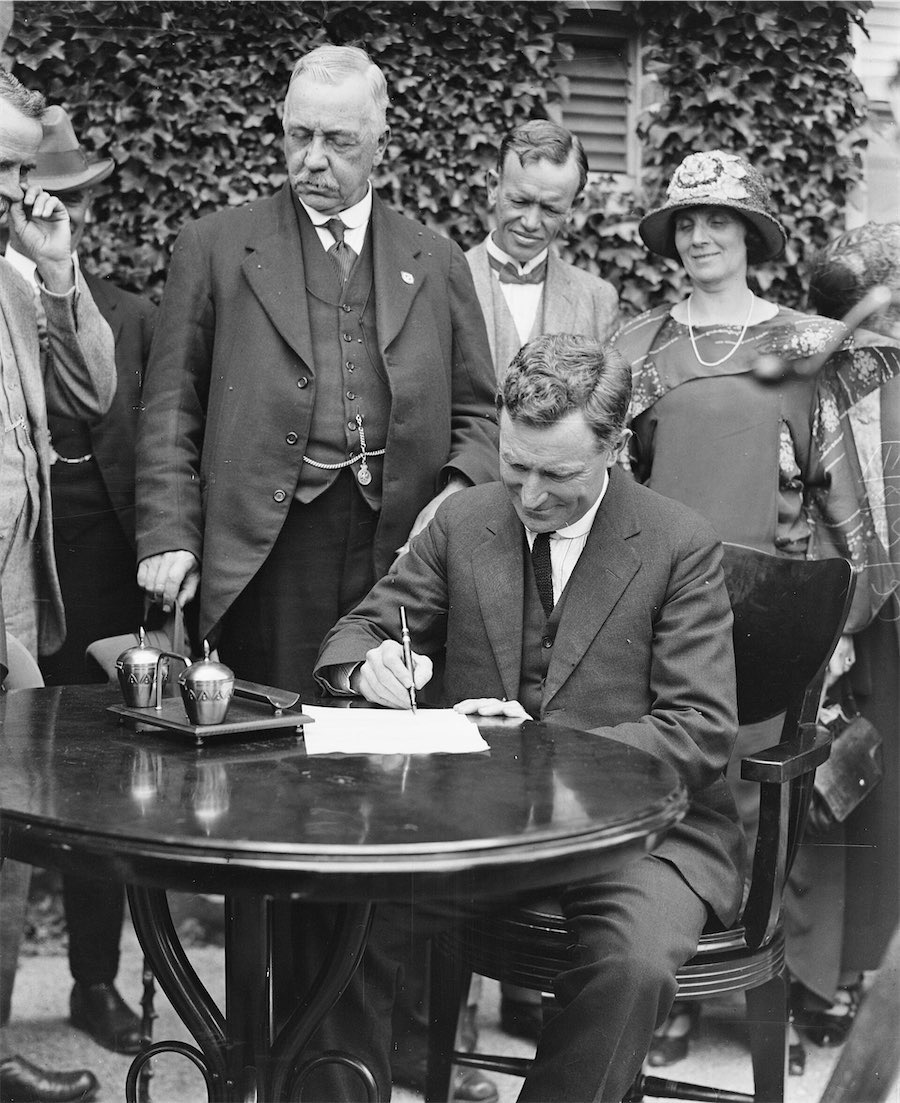
Knighted at the beginning of 1925 for his record as a Federation-era politician, Sir Austin had been re-elected later that year for the ninth time.
After close to four decades in the political sphere – and almost precisely a quarter of a century since first elected federally – he died of cerebrovascular disease on January 12, 1926. He was 61.
To date, Sir Austin remains the second longest serving member for Eden-Monaro (pipped by Allan Fraser with a total of 26 years over two different periods – 1943-66; 1969-72).
At noon on that May day in Melbourne 25 years earlier, the clouds had parted and the sun’s rays pierced the tall windows of the Exhibition Building’s grand dome just as the Duke of Cornwall and York (later King George V) commenced his oratory on behalf of his father, King Edward VII. As reported in The Argus: “[The] atmosphere was radiant and illuminated the vast spaces of the building and the great sea of faces with a bright Australian glow.”
Evocatively depicted in another monumental work by the highly-regarded Australian impressionist Tom Roberts, it was a poignant signifier: the “Big Picture”, as it came to be known, in every sense.
Well did it capture the promise and patriotism of a newly-minted united nation, and in marking 125 years of Federation, it’s a timely reminder of how we all combined to advance Australia fair.
And those core concerns haven’t shifted much: connectivity – be it roads, rail and communication; educating the young and caring for the ageing; a fair day’s pay for a fair day’s work; providing for and protecting the nation.
Nichole Overall is an occasional history columnist. Her day job is as a member of the NSW Legislative Council.
News all day, every day at CityNewsQBN.com.au.


Leave a Reply