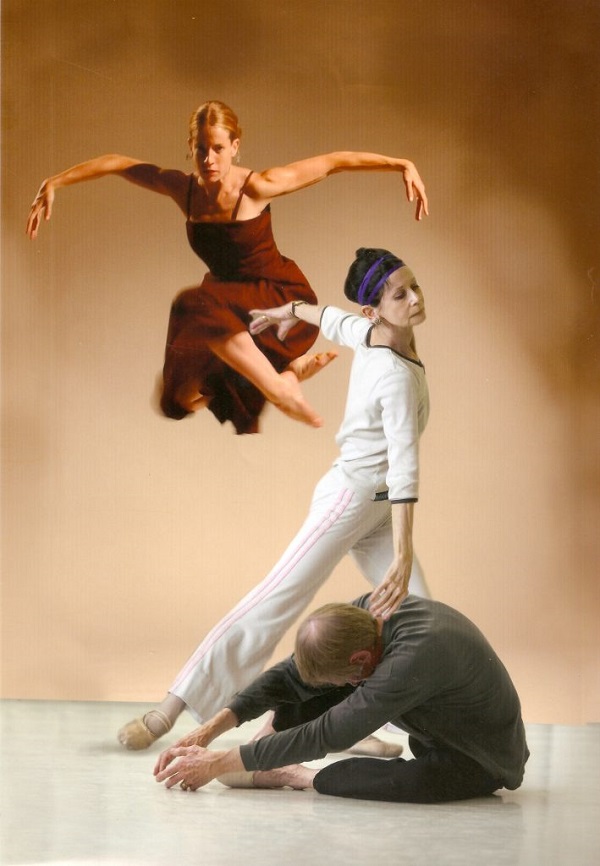
Dance / Pointe: Dancing on a Knife’s Edge, a film directed by Dawn Jackson, National Film and Sound Archive, May 3. Reviewed by SAMARA PURNELL.
“Will I dance again?”
Walking home one evening to her house in Highgate, Perth, dancer Floeur Alder was randomly and viciously attacked – punched in the face and stabbed in the neck, by a man who vanished into the night and has never been apprehended.
Her foremost concern in the immediate aftermath was if she would be able to dance again.
Pointe: Dancing on a Knife’s Edge is Floeur’s story – from growing up with famous dancers – “Superstars of ballet” as parents, to the “incident” as she refers to it, in 2000, and her journey through healing and re-emergence as a dancer in her own right and on her own path.
Dawn Jackson, whom Alder has known most of her life, directed the film, 10 years in the making. Pointe follows Floeur as she returns, in 2016, to the scene of the attack, describes her aspirations of a career in professional ballet across Europe and gives an extensive depiction of her early years and initial dance training.
Floeur’s mother was the famous prima ballerina Lucette Aldous, and her Canberra-born father, dancer Alan Alder, met Aldous at the newly formed Australian Ballet Company. “Dance music and movement cements us together” Floeur says of her family. “Their work is in every single cell of me”
Pointe is told through interviews with dance luminaries including David McAllister. Newspaper articles about Floeur’s attack and her parents’ careers are interspersed with plentiful archival footage of Aldous dancing with Rudolph Nureyev and Margot Fonteyn (Floeur’s godmother), and photographs of Alder and Aldous with celebrities such as Elizabeth Taylor. It’s delightful from a dance-lover’s point of view to see footage like this.
Nightmarish flashbacks, years of solo rehabilitation work in the dance studio and her connections and collaborations are depicted, interspersed with close-up imagery of flowers, trees, leaves and a staged set of flowers surrounding a bed, where Floeur, dressed in white, writhes in the crumpled sheets. At once funereal, balletic and nightmarish.
Surrounded by a household of cats, only-child Floeur spent her time with them or in the dance studio, before studying under her parents’ tutelage at WAAPA (where they had created the dance school). A fellowship saw her travel across Europe when she was 19, before she returned to Perth, where the incident took place.
The film gives a gory, detailed and confronting description of the attack. Pointe documents her rehabilitation, initial return to stage (deemed too soon), and the emergence of her own dance style. But dance wasn’t therapeutic and freedom for Floeur back then and a rage took over – a rage about the attack, loss, expectations and repressed anger from her childhood and dealing with her father’s consumption of vodka.
Breathwork was what really began to move the trauma through her body and begin healing.
Floeur returned to Paris to train in Bejart style with a former dance partner of her mother’s – Robert Bestonso and his partner Patrick, to create a work in a more contemporary style. As she dances through the depiction of the incident, sobbing wracks her body in waves, and as she is cradled by Patrick she repeats “I want my mum”. It’s a very emotional thing to watch, and many in the audience were in tears.
Rare Earth, which she created for and directed her parents in, performed as a trio, includes amusing commentary and footage of her father trying to walk in parallel, along with his struggle to “visualise and improvise” and her mother feigning sickness to get some respite from the drilling of Floeur’s rehearsals. It’s a beautifully poignant family journey of healing for her and her father.
Floeur describes her fear of being alone, walking at night, and passing people in the street, to finding peace and safety being out in nature and dancing in outdoor settings. (Her performance of Djilba was presented at the weekend at Mirramu, by Lake George). The film concludes with sweeping footage of Floeur in coastal and bush settings, returning to dance.
“Do you feel joy when you dance?” She is asked. Her hesitation is jilting and after a long time she replies “I’m starting to”.
Many of the people interviewed in Pointe have recently passed away, making the screening of it now all the more poignant. Pointe is a confronting watch, highly emotional, informative and with archival footage that will bring a smile to those who remember and those that have only heard about these wonderful dancers.
But mostly, it’s about a little girl, with an extraordinary background, growing up and going through an unimaginable event, and with hard work, the love of her dance family and her fighting spirit, forging her own name and dance journey.
Pointe: Dancing on a Knife’e Edge was presented as part of Australian Dance Week, which runs until May 6.
Wheeled into the operation, she asked: ‘Will I dance again?’
News all day, every day at CityNewsQBN.com.au.


Leave a Reply