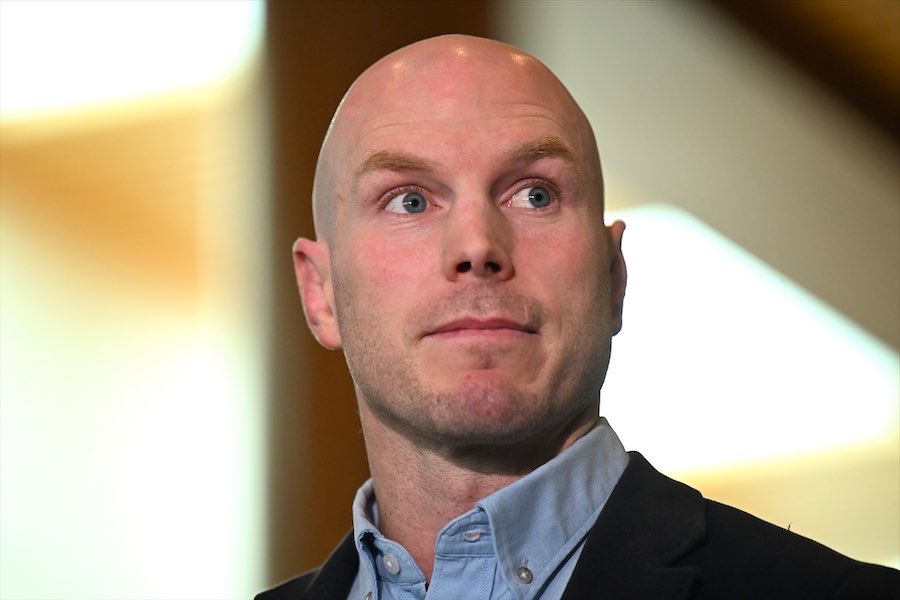
“Pocock’s greatest concern is regarding the untoward and blatant influence of vested interests on political parties, particularly the fossil fuel and gambling industries,” writes political columnist MICHAEL MOORE.
Australia’s major political parties are on the nose.

Despite many good people who work within Labor and Liberal to improve the lot of ordinary Australians, the success of One Nation at the Farrer by-election has shaken the foundations of these parties.
According to independent ACT senator David Pocock: “There is a lot of frustration and anger out there in the community that our political system is not working for Australians”.
A range of polls support his contention.
MPs Allegra Spender and Zali Steggall have been leading the push for the possibility of a much more co-ordinated approach by independents to the federal parliament. This push includes Pocock, who suggested on the ABC Insiders that all seats should be contested by community independents.
Despite party discipline being a key tenant of the major parties, it is still a major challenge to achieve a co-ordinated approach to policy decisions and governing. Recent experiences of co-ordination between different political parties also provides some sobering lessons.
Ian De Landelles, in a letter to CityNews says the Pocock idea to campaign in all 150 House of Representative seats across the country would have dire consequences if followed to its logical conclusion.
“The outcome”, he argues “would be utter legislative chaos… as all vestiges of the existing parties would be eliminated”.
He does have a valid point. The political parties have enough trouble, despite their decades of practice. The fiasco of the discussion between the ACT Liberals and the Greens to hold Labor better to account is a minor demonstration. Having a parliament of independents, De Landelles argues “would make ‘herding cats’ seem like child’s play”.
Reality check! The chances of suddenly changing the parliament to even a majority of independents would take quite a few elections. Considering Senator Pocock’s stellar performance, it is not difficult to project one of the House of Representatives seats in the ACT going to an independent. However, there is Buckley’s chance that Labor could lose all three of those seats and it is hard to believe there is a risk to Katy Gallagher’s Senate position.
Co-ordinated decisions of the major parties to undermine independents may have come back to bite them. Political donations for independents have been severely curtailed compared to the major parties. There are advantages to forming a political party.
Discussions amongst the “teal” independents have already shown some of the challenges. Already independents Monique Ryan and Kate Cheney have distanced themselves arguing they will “remain as a community independent”.
MPs Helen Haines and other crossbenchers, including Bob Katter, former National Andrew Gee and Centre Alliance’s Rebekha Sharkie, said they would also remain independent. However, this does not exclude some kind of grouping of some independents rather than a formal political party.
Rather than a political party, the independent MP for Bradfield, Nicolette Boele, framed the issue as “a formal alliance of community independents”. However, there are motivations for forming into a political party.
While the independents have a cap on spending, about a third less than candidates from political parties, there are opportunities for political parties to accept donations more broadly and tackle independent candidates by focusing very large expenditure on more vulnerable seats.
Pocock’s greatest concern is regarding the untoward and blatant influence of vested interests on political parties, particularly the fossil fuel and gambling industries.
“There’s this recognition that on so many of these big challenges we are facing, it’s not necessarily left versus right, it’s actually vested interests and their stranglehold on the major parties versus the Australian people,” he says.
There is already co-ordination between many of the federally elected independents. Support from Climate 200 has identified similar platforms of stronger climate action, environmental protection and political integrity. Additionally, similar to the major parties, the like-minded MPs and senators meet on Tuesday mornings of parliamentary sitting weeks.
Within the ACT Legislative Assembly there are constant discussions and strong relationships between the local Greens and independents Fiona Carrick and Thomas Emerson.
However, it remains to be seen how the community would react to having even some of the current federal independents and minor parties adopt more formal co-ordination.
Voters often make the “least-worst decision” as they cast their ballot. Considering such frustrations with the major political parties, and One Nation being too hard right for many, it would not be surprising to see a significant surge for independent candidates across Australia.
Michael Moore is a former member of the ACT Legislative Assembly and an independent minister for health. He has been a political columnist with “CityNews” since 2006.
News all day, every day at CityNewsQBN.com.au.


Leave a Reply