Music & Dance / Invitation to the Dance, Salut! Baroque. At Wesley Church, April 24. Reviewed by MICHELLE POTTER.
It was a surprise to discover that the music ensemble Salut! Baroque, which has been performing music from the Baroque era for Australian audiences for more than 30 years, was to present a program called Invitation to the Dance.
Not only was the presentation to focus on music created with dance in mind, but it was to include a live performance from a dancer.
Musically the evening consisted of nine works, one each from Jean-Féry Rebel, Christoph Graupner, Philipp Heinrich Erlebach, Georg Philpp Telemann, Henry Purcell, James Oswald, Jean-Baptiste Lully, Johan Helmich Roman and an anonymous composer.
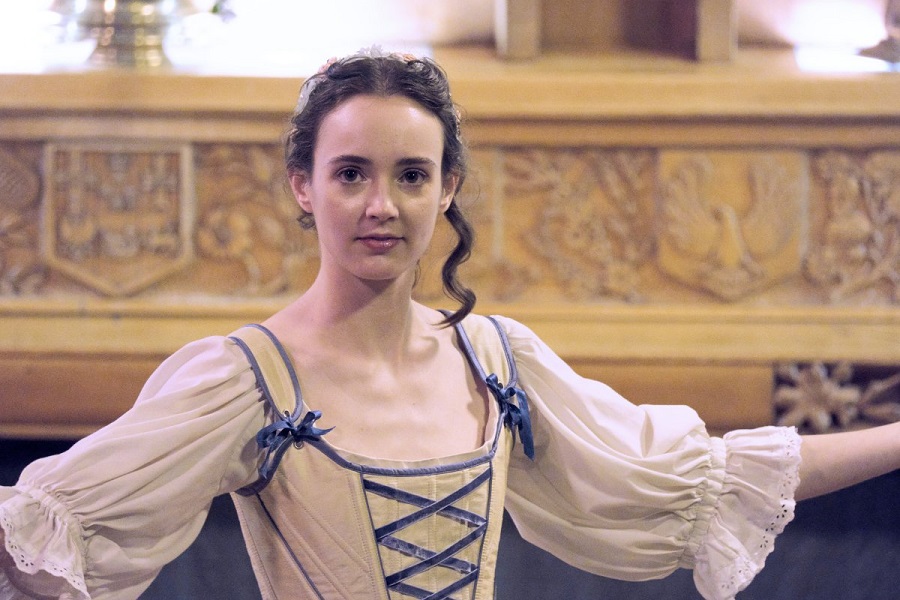
The dance component was performed by a specialist in Baroque dance, Aimee Brown.
My expectation was that Brown would perform in every, or at least almost every musical section. This was not the case. She danced for the whole of the opening piece, Rebel’s Les caractères de la danse. But for the rest of the evening Brown performed in just four of the items and then only for short moments from those four numbers.
Brown wore a 18th century-inspired, pale pink gown with three-quarter length sleeves ending in a frill, and with a few decorative elements as part of the gown. Her shoes were also pink and resembled ballet flats with a small heel attached. For the first item she wore a large, white feather in her hair.
There were slight changes of costume for each of her appearances, including changes to the headdress and additions to the costume including the addition to the dress of two side panels in a decorative Baroque design.
Brown’s dancing was quite delicate with an emphasis on hand and arm movements along with footwork that consisted mostly of quite small steps that looked balletic but without the turnout that later came to characterise balletic movement. Her upper body was mostly held upright. Elegant is the descriptive word that comes to mind.
It was disappointing that Brown’s performance was not made more visible, but this seems to characterise those occasions where dance is included as part of a musical event.
At a basic level, music is made to be heard but dance is made to be seen. When the dance is performed behind the orchestra, even when on a slightly higher level as was the case with the Salut! Baroque performance, the dance, especially what the feet are doing, is always largely hidden by the musicians.
Then, and again this was the case with Invitation to the Dance, the audience is often not in a tiered seating arrangement. This hides much of the dance from almost everyone.
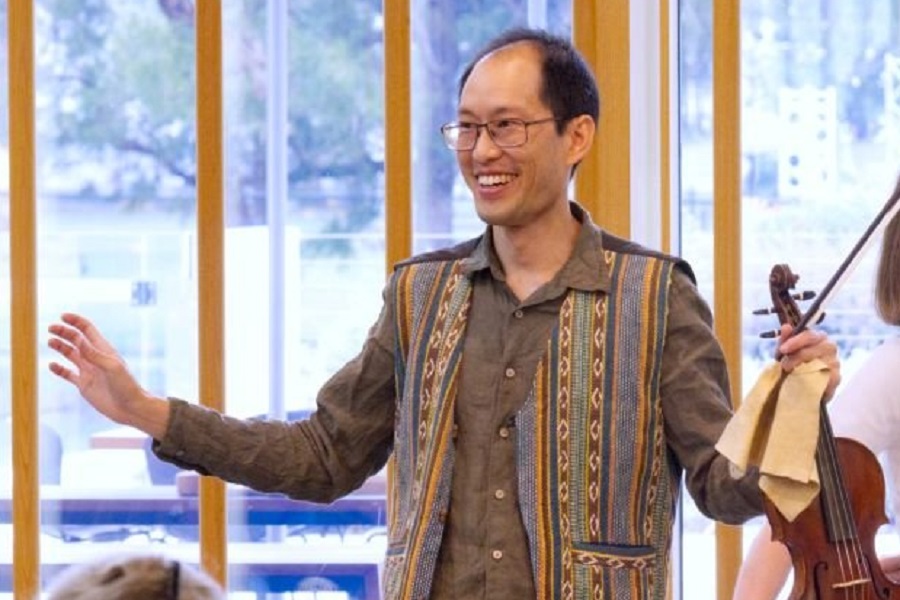
One very pleasurable aspect of the presentation was the very dance-like appearance of one of the musicians, John Ma. He played his Baroque violin not just with arms, hands and fingers, but with his whole body. As well as producing an outstanding sound, Ma moved his body according to the sound he was producing, up, down, sideways and so on. He was stunning to watch (and hear). A dancer-musician!
News all day, every day at CityNewsQBN.com.au.


Leave a Reply