Craft / Collective, Staunch. At Craft + Design Canberra, until May 23. Reviewed by MEREDITH HINCHLIFFE.
Staunch. is a collective of Blak artists.
Each artist is exhibiting work that draws on their creative practice and their country, community and collaboration. They are from all over Australia.
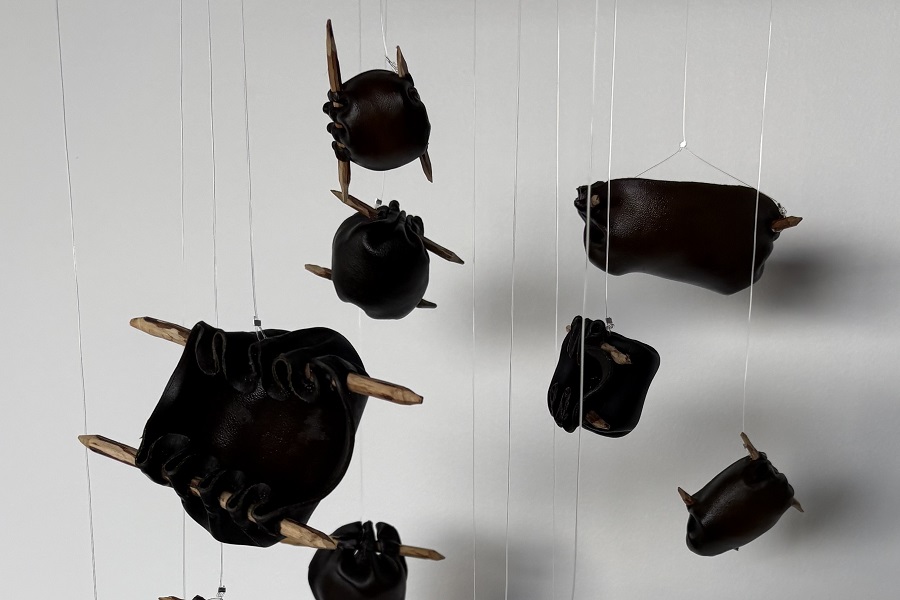
The works that I was quickly drawn to were two hanging pieces made up of small water containers made from bull kelp, by Nic Ingram.
I have seen large containers made from this fascinating material, but none that are so small. Bull kelp is a type of seaweed that is harvested off the coast in Tasmania. First Nations People dried it and then used it to transport food and water. When dried the seaweed goes dark and dries, it becomes leather-like and hard.
To form the containers, the edges are pulled together and threaded through a stick and form a semi-closed container. The larger the leaves of seaweed the larger the containers.
Sandy Harvey is showing a series of six hand-coloured collagraphs depicting native flora – a dispersed map of the homelands of members of Staunch. They show us that native flora continues to adapt and thrive – they are resilient and reflect the different ‘countries’ that the artists come from. They are gentle and graphic.
Works in this exhibition embody the challenge the artists are offering viewers: what do you think resistance looks like?
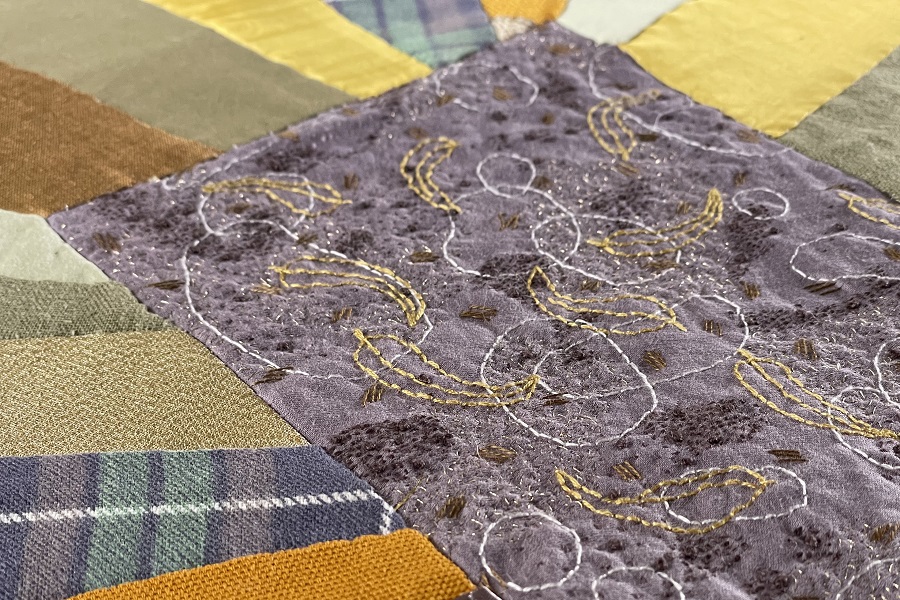
In addition, the 2025 artists-in-residence, Michelle Grimston and Hannah McKellar are exhibiting works made as a result of their research at the National Zoo & Aquarium and in three weeks at Cinerea Cottage in Tidbinbilla Nature Reserve where they were immersed in the landscape. This program remains a very important part of the Craft + Design annual program. The two artists explored ways of representing place – through textile mediums, photography, drawing and painting. The exhibition is a relatively minor part of the project, although always a very public expression of what it means to the participating artists.
The two sites involved this year – Tidbinbilla Nature Reserve, and the National Zoo offered contrasting environments for the artists to work in.
The residencies are extraordinary opportunities for the artists and their artistic growth. Their exploration of process and place will benefit them well into the future.
News all day, every day at CityNewsQBN.com.au.


Leave a Reply