By Tom Wark
When bumblebees are not hard at work pollinating our crops, you might be able to find them tapping their six feet to pop music.
A study released on Friday found bumblebees are able to learn and recognise rhythmic patterns across different speeds and senses.
Previously, only humans along with a few mammals and songbirds were thought to have the ability to grasp concepts such as time and rhythm.
But after Macquarie University scientist Andrew Barron and collaborators from Southern Medical University put some bees through their paces, it seems the humble bumblebee, and hundreds of other animals, could soon be added to the list.
“Rhythms are everywhere in nature … we’ve assumed prior to this study that those sorts of behaviours are some sort of innate fixed behavioural pattern,” Prof Barron told AAP.
“This study challenges that assumption … we don’t know how many other animals might be able to do it.”
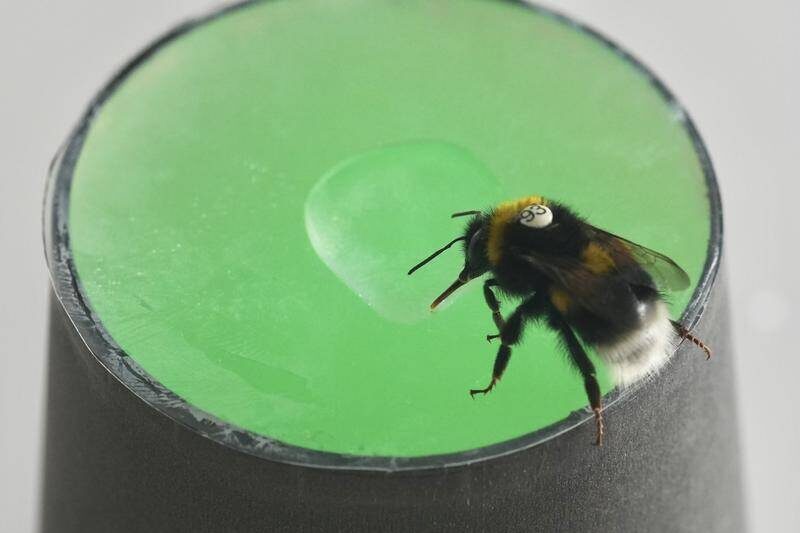
In the study, bees were trained to forage from artificial flowers embedded with flashing lights after learning a specific pattern, even at altered speeds, would lead to a sugary reward.
They were then trained to recognise repeated vibrations through the floor of a maze and then translate the patterns visually using flashing lights.
Such a skill was previously believed something only humans could do, Prof Barron said.
In humans, this ability is used in activities such as driving or learning a dance routine by watching dance moves and listening to a song.
Prof Barron is excited by what the findings could mean for the development of artificial intelligence.
“The bee brain is tiny and works on tens of milliwatts, so there’s got to be some tricks the bees are doing to accelerate their learning,” Prof Barron said.
“If we can equip AI … with this ability to abstract rhythms, there could be a whole range of applications down the line.”
News all day, every day at CityNewsQBN.com.au.





Leave a Reply