By Grace Crivellaro in Canberra
Australia has called for a de-escalation a month after US-Israeli first launched strikes on Iran, acknowledging the impacts on the global and local economy.
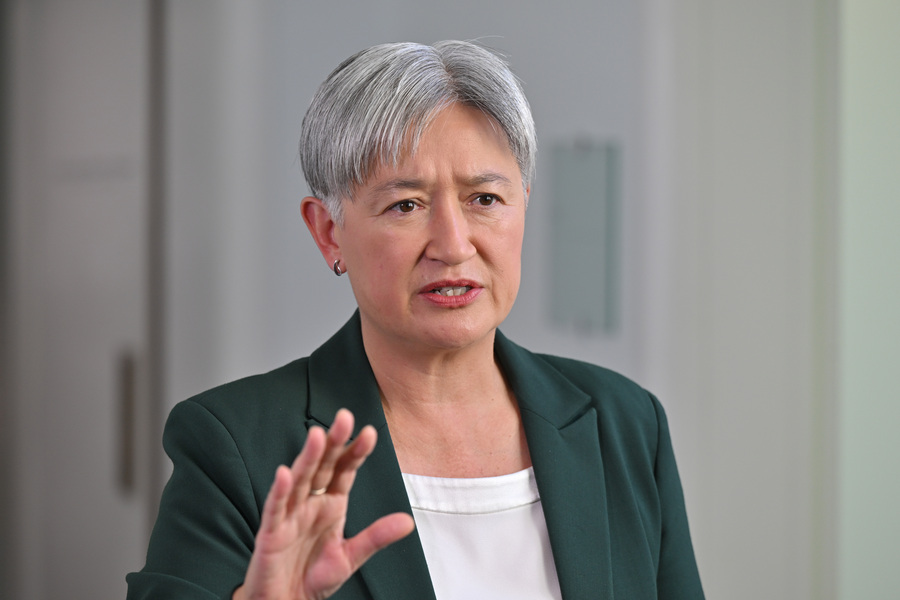
Foreign Minister Penny Wong said a de-escalation was needed after US President Donald Trump overnight threatened to blow up Iran’s energy infrastructure if a deal to end the war isn’t reached soon.
She encouraged peace talks to end the war, as the ongoing fuel crisis has gripped Australia and sent prices soaring.
“We believe it would be a good thing for the global economy and for Australians, and certainty for the world, if we could see de-escalation and these talks lead to the cessation of the conflict,” Senator Wong told ABC TV.
Mr Trump wrote on Truth Social that “great progress” had been made in talks, but said if an agreement wasn’t struck, the US would strike Kharg Island, which is the hub for 90 per cent of Iran’s oil exports.
Senator Wong’s calls echo Prime Minister Anthony Albanese’s message to Mr Trump on Monday night, when he said he would like to see an end to the war as the US has achieved most of its initial objectives.
Mr Trump should outline a timeline for the conflict’s end, he told ABC’s 7.30 program.
“Conflict always has a price and the conflict has achieved its objectives that were outlined at the beginning and we want to see, I think people want to see an endpoint,” the prime minister said.
Senator Wong said Australia would not provide troops on the ground should the US proceed with its plans.
“Our posture is defensive, not offensive,” she said.
“We’ve made that very clear and we provided defensive capability when Iran chose to attack countries that … were not party to taking strikes on Iran.”
Australia deployed an E7A Wedgetail surveillance aircraft and 85 personnel to the Middle East on March 10 for an initial four-week period, which the government argues was not a “major military operation”.
Senator Wong also confirmed more than 103 direct commercial flights carrying about 10,400 Australians have arrived home since March 4.
Australians in the Middle East should not delay their departure and should leave on commercial flights, she added.
“While there are talks to end the conflict, the situation in the Middle East remains volatile and could deteriorate rapidly,” Senator Wong said.
Australians are also being urged not to travel through Bahrain, Iran, Iraq, Israel, Kuwait, Lebanon, Palestine, Qatar, Syria, the United Arab Emirates and Yemen.
News all day, every day at CityNewsQBN.com.au.



Leave a Reply