Dance / I Thought You Were Dead But Here We Are, BOLD Festival. At Quantum Leap Theatre, November 15. Reviewed by CHENOEH MILLER
There is something thrilling about watching performers who have spent a lifetime mastering their craft.
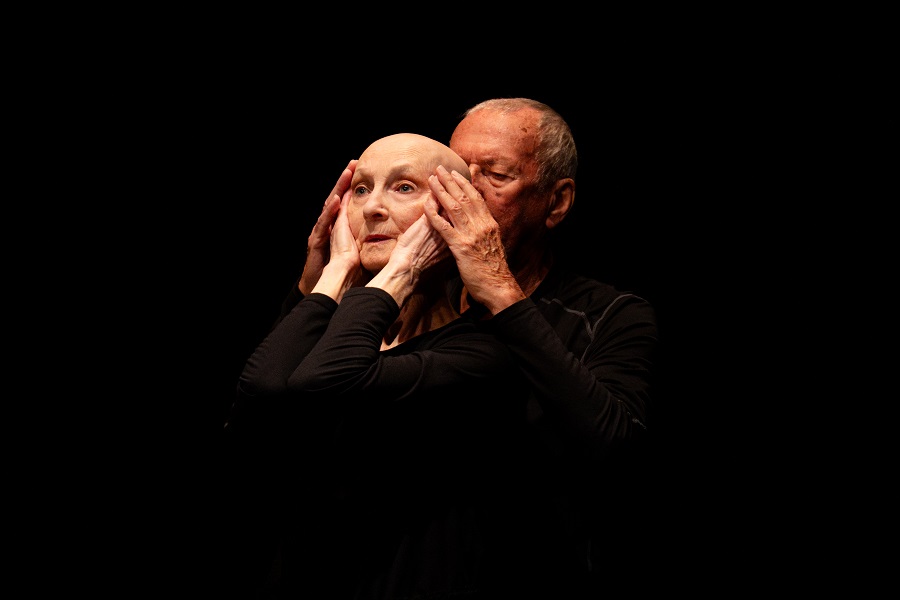
Still Breathing’s Anca Frankenhaeuser, Chrissie Koltai and Patrick Harding-Irmer, all in their late seventies or early eighties, bring extraordinary precision, mischief and tenderness to I Thought You Were Dead But Here We Are.
A man dressed in black stalks the perimeter while two women carry little red chairs into the space. Their movements are delicate, almost conspiratorial. Fingers entwine around a red rose; enormous grey tulle skirts trail blood-red fabric. The imagery is strange, beautiful and occasionally unsettling.
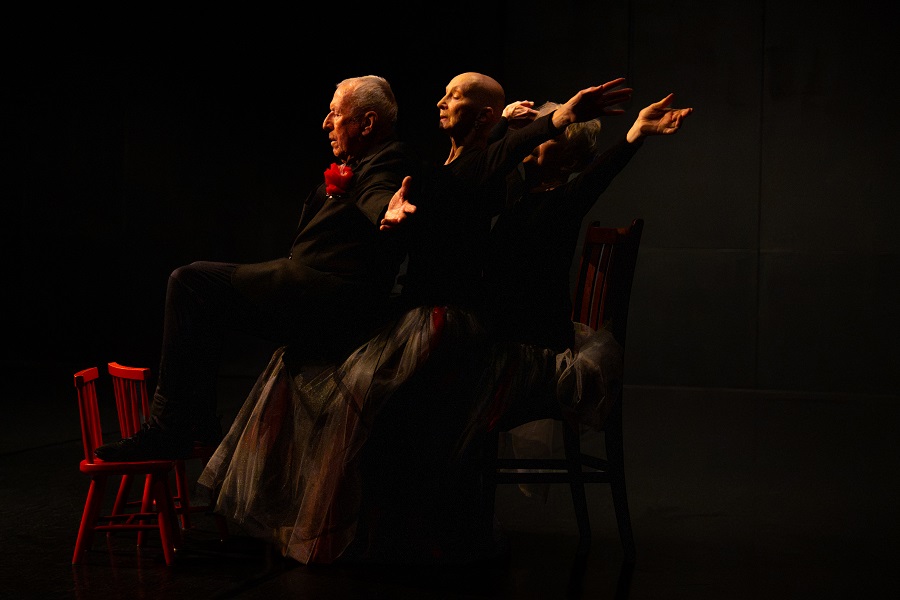
There are echoes of Pina Bausch’s Café Müller in the choreography’s intimate physical relationships, and of The Chairs in its absurdist theatricality. One woman, dressed like an oversized clown, moves with mischievous delight, while the others negotiate a shifting world of objects, gestures and encounters.
What is most captivating is the performers’ effortless command of the stage. Their movements are economical but never diminished, revealing decades of physical knowledge. Their affection for one another is palpable. At times funny, at times quietly heartbreaking, this is dance theatre of remarkable subtlety and humanity.
Then, Sue Healey’s film, The Cry of the Whistler, took us into a darker, more introspective world.
Exploring the life of Jane Mortiss, an artist who experienced significant mental illness, Healey creates a haunting portrait of creativity, isolation and psychological suffering.
The film’s carefully composed images and restrained atmosphere evoke the fragility of an artistic life. Questions of confinement, identity and whose voice is being heard linger beneath its visual beauty.
Rather than explaining Mortiss, Healey leaves us with an uneasy sense of the distance between an artist’s inner world and our attempts to understand it.
Together, these works reveal the richness and complexity of lives devoted to art, and the enduring power of creative expression.
News all day, every day at CityNewsQBN.com.au.


Leave a Reply