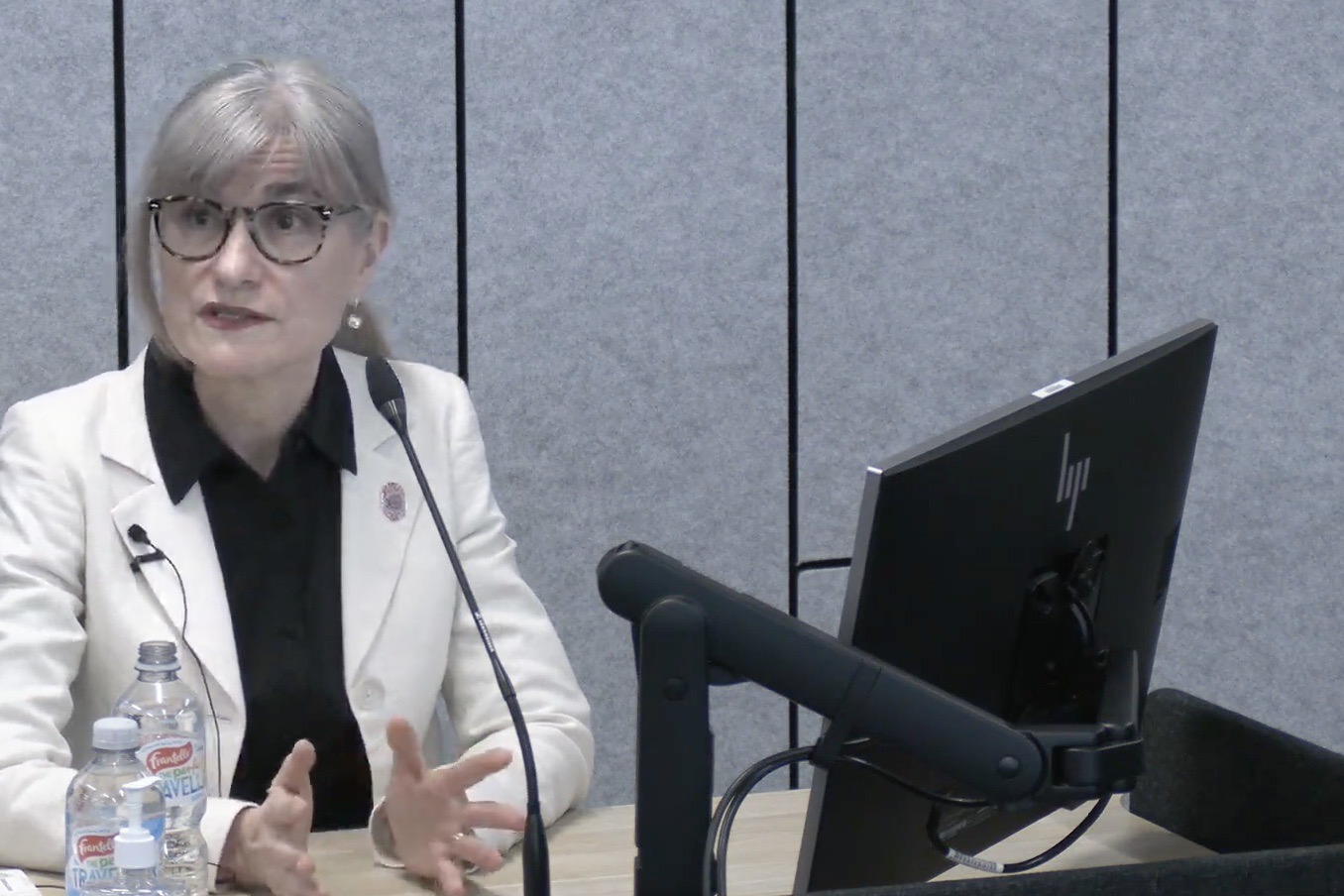
Two senior ACT public officials engaged in serious corrupt conduct by manipulating the Campbell Primary School tender to favour the CFMEU’s interests and then covering up what occurred, the ACT Integrity Commission has found.
The commission’s six-year Operation Kingfisher report found former Education Directorate director-general Katy Haire and former education minister Yvette Berry’s chief of staff, Josh Ceramidas, dishonestly interfered with the procurement process so local builder Manteena would not win the $18.2 million school modernisation project.
The contract was instead awarded to Lendlease, despite Manteena being recommended by two tender evaluation teams and offering a lower price.
Integrity Commissioner Michael Adams KC found the officials had “in effect, cheated Manteena to the advantage of the CFMEU and, as it happened, Lendlease at a substantial cost to the Territory”. The report made no adverse finding against Lendlease and said there was no evidence of wrongdoing by the company.
The 341-page report found Mr Ceramidas told Ms Haire that the CFMEU did not want Manteena to win and represented this as the outcome wanted by the government.
Ms Haire then became the decision-maker, replacing an official identified under the pseudonym Mr Green, and rejected the recommendation that Manteena receive the contract.
The commissioner found Ms Haire directed Mr Green to prepare a brief that would justify awarding the project to Lendlease for reasons other than the true reason.
She then facilitated the inclusion of “fabricated reasons” in the official decision documents and failed to disclose Mr Ceramidas’ intervention to the head of the public service, the probity auditor, the Auditor-General and the Integrity Commission.
The report described her actions as deliberate dishonesty rather than incompetence or poor administration.
“A thumb was placed on the scales, a classic description of cheating,” Mr Adams said.
The commission found Ms Haire dishonestly and partially exercised her public duties, abused her authority as director-general and breached the public trust placed in her.
It said her actions could constitute criminal offences, including general dishonesty, conspiracy to defraud, providing false or misleading information, producing a false document, abuse of public office and misconduct in public office.
The finding does not amount to a determination that she committed a criminal offence, which can only be decided by a court.

Mr Ceramidas was found to have used his position as a ministerial staffer to advance the CFMEU’s interests.
The report found he sought to have Mr Green removed as decision-maker because the official had resisted the union’s interpretation of the Secure Local Jobs Code.
Mr Ceramidas then told Ms Haire and Mr Green that Manteena should not receive the contract. He also lied and failed to disclose the whole truth while giving evidence to the commission, the report found.
His conduct amounted to a dishonest abuse of his office and could also constitute criminal offences, including conspiracy to defraud and abuse of public office.
The commission found Ms Haire and Mr Ceramidas provided a “back door” through which the CFMEU’s strategic interests were placed ahead of the government’s procurement rules, the interests of the Canberra community and Manteena’s right to have its tender considered fairly.
It found both had attempted to conceal what occurred and that their conduct was likely to threaten public confidence in government administration.
Their conduct was therefore classified as serious corrupt conduct.
Mr Green was also found to have engaged in corrupt conduct by helping prepare the misleading justification for the decision and initially concealing what had occurred.
However, the commissioner declined to classify his conduct as serious corruption because he later revealed the true circumstances to Manteena and gave substantially truthful evidence to the inquiry.
The report cleared Ms Berry of wrongdoing, finding no evidence Mr Ceramidas acted at her direction or that she knew of, agreed with or participated in his improper conduct.
Mr Adams found Mr Ceramidas acted independently to “curry favour with the CFMEU” and said there was no proper basis for an adverse finding against the minister.
The investigation began in March 2021 and involved 80 summonses, 30 witnesses, 34 days of private examinations, 12 days of public hearings and more than 1.8 million digital records.
The commission has also referred the conduct of another former ministerial chief of staff, David Ferguson, to the relevant minister to consider whether action should be taken under the Legislative Assembly staff enterprise agreement. No finding of corrupt conduct was made against Mr Ferguson.
News all day, every day at CityNewsQBN.com.au.





Leave a Reply