Music / Schubert’s Death and the Maiden, Canberra Symphony Orchestra, Chamber Series. At Gandel Hall, April 19. Reviewed by ROB KENNEDY.
The two classical composers featured in this concert explored the tension between hope, and despair, which asks listeners to confront their own mortality.
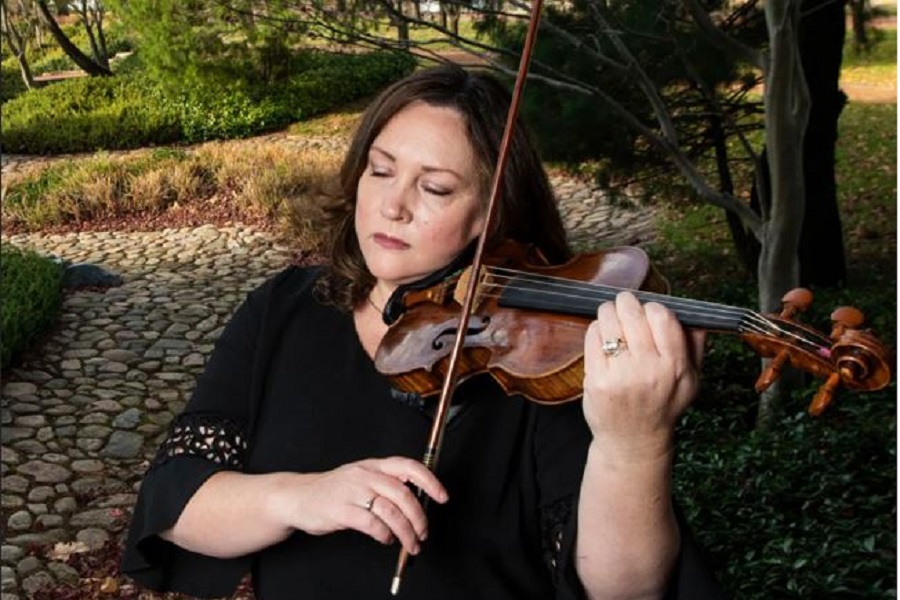
The players were Helen Ayres, violin; Doreen Cumming, violin; Tor Frømyhr, viola and Patrick Suthers, cello.
The pairing of Sirmen and Schubert is by no means an odd coupling, even though the two pieces in this concert were vastly different. The composers came from different times of the classical music period, and it showed.
The concert began with the String Quartet in B flat Major, Op.3 No.4 by Maddalena Lombardini Sirmen (1745-1818). She was an Italian composer, violinist and opera singer who began music studies at the age of seven.
In only two movements, the first cantabile, with a corresponding song-like quality, was well-formed and even in its dynamics and its compositional style. The players, with an equally smooth tone, rendered it with a flair fitting to the elegant and galant style of the time. Yet, it ended without an ending; it just stopped.
The second minuetto movement, with a more complex format, was quickly over. Just as I thought it was going to develop, it ended, but this time, the coda was expected.
Death and the Maiden’s opening is startling. The double stopping makes it sound like a string orchestra. It is perhaps announcing the arrival or presence of death itself. This is quality writing where every note and phrase cries with precision.
Its four movements, all in a minor key, mirror the issues the composer was having at the time. Written after recovering from a disease that killed people of Schubert’s time, death is evident in the music and clearly in the mind of the composer.
The way this music swaps between the profound and the light-hearted without losing its way, even over the space of just a few bars, is testament to a composer who has highly ingrained skills. Its idiomatic nature speaks volumes about Schubert’s ability to write music that speaks clearly to people.
This is music that sweeps a listener away in its passion, its profound voice and harmonic quality. It’s hard to say anything new about such a well-known, frequently performed piece like this, except, it will always be recreated, because its authenticity as a piece of emotionally connecting music sounds almost universal.
The large, almost capacity audience agreed with its classic origins and its contemporary appeal with a lingering and loud appreciation upon its final note.
News all day, every day at CityNewsQBN.com.au.




Leave a Reply