Camellias… a foundational plant in the Canberra garden.
Camellias begin flowering now, bringing colour into winter with evergreen structure and blooms that reward the right care,writes gardening columnist JACKIE WARBURTON.
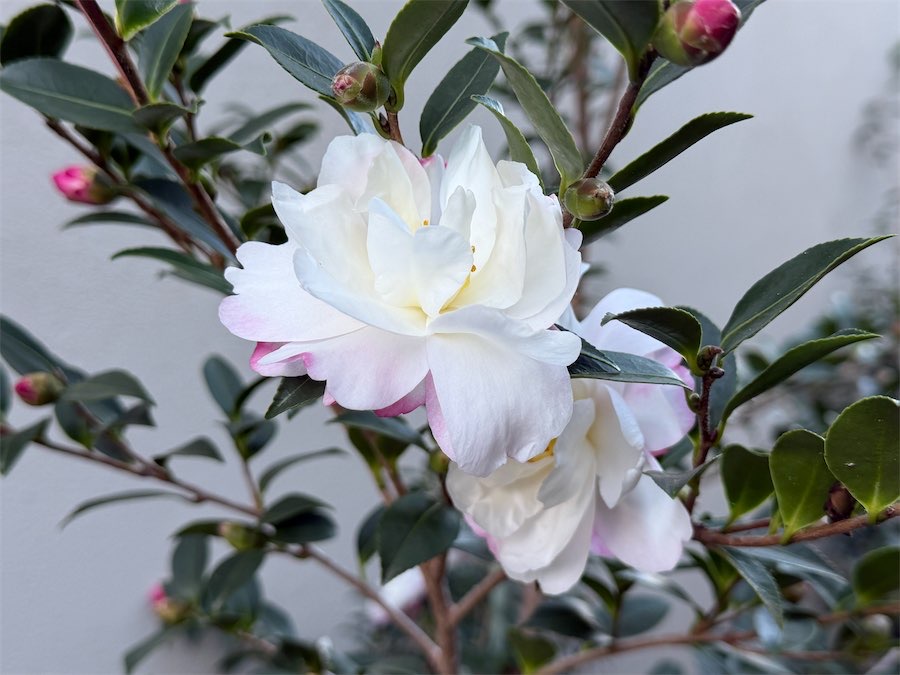
It is the beginning of the camellia season, and they are starting to flower now, with many varieties continuing right into winter when the larger leaves and blooms come into play.
Jackie Warburton.
Camellias are a foundational plant in the Canberra garden. Their evergreen foliage and range of sizes offer endless choice, though it is the flowers they are grown for.
Camellias are generally slow growing but can be transplanted as mature specimens, though this comes at a cost.
They prefer acid soil with moist, not wet, conditions. Prune after flowering and apply a little fertiliser to encourage blooms the following year.
Their shallow root system needs protection from both cold and summer heat. They grow best with roots in shade and tops in sun, so morning sun is ideal. The best time to buy is now, as they come into flower, ready for planting before the depths of winter.
AUTUMN is the busiest time in the garden as the seasons change, and stone fruit should be sprayed.
The most environmentally safe product is copper oxychloride. Saturate all parts of the plant once the leaves have fallen. Apply on a calm, sunny day with no rain forecast.
If insect pests were an issue last season, a stronger option such as lime sulphur can be used. It controls mites, scale and overwintering fungal diseases, acting as a winter clean-up spray.
A note of caution: apricot trees do not tolerate lime sulphur. It can cause severe dieback, leaf distortion, and long recovery, so it should not be used. Keep it away from ponds or areas with aquatic life.
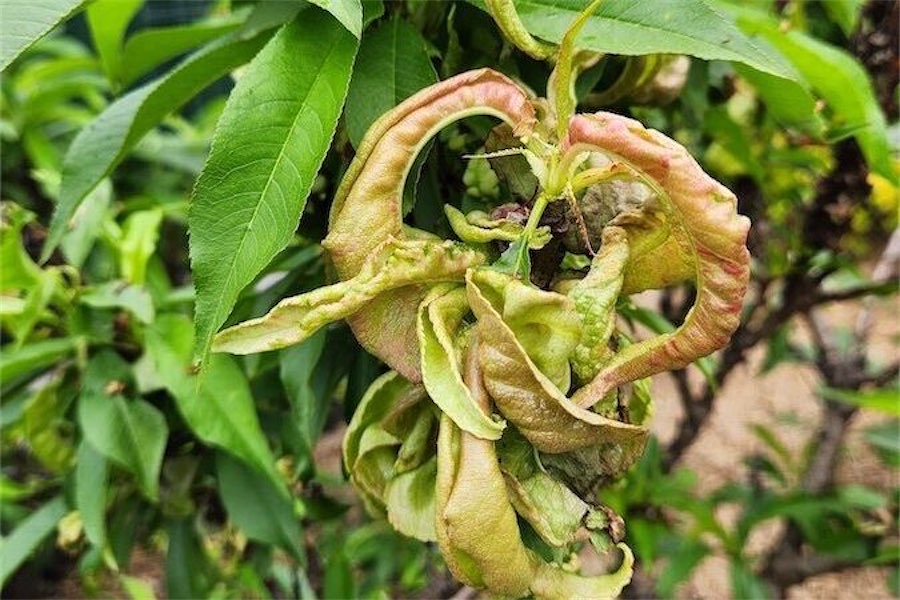
All stone fruit benefit from a copper or lime spray in late winter, just before flowering. This timing helps prevent peach leaf curl, which causes leaf bubbling. Only the first set of leaves is affected, while the second set grows normally. Remove infected leaves and dispose of them to reduce future infestation. The disease affects leaves, not fruit.
All fruit trees benefit from mulching in winter. This helps suppress weeds, retain moisture in the root zone, and prepare the tree for spring growth.
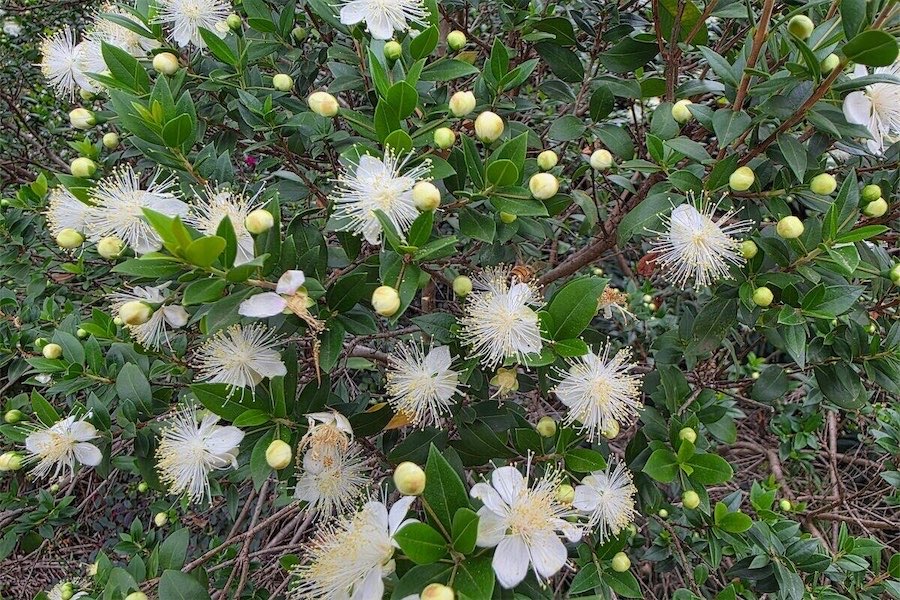
The common or true myrtle… tough once established. Photo: Jackie Warburton
THE common or true myrtle (Myrtus communis) grows well in our region. Star-like flowers appear in mid-summer when little else is in bloom.
Its glossy, evergreen foliage adds year-round appeal and it responds well to clipping. Native to the Mediterranean, it is tough once established.
Australia also has many myrtles that are just as easy to grow, from the Myrtaceae family, including bottlebrushes, eucalyptus and paperbarks. All myrtles respond well to light applications of general fertiliser to maintain lush growth through autumn and into spring.
In contrast, plants from the Proteaceae family do not tolerate phosphorus and should only be fed with specialised native fertilisers.
IN the autumn garden, gather fallen leaves, chop them and build a compost pile at least a metre tall and wide to generate heat for decomposition. Keep the pile moist over winter and it will be ready to use in spring.
Jottings
Feed autumn flowering bulbs as they begin to grow.
Liquid feed all vegetables once a fortnight.
Keep on top of annual weeds such as sticky weed and vetch.
Prepare the soil for planting fruit trees and roses.
With soil warming, it’s time to plant tomatoes, capsicums, cucumbers and other summer vegetables for a productive harvest, writes gardening columnist JACKIE WARBURTON.
"In 2026, NZ had an increase in overall sales of wine of eight per cent, a remarkable statistic given the global decline in wine sales generally," reports wine columnist RICHARD CALVER.
Hats off to the National Gallery for repositioning its café – Oculus Café x Kitchen by Mike – to the ground-floor foyer with views of the Sculpture Garden, writes dining reviewer WENDY JOHNSON.





Leave a Reply