By Andrew Brown and Jacob Shteyman
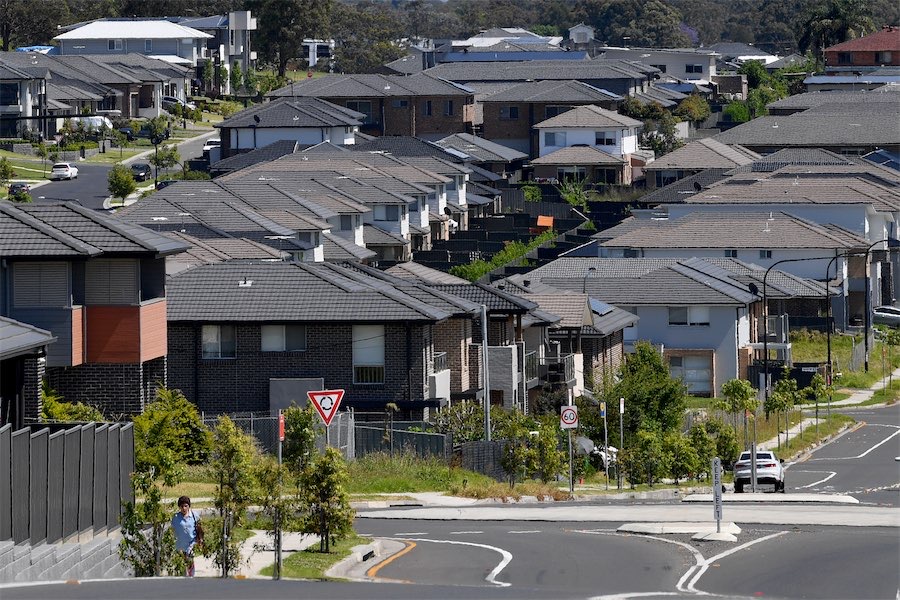
Not enough has been done to help younger generations enter the housing market since Labor was re-elected last year, the prime minister has admitted ahead of the federal budget.
As Treasurer Jim Chalmers prepares to hand down his fifth budget on Tuesday, the government is widely tipped to enact changes to negative gearing, capital gains taxes and family trusts.
Despite ruling out such changes before the 2025 federal election, Prime Minister Anthony Albanese said reform was needed make it easier for young people to enter the housing market.
“We do need to do more, and use every lever at our disposal,” he told ABC Radio on Monday.
“(Young people) continue to be entrenched without reform … for a long period of time, young people have tried to save for a home. Another year has passed since the election and not enough has changed.
“If we do change our position on any policy, we will explain why it is that that is occurring.”
Mr Albanese said delivering just promises taken to the election was not the limit of ambition for the government.
“We know people are under pressure, and the easy path is to say ‘oh well, we’ll just sit back and watch that occur’,” he said.
“The difficult decision, but the right decision, is to do the right thing with the right policies to deliver, and clearly, people are frustrated.”
It comes as the government will offer more money to states and territories as it tries to secure agreement over landmark environmental reforms, but one premier is vowing not to make it easy.
Tuesday’s federal budget will include more than $500 million in funding to implement environmental laws, which the treasurer said would help speed up approvals for housing, energy and critical minerals projects.
Passed in late 2025 after a tumultuous five-year process, the Environment Protection and Biodiversity Conservation Act promised to reduce layers of duplication where proponents had to secure approvals from both commonwealth and state governments.
The new environmental regime would reduce compliance costs and cut red tape, making it easier and faster to build, and making Australia a more attractive place in which to invest, Dr Chalmers said.
“More efficient approvals mean projects get off the ground quicker and Australians get into homes sooner,” he said.
“This is a big investment that will make our economy more productive and will help to get crucial projects going in housing, energy and critical minerals.”
But critical bilateral agreements that will give greater powers to the states to handle the assessment and approval of both layers of regulation are yet to be signed, meaning the full benefits of the reforms have not been realised.
Part of the budget boost will go to the states to fund extra staffing and resources needed to take on the extra approvals work and help convince them to sign up.
The Albanese government has already signed a memorandum of understanding with Western Australia and is optimistic about inking bilateral agreements with other states, but negotiations have stalled with Queensland.
Premier David Crisafulli continued to call on the federal government to reverse its decision to exclude oil exploration projects from access to use a fast-tracked approvals pathway under the laws.
“Until we have that dead hand of the (act) removed, the ability to really get cracking in the Taroom Trough (oil basin) will be hindered,” he told reporters on Sunday.
The Queensland and federal governments have not been in talks about a new bilateral agreement in weeks.
The federal government is warning Queensland’s decision to launch a year-long state productivity inquiry into the act could further delay the implementation of the faster approvals pathway.
News all day, every day at CityNewsQBN.com.au.




Leave a Reply