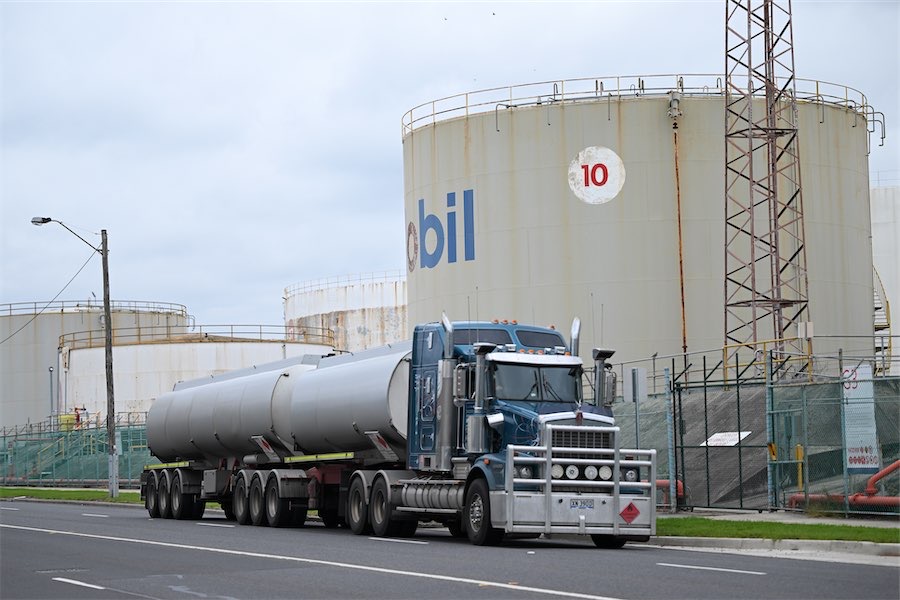
Lawyer RICHARD CALVER explains how the road transport industry is using an approved Fair Work ’emergency application’ to help it through a long period of price and supply disruption.
The Fair Work Act gives power to the Fair Work Commission to make an order to set minimum standards for parties in a road transport contractual chain, including for regulated road transport contractors and road transport employee-like workers, basically owner drivers.

In early April, the Australian government added to this power. The Fair Work Amendment (Fairer Fuel) Act 2026 was passed to help address transport operators affected by the fuel crisis caused by the conflict in the Middle East.
The Minister for Employment and Workplace Relations made a determination under this legislation that an application for the particular legal instrument called a Road Transport Contractual Chain Order (RTCCO) is an “emergency application”.
The minister can make that declaration where the minister is satisfied there is an event that has a significant national negative impact on the road transport industry, and it is in the public interest to make the determination.
The Expert Panel of the Fair Work Commission that heard from the applicants for an emergency RTCCO made an order that commences on April 21. It has far reaching effects. The central obligation is that those at the top of the chain, the “primary parties” in the contractual chain, must adjust the rate they pay to secondary parties for the performance of work in the road transport industry.
That adjustment is an amount necessary to ensure the secondary party fully recovers the increased cost of fuel caused by the latest price hikes. This same obligation applies to secondary parties where they contract another transport business down the chain.
There is also an obligation on primary parties (except for small businesses that are not road transport businesses) to ensure that secondary parties adjust pay as necessary for full cost recovery of fuel.
Reasonable steps must be taken to address that purpose. The adjustments can be in a number of ways: to the contractual rate, by way of a fuel increment or levy, or by reimbursement for the increased cost of fuel.
Mark Parry, the chair of the Australian Trucking Association said in response to the issue of the order: “The events of the weekend show that we still face a long period of price and supply disruption. Small and medium-sized trucking businesses cannot keep Australia’s freight moving at rates that do not recover their fuel costs.
“The industry’s business as usual contractual arrangements have served us well and will serve us well in the future. But they’re not working for many operators under the emergency we face.
“I urge every trucking business to read the order, talk to their financial adviser and seek the necessary rate adjustments.”
If you are in the transport chain, you should examine the way fuel costs are dealt with contractually, consider how your obligations in relation to fuel cost recovery will be affected and what “reasonable steps” you should implement to make sure other parties also meet their obligations.
Richard Calver is a specialist industrial relations lawyer with deep experience in the transport industry.
News all day, every day at CityNewsQBN.com.au.



Leave a Reply