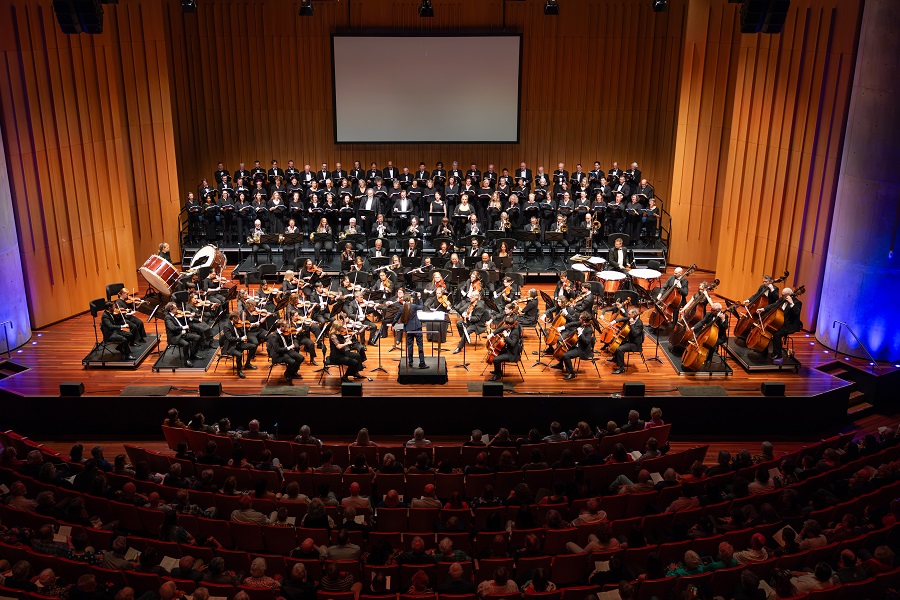
Music / Verdi’s Requiem, Canberra Symphony Orchestra. At Llewellyn Hall, November 5. Reviewed by DAVID WHITBREAD
A capacity audience held its collective breath while Jessica Cottis created an elongated silence at the conclusion of this glorious work. Then they erupted and rewarded all the performers with an extended standing ovation.
Conductor Jessica Cottis is in control. Such vast resources. Such dramatic material to work with. She gives clear direction and inspires orchestra, choir and soloists, shaping their sound. She is rewarded with impressive responsiveness.
There is even a moment in the famous Dies Irae when she crisply and decisively stopped the whole juggernaut midstream with a magic moment of silence.
Arguably, Verdi’s finest work, his Requiem exhibits all the drama of his operas for which he is justly famous. It has tunes. It is triumphant. It is delicate.
But most of all, it is colourful. Verdi employs a vast colour range to deliver the traditional Catholic Requiem Mass.
Canberra Symphony Orchestra clearly revelled in capturing those passing colours. Lustrous, rich, and shimmering.
From the opening horn solo by Robert Johnson offstage, playing Australian composer Liza Lim’s Dianna, written to celebrate the French horn’s history, from hunting calls to magpie song.
The Requiem segued with stillness and affecting warmth from the CSO strings. The enormous sound of the Dies Irae featured Veronica Bailey’s tremendous bass drum beats. And a completely wonderful moment with the trumpet section – where we were seemingly surrounded by trumpets from the gallery too.
Later an amazing high bassoon solo from Ben Hoadley with three vocal soloists. An ethereal solo from oboist Megan Pampling with high strings. A long sinuous first violin line into the Lacrimosa chorus.
The Offertory had stunning tremolos from both low and high strings and a sweet clarinet line against muted strings. Agnus Dei featured a delightful flute trio with the female soloists. Lux Aeterna a rich brass choir. Libera Me a stunning bassoon quartet.
Matching the orchestral palette with an impressive vocal palette, CSO Chorus was immaculately prepared by choirmaster Tobias Cole.
They sang with accuracy, strong clear lines and excellent diction throughout. But more than that was their dynamic control – from almost whispering warmth to the cataclysmic and thrilling Dies Irae.
That famous chorus was exciting and spectacular each time it returned. While the orchestra threatened to overpower the chorus at times, Cottis skilfully maintained balance.
The 75-strong chorus also showed nice vocal agility and tone in the demanding Sanctus.
Four visiting Australian soloists provided operatic gravitas with their impressive voices and equally impressive CVs.
Soprano Helena Dix was transcendent in Libera Me with unaccompanied chorus. One of the highlights of the entire night, this movement had sublime moments of great beauty and demonstrated her full vocal and dynamic range.
Mezzo soprano Deborah Humble shone in her Lux Aeterna solo line, but also shared a number of fantastic duets with Dix. The danger point here was the amazing unaccompanied octaves between soprano and mezzo in the Agnus Dei. The women blended their voices in true collaboration from their first pairing in Recordare.
Tenor Paul O’Neill showed his true operatic tenor tone from his solo in the Dies Irae. He seemed less certain of his lines in the vocal trios and quartets.
Bass Warwick Fyfe captured Verdi’s drama with some nice vocal acting in his solid solos.
What a magnificent event.
News all day, every day at CityNewsQBN.com.au.



Leave a Reply