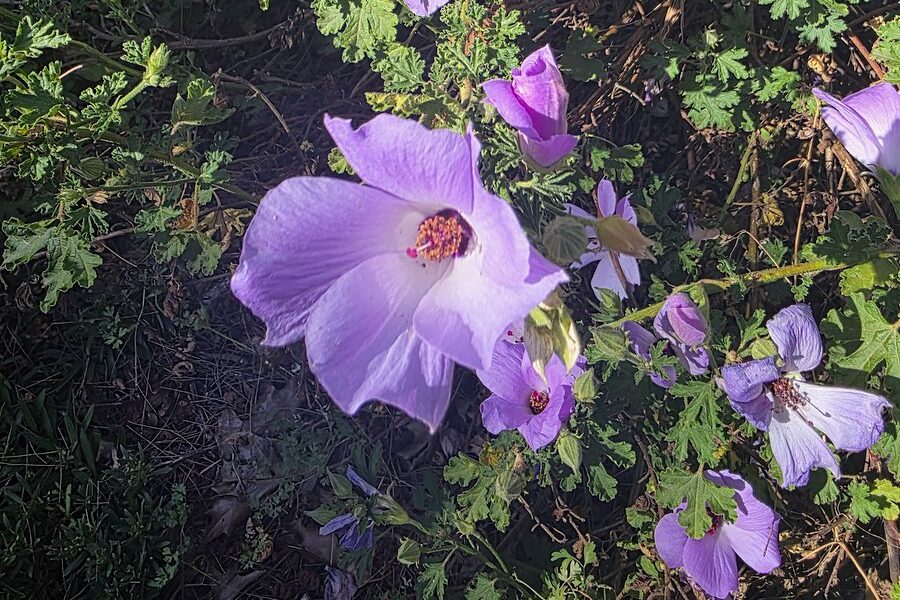
With its spectacular mauve flowers, the hardy native hibiscus brings a tropical touch to the garden from spring through to autumn, says gardening columnist JACKIE WARBURTON.
For a spectacular display of beautiful mauve flowers from spring through to autumn, the native hibiscus is a tough, low-maintenance shrub that brings a tropical touch to the garden.

Alyogyne huegelii Misty grows to about 1.5 metres high and wide, preferring plenty of sun and good drainage. It is frost-tolerant, but its majestic mauve flowers are the main attraction.
Native to Australia and a member of the Malvaceae family, Alyogyne is commonly known as native hibiscus. Once established, it is a tough, hardy plant, producing an abundance of tropical-looking flowers with fluffy petals.
A light clip after flowering will keep the shrub compact and encourage more flowers the following year.
This low-maintenance plant is equally happy in a container or small courtyard. It attracts bees, butterflies and other beneficial insects, while another valuable use is erosion and bank control.
Anyone looking for a larger Alyogyne, A. hakeifolia is an excellent choice. Growing two to three metres tall and 1.5 metres wide, it produces yellow or white flowers and enjoys the same growing conditions as Misty.
Its foliage is much more linear, while the plant can tolerate hotter, drier conditions. The highly sought-after white form, Elle Marie, grows to two metres tall and is an outstanding, long-flowering shrub.
THE next few weeks are the last opportunity to get many of the main vegetable crops into the ground and growing strongly.
Once temperatures exceed 30C, young seedlings and small plants can struggle in the heat. Growth may be stunted, while vegetables can develop a bitter taste. Keeping plants growing quickly will help maintain their sweetness.
Corn can be sown directly into the soil now, preferably in square formations rather than straight rows. Corn is wind-pollinated rather than insect-pollinated, so planting it close together improves the chances of successful pollination.
To make the most of space in the vegetable patch, consider the traditional Three Sisters companion planting method, using corn, climbing beans, squash and pumpkins.
These crops grow in harmony, with the corn providing a natural trellis for the climbing beans. The beans add nitrogen to the soil as a natural fertiliser, while squash and pumpkins spread across the ground, acting as a living mulch to suppress weeds and retain moisture.
This system can maximise yields in a small space, although good soil preparation is essential.

AS the weather warms, keep all garden beds mulched, covering the root zones of plants. Drip irrigation should also be covered with mulch to work efficiently.
Any mulch is beneficial, but materials that break down readily will improve the soil. Sugarcane mulch or small bark can be useful in confined spaces, while larger gardens can accommodate coarser bark.
When mulching, water the soil first, apply the mulch, then water again to help lock moisture into the ground.
Liquid-feed vegetables every fortnight to encourage strong, rapid growth.
ANOTHER attractive Australian native is the wonga wonga vine (Pandorea pandorana), a fast-growing evergreen climber.
Although it is not invasive, this vigorous twining plant will quickly grow over other shrubs. It is also ideal for covering fences or as a softer climber growing through trees.
When in flower, it produces masses of pendulous, bell-shaped blooms in shades of cream, yellow or, most strikingly, pure white.
Wonga wonga vine grows well in full sun or part shade. It is not particularly fussy about soil conditions, provided drainage is good.
Jottings
- Prune Banksia roses after flowering.
- Tie up berry canes to prevent suckering.
- Cover cherry trees before fruit ripens.
- Keep watering fruit trees.
News all day, every day at CityNewsQBN.com.au.




Leave a Reply