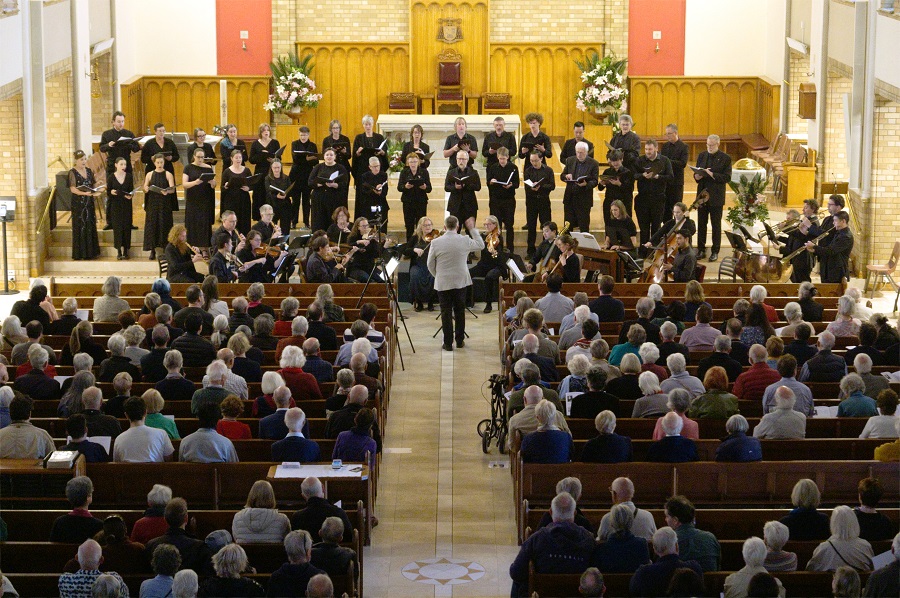
Music / Easter Oratorio, Canberra Bach Ensemble. At St Christopher’s Cathedral, April 19. Reviewed by HELEN MUSA.
Students of Western theatre history are taught that the revival of stage drama, following its suppression by the Catholic Church, actually began within the church itself, with small scenes depicting the visitation of three women to Christ’s empty sepulchre and the realisation that he had risen.
It is this very incident, as narrated in the Gospel According to St Luke, that forms the subject of the Canberra Bach Ensemble’s presentation of Bach’s Easter Oratorio BWV 249 and his church cantata BWV 31, originally written for the first day of Easter.
For anyone attending a Bach performance and fearing unrelieved solemnity, there are always more than a few surprises, as, given the joyful subject matter, the rhythms are often lilting and even jaunty.
Director Andrew Koll and orchestra leader Stephen Freeman, in this instance, augmented the ensemble’s considerable forces with several visiting instrumentalists in the trombone and oboe sections, ensuring a sustained sense of excitement.
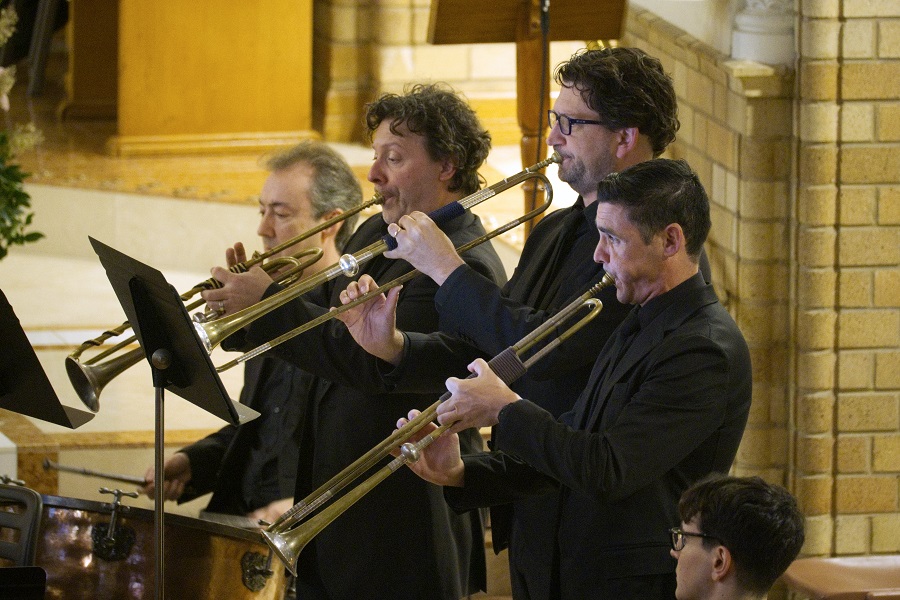
The main recital was prefaced by the motet Ich weiß, daß mein Erlöser lebet (“I know that my Redeemer lives”) by German composer Heinrich Schütz, setting an optimistic tone for the performance. What followed, however, was much more dramatic, as the opening chorus of the oratorio, Kommt, eilet und laufet, proclaimed that Christ had risen, accompanied spectacularly by brass and timpani.
Designed to celebrate the Resurrection, and quite unlike the St John and St Matthew Passions, this work focuses on the emotional reactions of Mary Magdalene, Mary Jacobe, Peter, and John upon finding the empty tomb.
Using the vocal talents of Greta Claringbould (soprano), Maartje Sevenster (alto), Timothy Reynolds (tenor) and Andrew Fysh (bass), the performance explored the differing personalities of the visitors to the sepulchre. Mary Magdalene, for instance, is portrayed as taking aim at Peter and John for their lukewarm response, though both eventually reveal their inner torment at the suffering of Jesus.
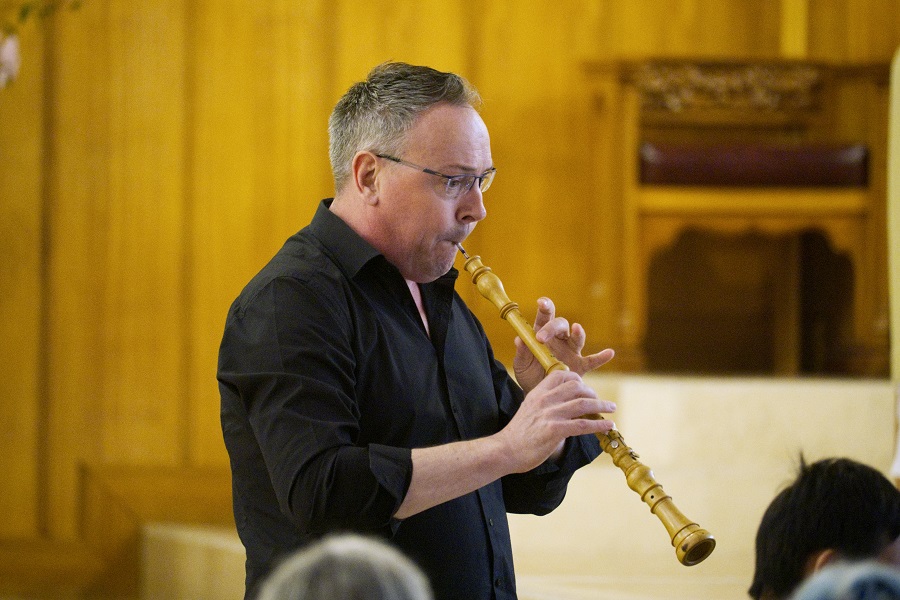
Among these responses, Reynolds’ penetrating tenor reflected on the comfort offered by the sight of Jesus’s unwrapped cloth at the sepulchre, while Sevenster’s alto aria, Tell me where I may find Jesus?, picked up the pace, powerfully supported by Aaron Reichelt’s oboe.
A particularly memorable moment came in Claringbould’s soprano aria, Seele, deine Spezereien from the Easter Oratorio BWV 249, supported and interwoven with Dante Costa’s performance of the extended flauto traverso solo, adding grace and fluidity to her lines.
The oratorio concluded with the chorus clearly enjoying themselves as they sang, “You heavens, open your magnificent archways,” supported by triumphant brass.
The second half of the concert, Der Himmel lacht! Die Erde jubilieret (BWV 31), is known for its dramatic variation, opening with the exultant chorus “Heaven laughs! Earth exults,” followed by a powerful and confident bass recitative from Andrew Fysh and a lilting bass aria.
The cantata then took a more solemn turn with an urgent aria by Reynolds, followed by a soprano recitative by Claringbould, supported by oboe in the background, reflecting the deep joy of the Resurrection. Even the final chorale, “Thus I go away to Jesus,” was not overly buoyant.
For that reason, after receiving due applause, Koll returned to the victorious concluding chorale of Part One, providing the concert with a rousing encore.
News all day, every day at CityNewsQBN.com.au.


Leave a Reply