
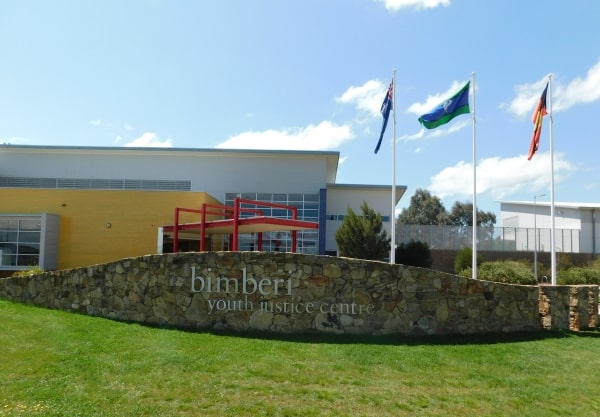
“It is deeply troubling that in the last five years the number of Aboriginal children being incarcerated in Canberra has almost tripled and is now the highest rate in Australia,” writes indigenous advocate JULIE TONGS.
The annual Productivity Commission Reports on Government Services have now been released.

The series of detailed reports reveal, once again, the extremely poor outcomes being delivered, across the board, by the ACT Government.
This is particularly the case in respect of the local Aboriginal and Torres Strait Islander community of which the most disturbing data set is that which details the number of young people aged 10-17 years in detention, by indigenous status.
The commission has included in the relevant tables the rate per 10,000 young people who were Aboriginal and Torres Strait Islander and the rate of those that were non-indigenous.
Here are the rates of detention of Aboriginal and non-Aboriginal children in the ACT over the past five years:
2020-21: Indigenous rate 18, fourth highest in Australia. Non-indigenous rate, 1.4.
2021-22: Indigenous rate 19.7, fourth highest in Australia. Non-indigenous rate, 1.7.
2022-23: Indigenous rate 28.6, fourth highest in Australia. Non-indigenous rate, 2.3.
2023-24: Indigenous rate 39.2, third highest in Australia. Non-indigenous rate was 2.7.
2024-25: Indigenous rate 51.9, the highest rate in Australia. Non-indigenous rate, 3.5.
While the data speaks for itself in terms of the dramatic over-representation of Aboriginal children in touch with the criminal justice system and imprisoned, it is deeply troubling that in the last five years the number of Aboriginal children being incarcerated in Canberra has almost tripled and is now the highest rate in Australia.
I am concerned that this latest raft of Productivity Commission reports has not received the degree of coverage in local media that I believe is warranted.
It is in light of that concern that I have prepared the following summaries of a few of the latest outcomes reported on by the commission.
The ACT health system
The latest Productivity Commission report on health raises very concerning questions about the ACT health system.
Under the heading “Affordability of primary healthcare services” (Page 26), the commission reports that not only did the ACT have the highest rate in Australia of people (about 12 per cent) who did not, in 2024-25 see a GP due to cost but also had the highest rate of people (about 10 per cent) who did not get prescription medication when needed, due to cost.
Thank goodness we’re such a progressive community that, hopefully, none of our fellow citizens who cannot afford to see a doctor or buy medication have died as a result.
Justice
About 40 per cent of adults discharged from prison in the ACT in 2022-23 returned to prison or corrective services within two years.
The number of deaths from apparent unnatural causes for Aboriginal and Torres Strait Islander people in prison across Australia increased to a 10-year high of 10 in 2024-25.
Nationally, in 2023-24, 97.2 per cent of Magistrate Court decisions resulted in a guilty outcome for defendants – a figure unchanged over the past four years.
Interestingly, however, in the ACT in 2023-24 only about 65 per cent of Magistrates Court decisions resulted in a guilty outcome, that is about 30 per cent fewer than the national average.
This raises the question of what possible explanation can there be for why ACT Policing got it wrong so often and charged so many apparently innocent people with a crime that the court determined they did not commit.
It is perhaps relevant to the arrest/conviction rate in the ACT that only about 50 per cent of Canberrans, when asked if they agreed with the statement that: “Police treat people fairly and equally,” said that they agreed.
Police services
In 2024-25, the ACT had the lowest real recurrent expenditure in Australia on policing, per person, of the population.
Crude imprisonment rate
The national age-standardised imprisonment rate per 100,000 Aboriginal and Torres Strait Islander people in 2024-25 was 2112.6 compared with a corresponding rate of 146 for the non-indigenous population. The national imprisonment rate for Aboriginal and Torres Strait Islander populations is, therefore 14.5 times greater than that for the non-indigenous population.
Community corrections
The national crude community corrections rate in 2024-25 for the Aboriginal and Torres Strait Islander population was 3440 offenders per 100,000 relevant adult population compared with 281 offenders for the non-indigenous population. In other words, the national Aboriginal and Torres Strait Islander community corrections rate is 12.2 times greater times greater than the non-indigenous population.
Youth diversion
The ACT had, in 2024-25, by far the lowest rate of diversion of Aboriginal and Torres Strait Islander youth offenders from court to a non-court action with only 7.6 per cent of Aboriginal youth offenders so diverted. For comparison sake, the diversion rate of indigenous youth in WA, Queensland, NT and Victoria was more than 50 per cent.
Julie Tongs is CEO of the Winnunga Nimmityjah Aboriginal Health and Community Services.
News all day, every day at CityNewsQBN.com.au.



Leave a Reply