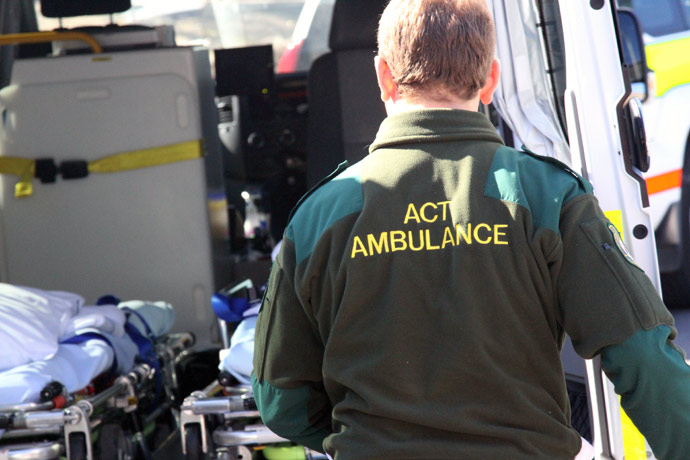
ACT ambulance stations were forced to close 42 times in the first three months of 2026, as the service recorded its busiest start to a year and staffing pressures continued to intensify.
The first quarterly report from the ACT Ambulance Service (ACTAS) shows Dickson station was closed 33 times, Fyshwick eight times and Woden once over the 90-day period.
The closures coincided with record demand, with close to 20,000 Triple Zero (000) calls received in the first quarter — the highest ever recorded for the service since reporting began.
According to ACTAS, a significant proportion of calls did not require an ambulance response, with many callers instead being supported by clinicians over the phone.
Despite the surge in demand, the service reports performance has remained steady. Median response times continue to meet targets, and 90 per cent of Priority 1, life-threatening cases received an ambulance within 20 minutes.
ACT Ambulance Service Chief Officer David Dutton said the organisation was operating under sustained pressure.
“The ACT Ambulance Service continues to work under increasing demand,” Mr Dutton said.
“Despite the pressures, our call takers and paramedics consistently demonstrate professionalism and compassion, delivering care in challenging circumstances.”
He said transparency around demand and capacity was important for both staff and the community.
“Our people deserve honesty about the realities of the job. Being transparent about demand and capacity is part of how we support our workforce and build trust with the community.”
However, workforce data released in the same report highlights ongoing strain behind the scenes.
ACTAS operated 116 shifts below minimum crewing levels over the quarter, including 90 night shifts, while staff worked more than 7400 hours of overtime.
Additional information provided to the Opposition shows the service is relying on an average of 401 overtime hours per week, costing more than $323,000 per month.
Shadow Minister for Police, Fire and Emergency Services Deborah Morris said the figures reflect a system under pressure.
“Our paramedics are going above and beyond to deliver lifesaving care to the community, but they can’t do it on their own,” Ms Morris said.
“This is a system being held together by overtime, goodwill and exhausted frontline staff.”
Ms Morris said workforce impacts were compounding, with staff movement and wellbeing indicators trending in the wrong direction.
Despite the recruitment of 22 paramedics, 13 have since left the service, resulting in a net gain of just nine staff.
Since the current roster was introduced in April 2024, ACTAS has recorded 54 workers’ compensation claims, including 20 psychological claims. In the current financial year to March, there have also been 55 activations of the Employee Assistance Program — already exceeding totals from the previous two years.
“These figures tell a very serious story,” Ms Morris said.
“Station closures, below-minimum crewing, escalating overtime, workers compensation claims and growing use of the Employee Assistance Program all point to the same conclusion: our emergency services are under serious pressure.”
News all day, every day at CityNewsQBN.com.au.




Leave a Reply