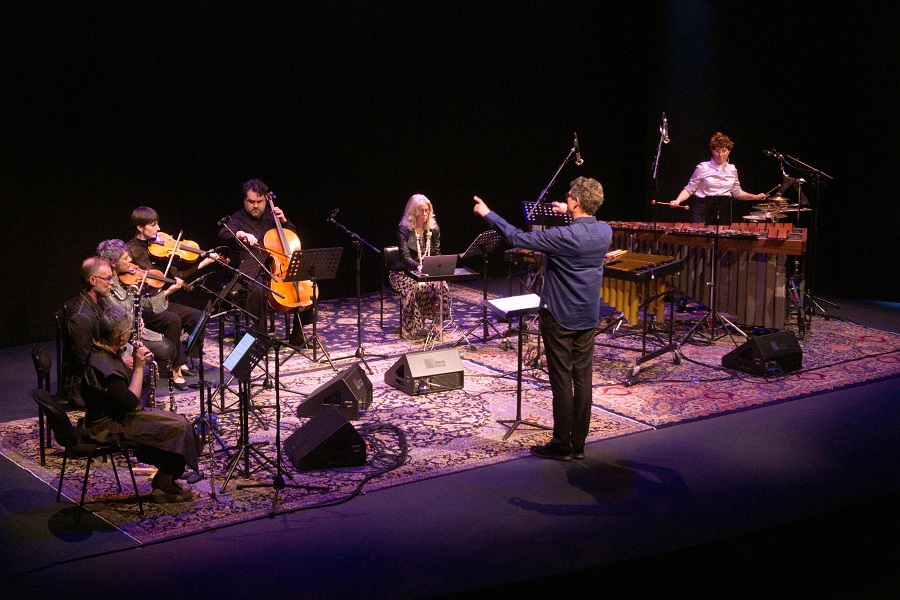
Music / The Oracle, Ensemble Offspring. At The Street, June 5. Reviewed by HELEN MUSA.
A suite of compositions that look to the elemental forces of nature to prophesy the future lies at the heart of Ensemble Offspring’s “biggest and boldest program of the season”, also advertised as its “most subtle and surreal”.
A slightly reduced ensemble from that heard in Sydney filled The Street Theatre with sounds from beneath the sea, beneath the ground and from ancient cultures.
Oracle began mysteriously with Christopher Cerrone’s How to Breathe Underwater. Vocalisations by Veronique Serret immediately conjured the elemental nature of human respiration, joined by the muted trumpet of Arkie Moore, Jason Noble on bass clarinet and Blair Harris on cello. Just as enigmatically, this short piece ended with trumpet and bass clarinet fading to silence.
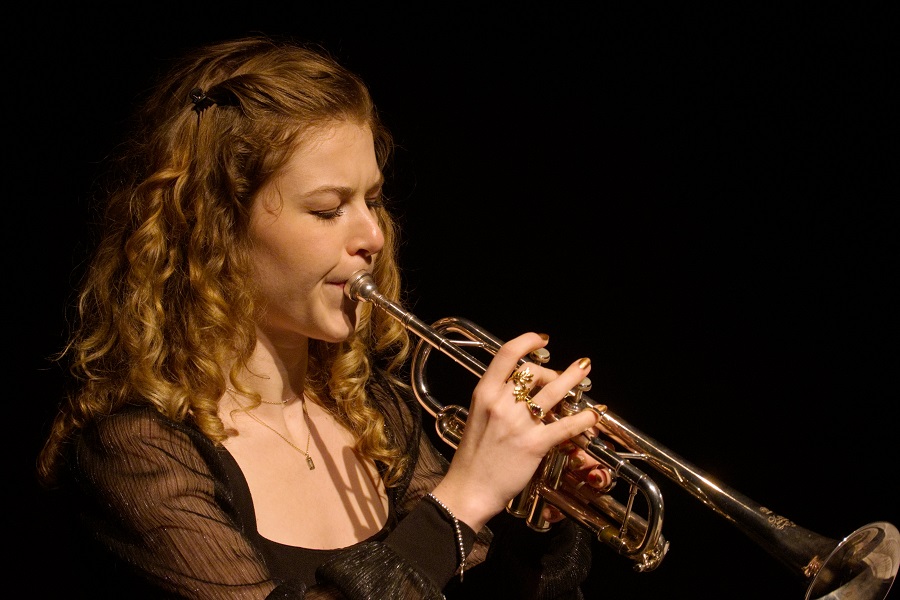
Artistic director of Ensemble Offspring Claire Edwardes then introduced us to Arkie Moore, (rare for them to have a brass player, she explained) as the company’s Hatched Emerging Performer. She went on to perform three short movements from American composer Robert Henderson’s fiendishly difficult Variation Movements for solo trumpet, featuring wild changes of key and sequences of notes while maintaining the perfect purity of her instrument.
The program featured two works by famed composer and ANU School of Music graduate Kate Moore, now living in the Netherlands. The first, Joyful Melodies, an Ensemble Offspring commission, offered Edwardes the chance to explore all the possibilities of the solo vibraphone in a work full of mesmerising repetitions. Ostensibly a work of great joy, as Edwardes couldn’t help remarking to the audience, much of it was written in a minor key.
The centrepiece of the evening was a much longer work by British composer Tansy Davies, who was there with her husband Clark Rundell, who conducted the full ensemble in the Australian premiere of Lost Science, co-commissioned by Ensemble Offspring.
Here, instead of Edwardes at the vibraphone, it was percussionist Niki Johnson who performed on the marimba. This composition began with an almost murky exploration of the underworld, perhaps caves, described by the company as the voice of Earth: secrets of her deep time structure and of the pains of transformation. Punctuated by harsh sounds from the strings, flute and bass clarinet, it was dramatic and almost pictorial at first, but moved to its quiet conclusion in an almost somnambulistic manner.
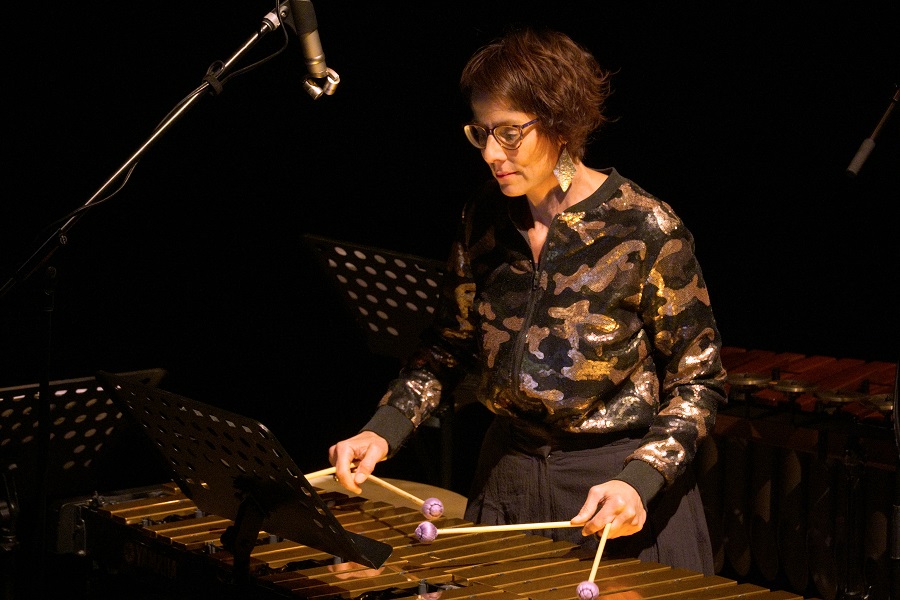
In a clever piece of programming, the final work was Moore’s 2025 composition Rose of Roses, another Australian premiere and Ensemble Offspring commission. This saw Edwardes back at the vibraphone and occasionally taking to the side drums as Moore’s work conjured up 13th-century Spain with a modern-day cantiga, Rose of Roses, which Edwardes told us was the tale of a nightingale who, pierced by a rose thorn, sings itself to death.
This final work allowed clarinet, flute, vibraphone and, most particularly, Serret, lushly romantic on violin, to run the full gamut from lyrical passages to jig-like dances, bringing this concert of contemporary music to a pleasing conclusion.
News all day, every day at CityNewsQBN.com.au.



Leave a Reply