
“It is an open question whether the Legislative Assembly will be able to hold the government to account and force it to return to the fundamentals of public financial management.” JON STANHOPE & KHALID AHMED return to excesses of the fiscally failing ACT Government.
The array of excuses regularly proffered by the ACT Government to justify the precarious state of the ACT’s finances are wrong, irrelevant or immaterial.
Notably, the independent expert engaged by the Select Committee conducting the inquiry into finances, Saul Eslake, in his interim report, concludes that the deficit totalling more than $7 billion was due to the ACT Government’s policy decisions.
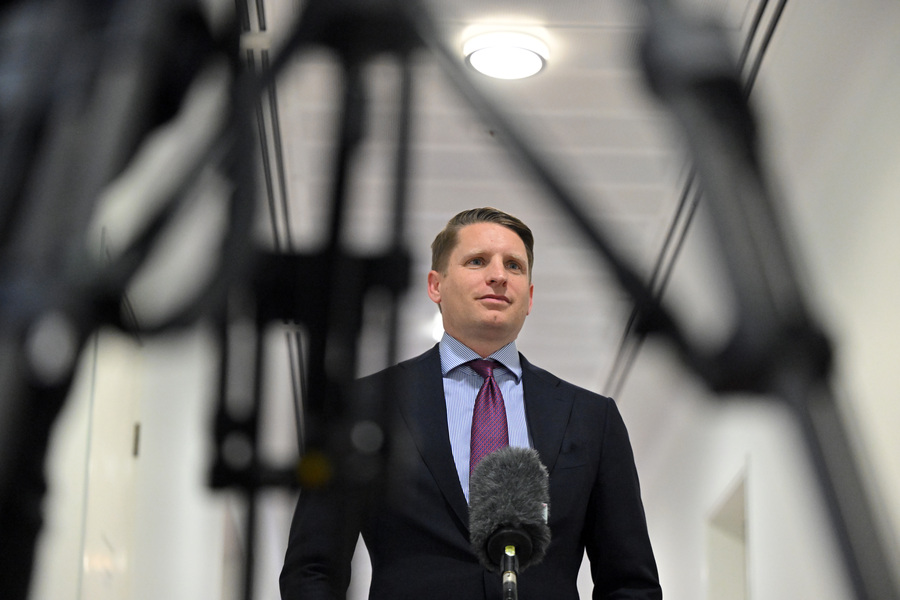
While Eslake is yet to provide specific recommendations on how best to repair the ACT’s parlous finances, the response from Chief Minister Andrew Barr was predictable but deeply disappointing, reportedly saying there are no “simple solutions”.
This pearl of wisdom follows his earlier comment when the inquiry was established, that there are no “silver bullets”, which prompted us to ask if the government will be either inclined or equipped to act on any recommendations proffered by the inquiry.
Barr’s latest comments also raise the question whether he has confidence in his Treasurer Chris Steel’s claims that he has put the budget on track to surplus, albeit and as always, in a few years’ time.
We have noted that earlier ACT administrations, both Liberal and Labor, were able to maintain balanced or surplus budgets while delivering above-average services without excessive taxation or debt.
The approach adopted by those administrations was, without taking away any credit from them, standard textbook public financial management that would be expected of any responsible government.

However, it is important to stress, and not understate, the significance of the task at hand for the current government. Eslake observed in his interim report that this is not the first time the ACT has been here, citing the 2007 Strategic and Functional Review.
In fact, the ACT has never been “here” before. The major financial reforms undertaken previously (by Carnell-Humphries and Stanhope-Gallagher governments) were under quite different circumstances.
Following self-government, and after an initial period of instability, the Liberal government under Carnell needed to transition the ACT to state-like funding arrangements.
The magnitude of the budget adjustment required was significant, being almost at par with the current deficit. However, there was very little debt transferred to the ACT and the Territory inherited excellent infrastructure and high-quality services.
It is to Carnell’s credit that she opted for a fundamental and far-reaching change in financial management – first of its kind in Australia – rather than looking for simple solutions. The financial management legislation that requires budgets be on a sustainable basis and plans to address any departure from prudent financial management were developed under that reform.
The 2007 Strategic and Functional Review stated, as indeed referenced by Eslake, that there was [at that time] no crisis, but that there would be one if action was not taken. In 2006, the operating budget was in surplus ($120 million) and net debt was negative (-$344 million).
The budget papers and the review document reveal that the major restructure of government functions and departments at that time was aimed at addressing the challenges of ageing, increasing demand for healthcare, and a major renewal and investment in public education system. The health budget was also put on a realistic but sustainable path with certainty for clinical managers to plan for services and workforce.

The previous reforms and restructures, of course significant and challenging at the time, were different. Neither of them had to deal with the Amphisbaena (Greek mythology’s twin-headed, winged viper) of deficit and debt. To add to the problems currently being experienced, the monster has devoured fiscal capacity and degraded essential public services.
For example, in the 2013-14 budget, health growth was funded at a rate of 6.5 per cent. In the 2016-17 budget, this had been cut down to 4.1 per cent. What may appear to be a small “shave”, compounded year on year to more than $200 million before the pandemic.
It was no accident, therefore, that waiting times had deteriorated to the worst in the country, and the health system did not have adequate capacity to deal with the demands of the pandemic.
In the 2025-26 budget, the health portfolio is funded at a growth rate of just 1.5 per cent – a cut in real terms every year over the next four years when, in fact, the budget needs to be boosted.
It is to the credit of frontline professionals that the system has functioned under such constraints, but undoubtedly with significant personal costs to them
We could similarly go in detail through other areas of the budget, for example, education, public housing, corrections, social services. However, a broad-brush picture of the challenge is already clear:
- A structural deficit with $1.4 billion (15 per cent of the budget) in deficit in the last audited statements.
- $9.2 billion in net debt, forecast to grow to $13 billion.
- A $500 million interest bill, forecast to grow to $1 billion consuming 10 per cent of the budget.
- Underfunding of key services, both in the base as well as in growth across the budget horizon.
- A high tax system with some of the highest taxation levels in the country on some bases.
- No fiscal space with the forward estimates not fully reflecting the parametric drivers of costs, and some of the key policy commitments, implying unidentified savings or cuts to services.
There are three points worth highlighting:
- There is no room to move. The 1995 reform had scope to sharpen some comfortable budgets – inefficient expenditures – under a previous federal departmental administration. The 2007 reform could refocus and boost expenditure in health and education because of the budget capacity as well as revenue options, since the Territory was a below-average taxing jurisdiction at that time.
- Reform is unlikely to be driven internally. Both the previous reforms were responses to external factors – transition from self-government in 1995; and the emerging challenges from demographic shift and technological changes and a change in standards in 2007. The existing problem is of the current government’s own making, and as such there are natural barriers to confronting it and working out solutions. These are quite evident in the government blaming everything else, from the global financial crisis to the federal government, the Grants Commission, the pandemic and even Canberrans for daring to seek to access services.
- It is uncertain if the reform or change could be driven externally. The normal accountability mechanisms in a democracy have failed while the problem has festered for well over three terms. We have previously noted a permanent majority – whether in a power-sharing coalition or guaranteed support on the floor of the Assembly – and capacity in the mainstream media as relevant factors.
We acknowledge that the current inquiry by the Select Committee could not have been established without the support of the Greens. However, their objectives are unclear, ie, whether they are seeking to put the Territory’s finances and services on a sustainable footing, or simply seeking some fiscal space for their obsession project.
Either way, it is ironic that the predecessors of the current Greens were instrumental in introducing the principle of prudent financial management. Clearly, under any real commitment to that principle, they would abandon that passion project in favour of higher-priority services.
As such, it is an open question whether or to what extent the Legislative Assembly will be able to hold the current government to account and force it to return to the fundamentals of public financial management. In short: where will the leadership come from?
But here’s a positive suggestion: the government could commit in the budget papers to some tangible and specific financial objectives and targets, such as, “no new borrowings for the General Government Sector” or “maintaining the Net Debt to Revenue Ratio within the range of AAA rated jurisdictions” or “achieve an operating surplus by [year]”. Such were the targets adopted by previous administrations, which were abandoned by the current government in favour of vague statements more suited to a media release or re-election pamphlet.
A good start would be to explain how these targets will be achieved, and to deliver on those targets.
Jon Stanhope is a former chief minister of the ACT and Dr Khalid Ahmed a former senior ACT Treasury official.
News all day, every day at CityNewsQBN.com.au.



Leave a Reply