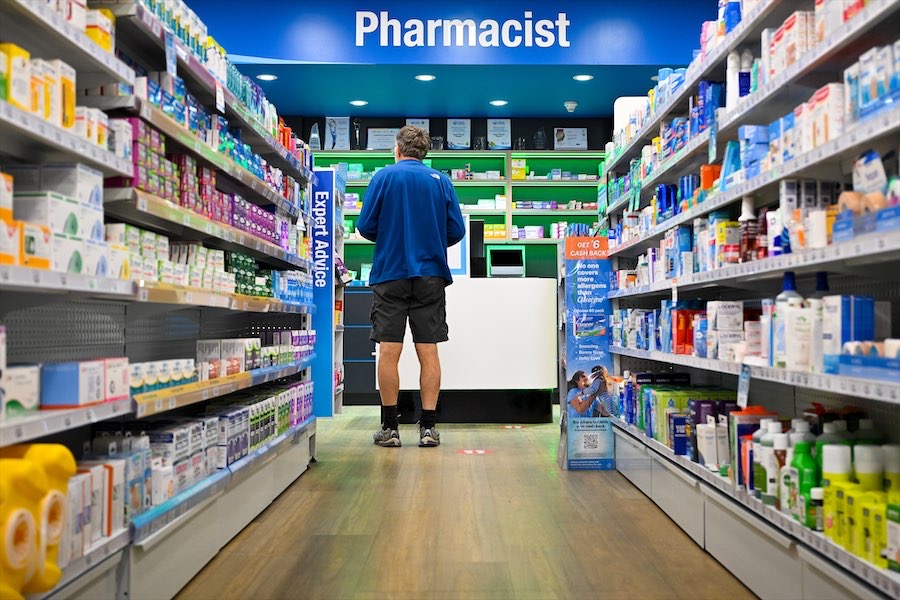
Since July 2022, Canberrans have filled more than 5.3 million cheaper PBS scripts as a result of renewed co-payment policies. The estimated patient savings total almost $46 million, say EMMA McBRIDE & ANDREW LEIGH.
At a pharmacy in Belconnen or Tuggeranong, the moment is easy to miss. A card is tapped, a receipt prints, and the price is lower than it would have been a few years ago.
For many Canberrans, that smaller number helps. It makes the household budget stretch further and ensures people are more likely to take their prescribed medications.
The Pharmaceutical Benefits Scheme has long been one of Australia’s great social institutions. Since 1948, it has ensured that life-saving and life-improving medicines are available at an affordable price, with the Commonwealth covering most of the cost. New medicines are assessed independently for clinical effectiveness and value for money before being listed. The PBS is a compact between government, taxpayers, patients and industry: rigorous evaluation in exchange for broad access.
Over time, co-payments edged upwards. By 2022, the general patient co-payment had reached $42.50 per script. For someone managing high blood pressure or diabetes, those costs accumulate quickly. For families with children on regular medication, they multiply. When out-of-pocket prices rise, adherence drops. Missed scripts lead to avoidable complications and greater pressure on the health system.
That is why the recent reforms matter.
Our government reduced the general co-payment to $30 in 2023, and from 1 January this year to $25 – the lowest level in two decades. We introduced 60-day prescriptions for eligible medicines, allowing patients with stable conditions to receive two months’ supply for a single co-payment. We lowered the Safety Net threshold so households qualify for additional discounts sooner. We froze co-payments during 2025 to shield patients from indexation at a time of cost pressure.
These are structural changes to the way patients interact with the PBS. They reflect the insight that affordability shapes behaviour. When medicines are priced within reach, people take them as prescribed. That keeps blood sugar stable, blood pressure controlled, and asthma managed. It keeps people active in their jobs and communities. It eases demand on hospitals and supports productivity.
Since July 2022, Canberrans have filled more than 5.3 million cheaper PBS scripts as a result of these policies. The estimated patient savings total almost $46 million.
Almost $46 million remaining in local households over three and a half years strengthens the Canberra economy. It supports cafés in Kingston, bookstores in Civic and small businesses across Gungahlin. More importantly, it supports the health of the people who walk through their doors.
The PBS rests on a straightforward proposition: access to essential medicines should depend on clinical need rather than the size of a bank balance. By lowering co-payments, we have reinforced that principle for a new generation.
The price on a pharmacy receipt may look modest. Across millions of scripts in the ACT alone, it adds up to something substantial – better health, stronger household finances and a fairer health system.
Emma McBride is the Assistant Minister for Mental Health and Suicide Prevention, and Assistant Minister for Rural and Regional Health. Andrew Leigh is the Assistant Minister for Productivity, Competition, Charities and Treasury.
News all day, every day at CityNewsQBN.com.au.


Leave a Reply