A frank interview by a Soviet reporter with Australian historian Manning Clark received its most thoughtful scrutiny neither in Australia nor in the Soviet Union in an intriguing twist of events, write STEPHEN HOLT & ROSS FITZGERALD.
During the last years of the USSR, a journalist named Alexei Ivkin reported on developments in Australia for its official newspaper Pravda.
Embodying the spirit of openness (“glasnost”) then sweeping his nation, Ivkin was a refreshing contrast to the dour apparatchiks usually sent out to cover Australia for Soviet readers.
The positive vibe generated by Ivkin was well to the fore when the Australian Jewish Times featured a profile of him in the spring of 1989. The article noted Ivkin’s freely expressed hostility to antisemitic groups in Russia, which was seen as consistent with his utter decency. He had left the blight of doctrinal bigotry behind him.
Aged 43, Ivkin was then living in a plush apartment in the upmarket Sydney suburb of Edgecliff. He drove a Mercedes and wore expensive clothes. Soviet leader Mikhail Gorbachev, he was quoted as saying, was “a wise man” who governed a nation which was “fed up with so-called ideology.”
A few weeks later Ivkin received further sympathetic coverage, this time in the Communist Party of Australia’ s newspaper Tribune. The newspaper asked the Pravda journalist to name the best and worst events of the 1980s, a decade that was then fast expiring.
In response he referred to the disastrous Chernobyl nuclear accident and China’s Tiananmen Square massacre in his list of the decade’s worst news events. His list of the happiest events for him in the 1980s included Gorbachev’s policy of “perestroika” (restructuring) and an official visit to Moscow in 1987 by Australia’s ALP Prime Minister Bob Hawke.
On a more personal level, Ivkin’s list of pleasing events also included his meeting and interview with Prof Manning Clark, whose six-volume A History of Australia, had been completed in 1987 and who the Russian scribe regarded as “one of the best Australian historians”.
The interview in question had appeared in Pravda on October 6 1989. Its purpose was to enlist Clark’s help in answering a basic question for Soviet readers: What were the inhabitants of this remote continent really like?
Ivkin began the interview by opining that Clark was Australia’s “most famous and most popular historian”. The nation’s “cultural horizon” would, he wrote, be “unthinkable” without him. Ivkin saw him as someone whose observations could help outsiders come to grips with this faraway nation’s psyche.
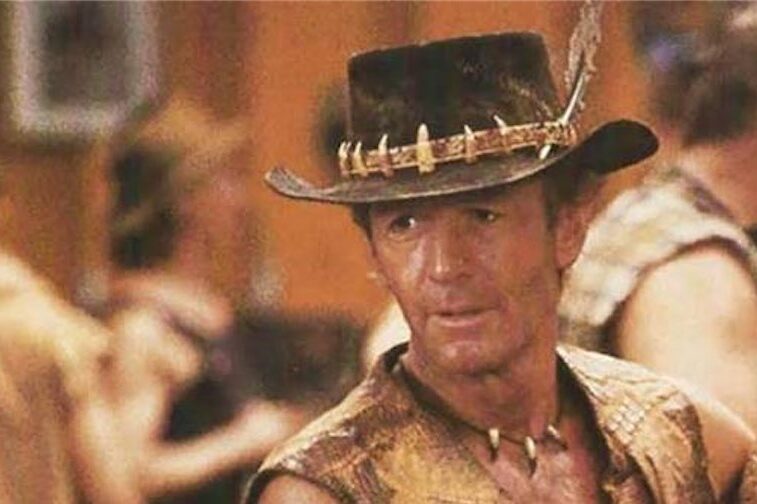
However, Ivkin also knew that Clark, certainly beyond its shores, was not the most widely known Australian. That honour undoubtedly now belonged to Crocodile Dundee, as depicted on movie screens by Paul Hogan.
The film was a great hit among Ivkin’s Soviet compatriots. They lapped up its bushwackery when a Russian-dubbed version began appearing in cinemas across the Soviet Union in 1988.
So Ivkin kicked off the interview by asking Clark for his opinion on how far the hero in the film was truly a typical Australian.
Clark responded by pointing out that Mick Dundee represented a national myth as opposed to everyday reality. Dundee embodied the common Australian notion that true Australians were a tough, no-nonsense people who drank and wisecracked a lot, and lived and worked in harsh remote communities.
But such a view, Clark noted, was an invention. The typical Australian lived and worked in cities, not in the wilderness. Crocodile Dundee’s lifestyle was a dream fostered by urban Australia. Only on weekends did some Aussies manage to get into untamed nature and even then usually by car with a trailer and a comfortable tent.
Ivkin then asked Clark about the Australian nation’s supposed inferiority complex and why important reality was always seen as elsewhere.
The historian noted that he had grown up at a time when Australia was an outpost of the British Empire. Its wars were our wars. World War II changed things. Australia had to turn to the US.
The old emotional bondage weakened. Peace brought industrialisation and mass immigration. Australia was a more diverse and confident nation. The old self-doubt that once haunted Clark began to lift.
The interviewer then referred to the view that, on the whole, Australians were actually quite a conservative people.
Clark readily agreed. He noted that Australians had long-cherished ideals of fairness and equality. Yet genuine revolutionary movements had yet and seemed unlikely ever to appear. Australians tended to prefer caution and continuity to upheaval. They were a nation of homeowners, small proprietors and aspiring middle-class families. They were conservative at the ballot box.
Ivkin turned the conversation to the position of Australia’s indigenous population. Clark’s tone grew grave. After generations of neglect, he noted, there was now a sense of guilt at the damage done to a rich Indigenous culture and a desire to preserve what had been nearly destroyed. Instead of confrontation and guilt Clark yearned instead for a “serious dialogue” to begin: “The history of relations between whites and Aboriginal people will be viewed not as a struggle between the innocent and the villains, but as a tragedy – one of those tragedies which, if faced honestly, can inspire good deeds and add wisdom and mutual understanding.”
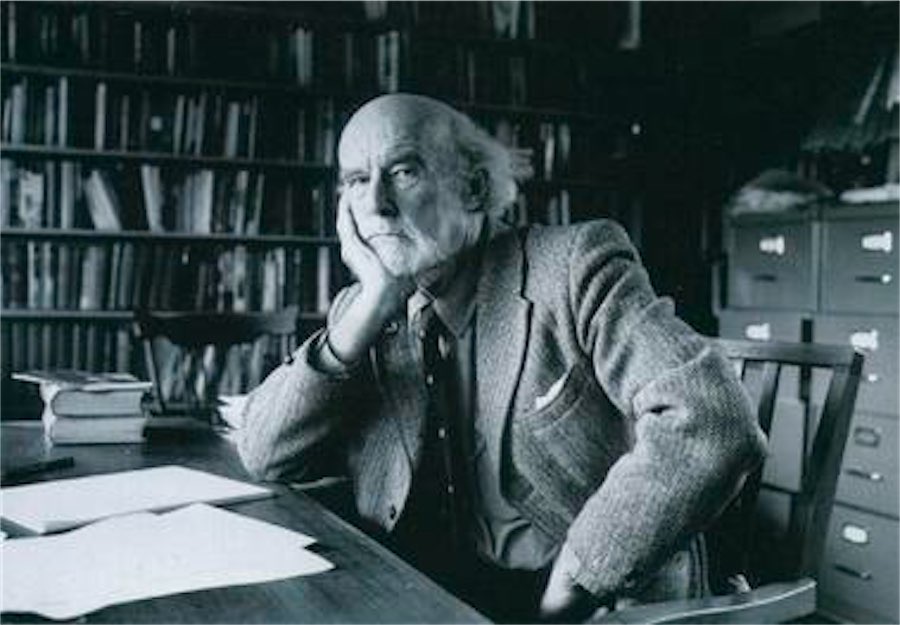
The interview concluded with Ivkin asking Clark to describe Australia as it stood at the end of the 1980s. The historian had no simple answer. He knew that the old British myths of his youth were gone and yet some of the nation’s intelligentsia and opinion leaders seemed to have lost faith in the ability to create a radically better kind of society. In contrast, Manning Clark had hope: “Everything is being questioned. There is nothing sacred, no taboos.”
Given the dramatic collapse of some of the 20th century’s great comforting myths, Clark considered that Australians at the end of the decade had the chance to become wiser and clear sighted.
Ivkin’s interview did not go unnoticed, although in an intriguing twist of events, Pravda’s 820-word Russian language article on Clark received its most thoughtful scrutiny neither in Australia – where the language barrier in a pre-autotranslate era was a force to be reckoned with – nor in the Soviet Union.
Instead, this occurred in distant California. Located in Stanford, the California Institute of International Studies analysed the Soviet press in its World Affairs Report.
During 1989, this prestigious publication documented the shifts in Soviet propaganda and policy as the Iron Curtain began to collapse.
Clark’s Pravda interview fell within the remit of the World Affairs Report. The journal ticked off Clark’s key points and extrapolated from them. Middle-class respectability meant that Australia had never been fertile ground for revolutionaries. Promoting small pro-Soviet groups in such a society was a waste of time.
New and more enlightened attitudes meant that indigenous communities could not be counted on to become radicalised. Faith in old doctrinaire creeds was dying in Australia. All these key points, which were canvassed in the Clark interview, cut across old-style Soviet orthodoxy: “It is not clear if Clark realised that he was telling the reporter that Moscow’s old propaganda and intrigue had produced no results”.
The World Affairs Report highlighted that Ivkin had reproduced all of Clark’s observations without comment. There was no attempt to uphold Moscow’s old party line.
It simply did not occur to the World Affairs Report in 1989 that Manning Clark, by appearing in Pravda, might somehow on that account be a Soviet stooge.
The claim, published in Brisbane’s Courier-Mail newspaper in 1996, that Clark must have been an “agent of influence” working for the USSR during the Cold War carried no weight in Stanford and the World Affairs Report.
It seems a shame that, in Australia, a similar adherence to the complex truths about Manning Clark and the Soviet Union in the late 1980s had not prevailed here as well as in sunny California.
Dr Stephen Holt is a Canberra-based historian and biographer. Ross Fitzgerald AM is emeritus professor of history and politics at Griffith University.
News all day, every day at CityNewsQBN.com.au.




Leave a Reply