
How often do you reach for your phone without knowing why? This sponsored post looks at a new Canberra-built app designed to interrupt the habit and give that time back to real life.
The phone comes out while waiting for the kettle to boil. Then again during a television ad. In bed before sleep. While waiting for a friend. Sometimes within minutes of waking up.
Often, there’s no particular reason for picking it up.
That almost unconscious reach for a screen is exactly what Canberra sisters Tanja and Alannah Catalinac want Australians to think about.
And rather than simply talking about the problem, they decided to build something to interrupt it.
The sisters are the creators of Pivot: IRL, a new Australian app built around a refreshingly simple idea: instead of merely measuring how much time we’ve spent on our screens, Pivot helps us decide what we’d rather be doing with that time.
Now live on Android and Apple, Pivot will officially celebrate its launch in Canberra on Wednesday, August 26.
At the heart of the app is a small but deliberate interruption.
When habit tells someone to scroll, Pivot creates a moment to choose.
That choice doesn’t have to be productive or ambitious. It might be walking the dog, stretching, gardening, reading a few pages of a book, calling someone you care about, trying a hobby, spending time with family, or simply doing nothing for a few minutes.
It’s less about declaring war on technology and more about putting technology back in its place.
From frontline careers to changing screen habits
Tanja and Alannah didn’t come to technology through the traditional start-up route.
Between them, the Canberra sisters bring more than 18 years of law-enforcement leadership and 16 years of health-sector experience.
Their frontline careers gave them insight into how people behave under pressure, fatigue and stress—and the habits we fall back on when our mental resources are running low.
That understanding helped shape Pivot around behaviour rather than guilt.
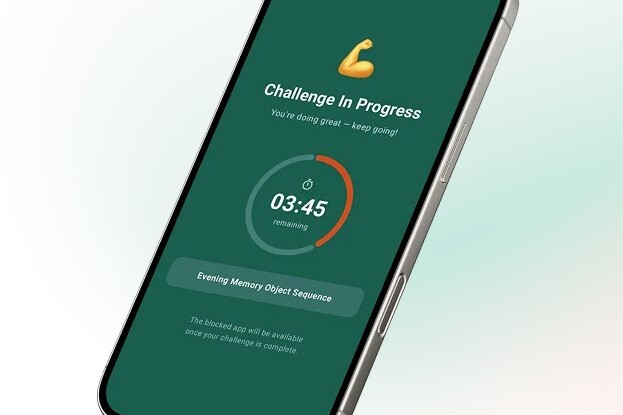
The app isn’t designed to shame people for using their phones. Instead, it creates a pause between the impulse to scroll and the decision about what happens next.
Pivot also allows users to create a “Pivot Team” of chosen friends and family, helping turn time away from screens into opportunities for genuine connection.
The same principle can be applied at work, during study and around sleep. Users can create focused periods followed by deliberate analogue resets, helping establish clearer boundaries between technology, concentration, rest and real life.
The question isn’t how much. It’s why.
For Tanja and Alannah, success isn’t about convincing people to abandon smartphones or social media.
Phones remain essential tools for communication, work, navigation, entertainment and everyday life.
Instead, Pivot asks a different question:
Are you using your phone because you chose to or because reaching for it has become automatic?
The distinction may seem small.
But across a day, a week or a year, those tiny moments can add up to a surprising amount of life.
Time for the hobby that disappeared somewhere along the way.
Time for exercise.
Another chapter of a book.
A conversation without a notification interrupting it.
A walk outside.
Or simply the increasingly rare experience of allowing a quiet moment to remain quiet.
For the Canberra sisters, that is ultimately what Pivot is about.
Real life is happening while we’re scrolling.
And perhaps the answer isn’t putting the phone down forever.
It’s putting it down long enough to remember what you wanted to be doing before you picked it up.

Scrolling and neuroscience
Pivot: IRL will officially celebrate its launch on Wednesday, August 26, from 5pm to 8pm at Ovolo Canberra.
Joining Tanja and Alannah will be award-winning neuroscientist, bestselling author and international keynote speaker Dr Mark Williams OAM, clinical and forensic psychologist Lia McInnes and forensic victimologist Amber McKinley (Ph.D., MCJ, BA LibS), who together, will provide expert commentary on habitual screen use, attention and developing healthier relationships with technology.
The event will bring together technology, neuroscience and a very human question increasingly relevant to Australian families, workplaces and communities:
When your hand reaches for your phone, who made the decision—you, or the habit?
News all day, every day at CityNewsQBN.com.au.





Leave a Reply