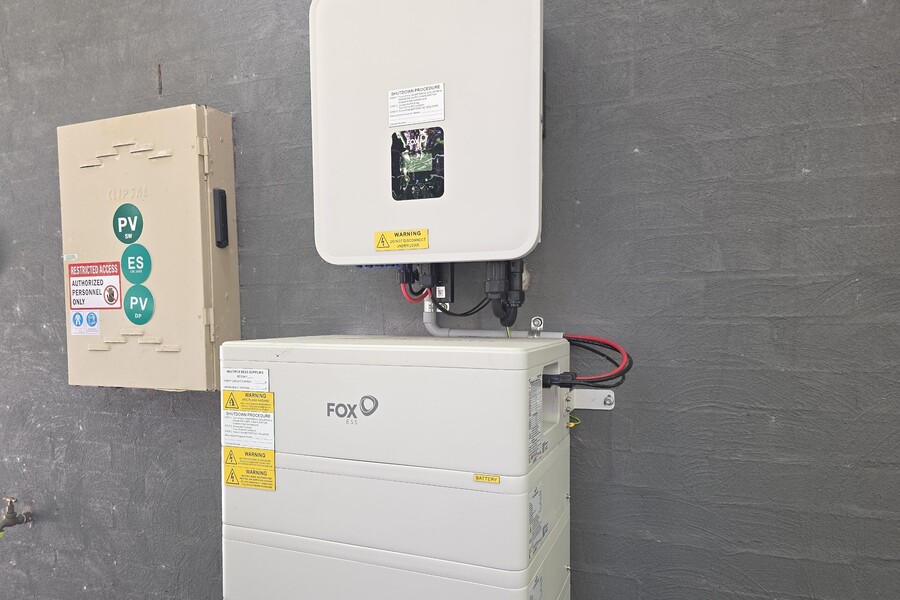
Canberra households weighing up a home battery have less than three months before the federal discount shrinks. Here is what it is worth, how the ACT loan fits in, and what to check on a quote. This is a sponsored post.
Canberra households thinking about a home battery have a deadline worth knowing about.
The federal battery discount steps down on 1 January, and the figure that applies is set by the date the battery is installed, not the date it is quoted.
For a typical 13.5 kWh battery, the discount is about $3400 today. From 1 January it falls by roughly $550, and it keeps falling every six months until the program closes at the end of 2030.
What the federal discount is worth
The Cheaper Home Batteries Program takes the discount off the price at install. It is paid through small technology certificates, so most households see it as a line on the quote, not a cash payment later.
| Battery size | Discount now | From 1 January |
| 10 kWh | about $2,500 | about $2,100 |
| 13.5 kWh | about $3,400 | about $2,850 |
| 20 kWh | about $4,400 | about $3,700 |
To qualify, the battery has to be paired with rooftop solar, new or existing, be on the approved product list and be installed by an accredited installer. There is no income test. The full rate applies to the first 14 kWh of usable capacity and a reduced rate above that, so very large batteries earn less per kWh. There is a fuller breakdown of how the federal solar battery rebate is worked out and how it steps down through to 2030.
What the ACT adds
The ACT does not pay a separate cash rebate on batteries. What it offers is finance. The Sustainable Household Scheme lends ACT homeowners $2000 to $20,000 for a battery and other electric upgrades, repaid over up to 10 years, with no establishment fees and no penalty for paying it off early.
The loan launched interest free, which is how many Canberrans still remember it. It now carries 3 per cent interest for most households. Homeowners who used the scheme before, or applied before 1 July 2026, are capped at $15,000 across the life of the scheme. Applicants attend a free one hour online workshop and pass the lender’s credit check.
Concession card holders have a better deal through the Home Energy Support Program: a zero interest loan of up to $10,000, plus rebates of up to $5000 on eligible upgrades. It is worth confirming which products that rebate covers before booking.
Put together, a 13.5 kWh battery quoted at about $13,500 comes down to roughly $10,100 after the federal discount. Financed at 3 per cent over 10 years, that is about $98 a month. The guide to the solar battery rebate for Canberra homes has worked examples for 10, 13.5 and 20 kWh batteries, with repayments over five and 10 years.
Why a battery suits a Canberra home
Evening is when a battery earns its keep. Evoenergy’s time of use network tariffs make the evening peak the dearest power of the day, while solar sent back to the grid at midday earns only a few cents per kWh. A battery stores that midday solar and uses it after dark.
Canberra’s move off gas adds to the case. The ACT stopped new gas connections in December 2023 and plans to move homes off gas by 2045, so more households are heating with reverse cycle systems on cold winter evenings, exactly when stored solar is most useful.
Cold is the catch. Canberra nights regularly fall below zero between May and September, and many lithium iron phosphate batteries slow or stop charging near 0°C. Ask the installer where the battery will go and check the model’s rated operating temperature. A garage or sheltered wall is a better spot than an exposed wall on the south side of the house.
Living over the border
Queanbeyan, Jerrabomberra and Googong are in New South Wales, so the ACT loan does not apply there. Those homes get the same federal discount, plus the NSW incentive for connecting a battery to a virtual power plant, with recent provider offers around $40 per usable kWh. That adds about $400 to $540 for a typical 10 to 13.5 kWh battery. The NSW battery rebate changed in July, and solar is no longer needed to claim the NSW payment.
Before you sign
• Get quotes now. The discount is set by install date, and installers tend to get busier in the weeks before a step down. A battery quoted in December but installed in January gets the lower figure.
• Check the quote. The discount should be shown as its own line, worked out on usable capacity, not the nominal size on the box.
• Check the paperwork. Confirm the battery is on the approved product list and the installer is accredited.
• Sort finance first. If you plan to use the ACT loan, get it approved before locking in an install date.
Not sure what applies at your address? Energy Rebate Check has a free postcode checker that lists the battery and energy upgrade rebates that may apply to your home.
News all day, every day at CityNewsQBN.com.au.




Leave a Reply