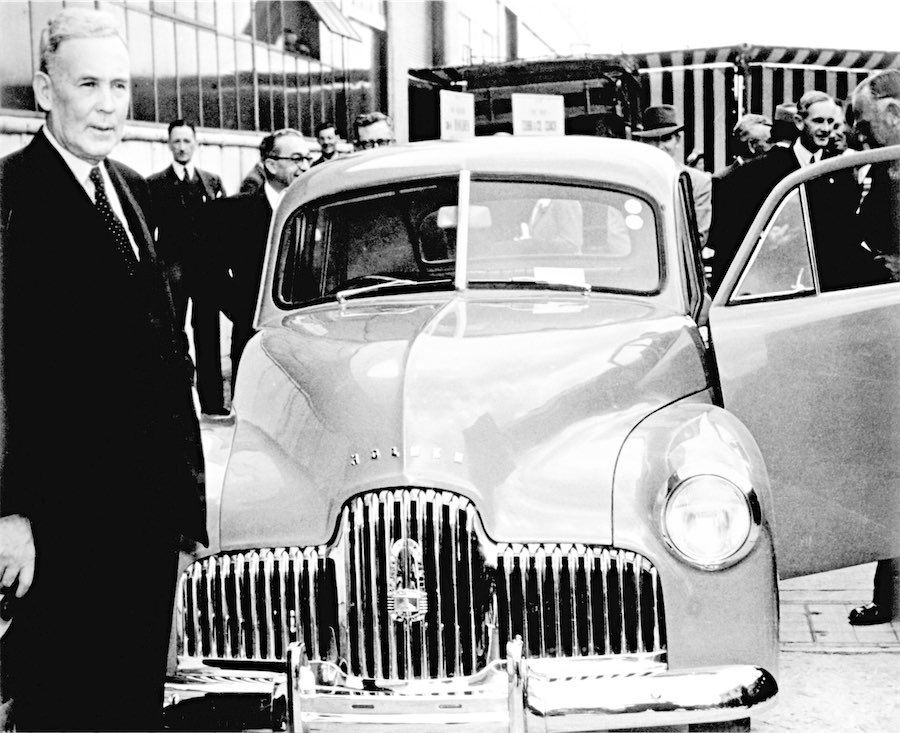
Public reaction to Australia’s first locally made car in 1948 was extraordinary. Now an aptly titled exhibition at the National Archives, Rear Vision: the Holden Collection, brings to life the memories and stories of GMH, reports HELEN MUSA.
“We love football, meat pies, kangaroos and Holden cars,” went the famous advertising jingle from the 1970s.
Small matter that it was a rip-off from the American jingle, “Baseball, hot dogs, apple pie and Chevrolet”, it took off here among a populace who probably didn’t know or care that the same company – General Motors – owned both Holden and Chevrolet.
Historically, public reaction to Australia’s first locally made car in 1948 was extraordinary. Around 18,000 people reportedly signed up to buy the car sight unseen and at the height of Holden’s popularity, the EH Holden became the fastest-selling Australian car ever, with more than 250,000 sold in 18 months.
Now an aptly titled exhibition at the National Archives of Australia, Rear Vision: the Holden Collection, brings to life the memories and stories of General Motors Holden.
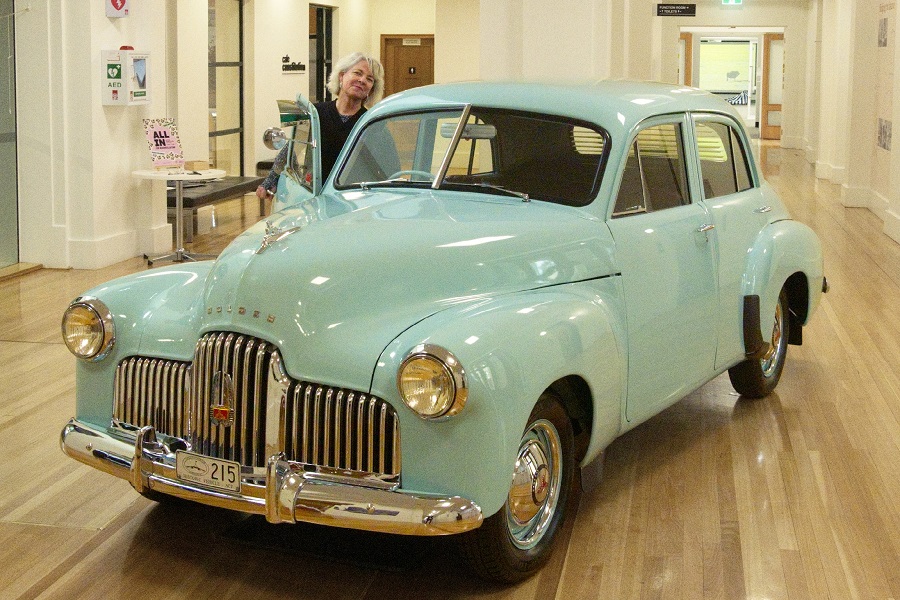
As visitors walk in the door of the archives, they will be confronted by a large 48-215 (FX) Holden, the property of Canberra Classic Holden Club members June and Tony Pryce, who painstakingly restored it in original duck-egg blue tones sourced from period colours.
When I catch up with NAA curator Anna Edmundson, I learn that the show, developed originally by the State Library of South Australia with the University of Adelaide, has been augmented in Canberra with patent records, advertising, industrial relations files and material relating to women workers’ campaigns for equal pay, all from the Archives’ collection.
Bookended by the first and last engines Holden produced – yes, the actual engines – Rear Vision traces the company’s journey from a 19th century Adelaide saddlery, through military production during World War II, the creation of Australia’s own car and finally the company’s closure in 2017.
Inside the show are Monaro transmission components, custom paint and trim samples, fibreglass moulds, glasswork, Lego model cars and the original bronze lion statue from the entrance to the Elizabeth assembly plant.

And for those feeling nostalgic, there will even be photo opportunities inviting visitors to place themselves back into the “good old days” behind the wheel of a cardboard FX.
I find that although American-owned, Holden quickly became synonymous with Australian nationalism and indeed the names “Boomerang” and “Woomera” were touted for the original car, though they settled on the more commonplace 48-215, quickly known as the FX and later superseded by the famous FJ.
Later models, however, did adopt names drawn from Aboriginal languages: Torana meaning “to fly”, Monaro meaning “high plains” and Camira meaning “wind”.
The exhibition explores Holden’s place in Australian cultural memory.
“We’ve all got a picture in our minds of grandma near a Holden with a Hills Hoist in the background,” Edmundson says.
There is material relating to artist Albert Namatjira, who spent his first tax return on a green Holden truck, and to Jimmy Barnes, who worked at the Elizabeth plant in SA after migrating from Glasgow.
Barnes would go on to perform Shutting Down Our Town, written by Troy Cassar-Daley, at a farewell party for retrenched workers when the Elizabeth factory closed in October 2017.
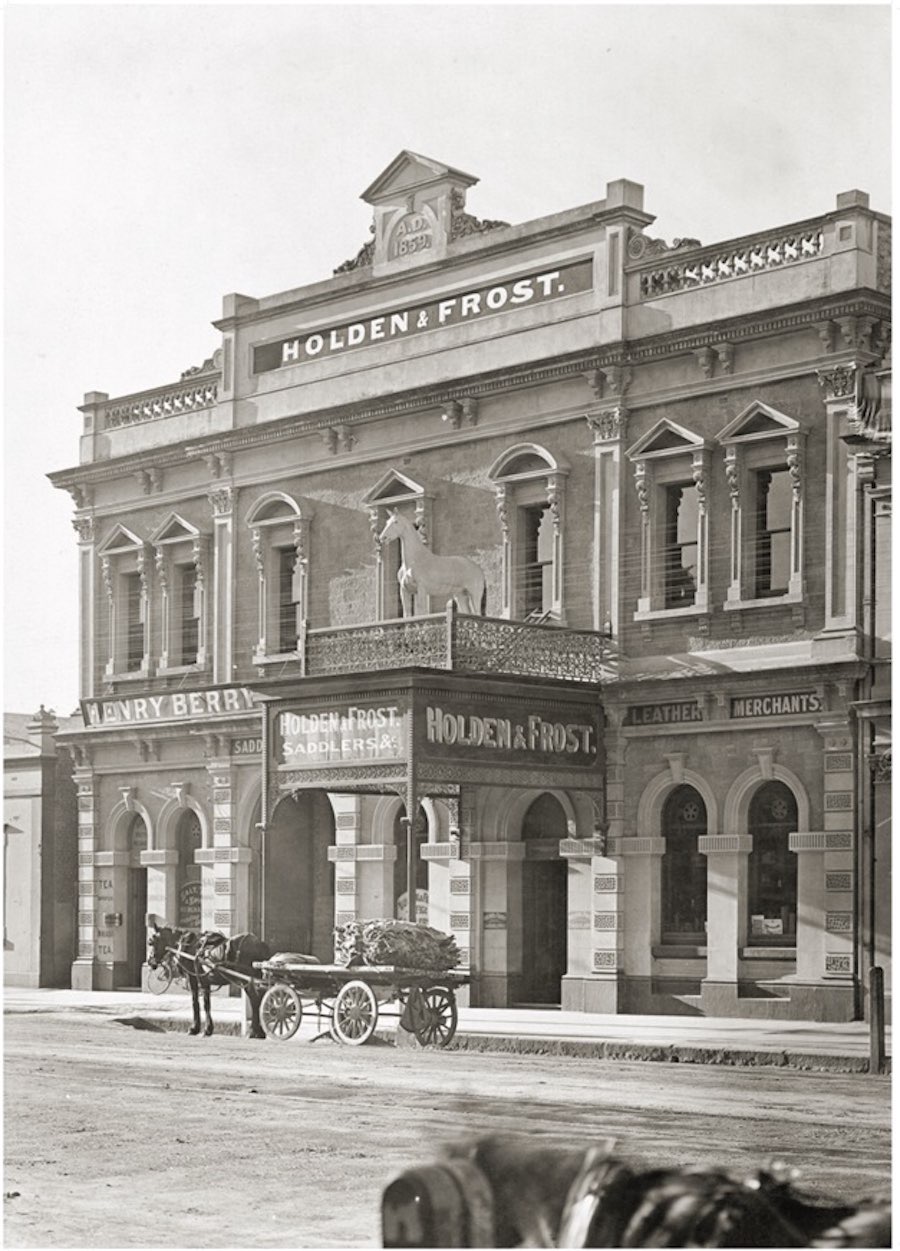
The story began in 1856 when James Alexander Holden, a talented inventor as Edmundson points out, established a saddlery business in Adelaide that expanded into carriage trim, leather seats and carriage bodies before moving into early car-body production mounted on to imported Chevrolet chassis and engines. Little known is that in the 1920s Holden also supplied bodies for Melbourne’s W-Class trams.
When it merged with General Motors in 1931, the company retained enough autonomy to develop vehicles adapted to Australian conditions.
The exhibition argues that Holden’s real industrial transformation came during World War II when it shifted into military manufacturing, producing aircraft engines, anti-tank guns, artillery shells, bombs and military equipment.
Among the wartime objects on show is the Gipsy Major engine that powered Tiger Moth aircraft, the first Australian-built Holden engine, contrasted with the company’s final 2017 vehicle, the VF Commodore SS-V Redline, later purchased for $750,000 by a former Holden employee.

Pride of place is also given to the Beaufort Bomber program, especially photographs showing the women working on the bomber production.
Edmundson says that around 35 per cent of people working on the Beaufort were women, though they had to strike to demand equal pay with men after intervention by the Women’s Employment Board.
The exhibition also stresses the multicultural make-up of the workforce, while another section examines the devastation wrought on trades communities after the company’s collapse.
Ultimately, Edmundson says, Rear Visions is less about the physicality of the car than the stories of people.
Rear Vision: the Holden Collection, National Archives of Australia, daily, until October 11. Free.
News all day, every day at CityNewsQBN.com.au.


Leave a Reply