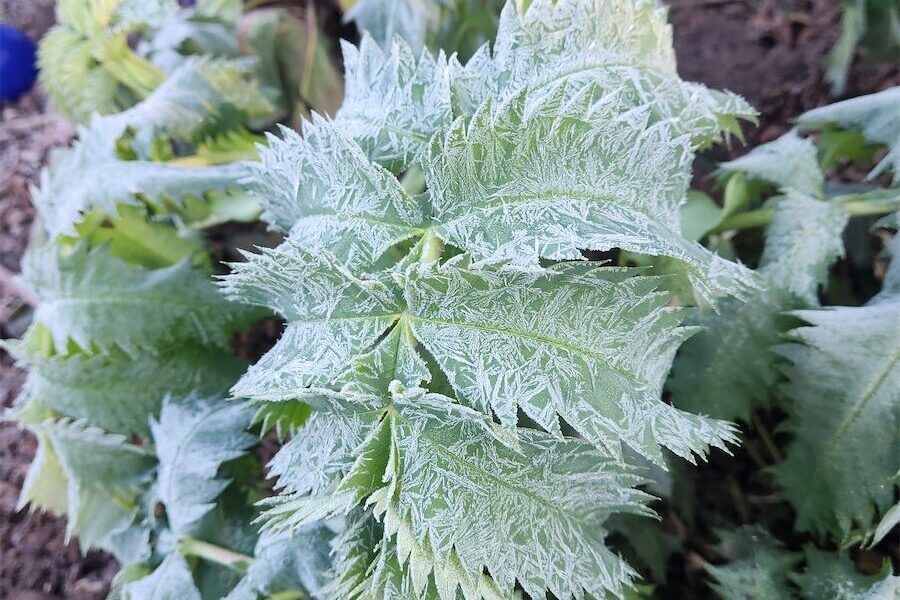
Gardeners can prepare plants for frost by choosing suitable varieties, improving microclimates, mulching well and adjusting care for indoor plants through the colder months, writes gardening columnist JACKIE WARBURTON.
As the first frosts for the season are here, now’s the time to prepare plants for winter and protect them as much as possible from being “burnt”.

Some potted plants can be placed under cover or brought indoors. Plants in the ground should suit the conditions where they are grown.
Frost-hardy plants cope with severe winters, including heavy frost, snow and long chill periods. Frost-tolerant plants handle only light frost once mature and dislike prolonged freezing.
Understanding frost tolerance improves success, especially with vegetables. Spinach, carrots and other root crops have high frost tolerance. Peas, radishes and lettuces tolerate only light frost. This knowledge helps determine planting positions and what needs protection.
Frost hollows can be improved by adding evergreen hedges, walls or small trees to redirect cold air and create a useful microclimate. Planting beneath trees can also offer protection.
MULCHING is important in winter as it reduces soil temperature fluctuation and plant stress. There are many mulch options, some better than others. Apply mulch about 75mm thick. Chunkier materials last longer and allow water to penetrate the soil. Water the ground first, then mulch, then water again to lock in moisture.

THERE are few indoor plants suited to cold, outdoor winters. While many enjoy summer outside, they should be brought indoors for winter. Watering can be tricky, as plants become fussy if conditions are not right. Keep them about 20cm from windows with indirect light. Use tepid water no more than once a week.
Anthurium andraeanum, or flamingo flower, is a good choice for beginners. It has glossy leaves and grows in low light. It can be displayed in a small pot or in water with pebbles. Once it outgrows its container, divide and repot.
Keeping indoor plants in smaller pots makes them easier to manage and move through the seasons. Use liquid feed in cooler months, then a growth fertiliser in warmer weather.
Pot plants before winter and give them extra care to encourage strong growth. An open potting mix works best; a blend of potting mix and orchard mix in equal parts is effective. A more open mix reduces fungus gnats and whitefly but requires more frequent watering.
IN the vegetable patch, remove spent summer crops, chop them finely and add to compost. Keep fallow beds weed-free and lightly mulched with organic material.
Jottings
- Leave spent foliage on perennials through winter for habitat.
- Keep garlic weed free and sprinkle a little blood and bone.
- Turn compost and add water and organic matter.
- Dead rose for more flowering before winter.
News all day, every day at CityNewsQBN.com.au.




Leave a Reply