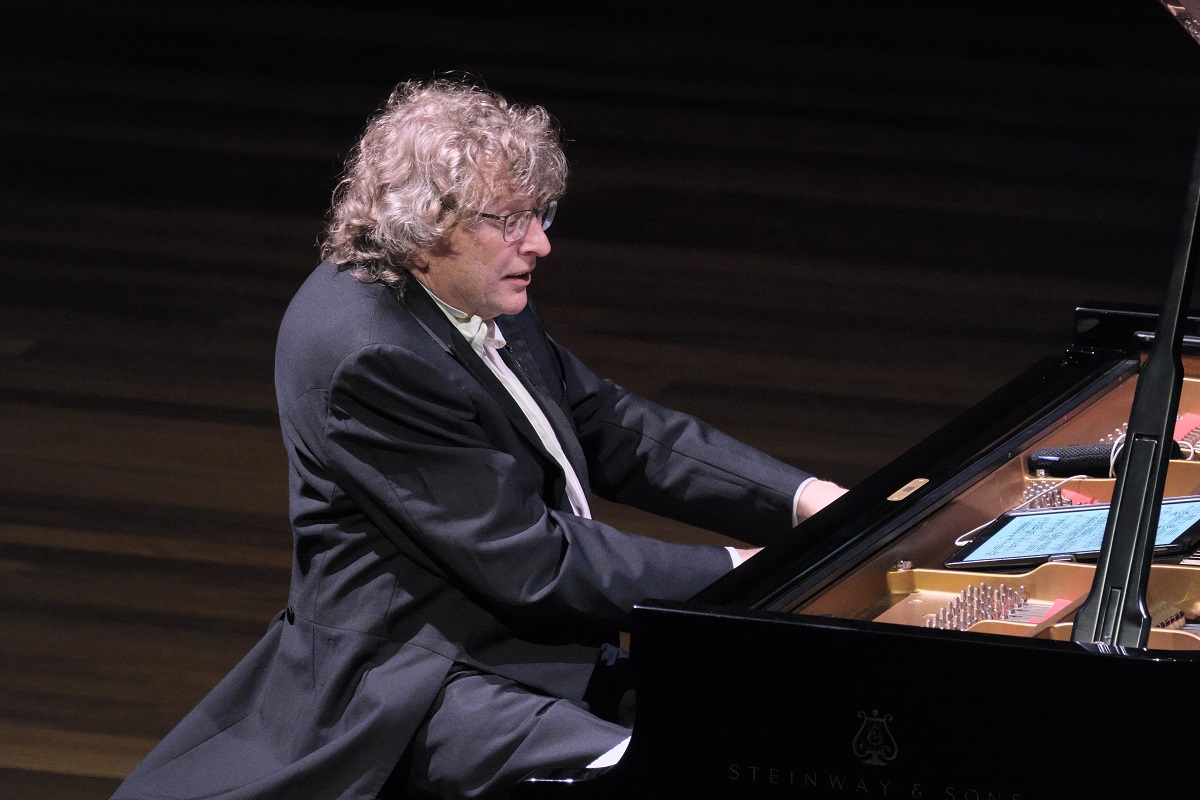
Music / Chopin Nocturnes, Piers Lane. At Snow Concert Hall, October 29. Reviewed by NICK HORN
Frédéric Chopin’s Nocturnes are a foundation of the romantic repertoire.
Presenting an ambitious program covering all 21 of these compositions, acclaimed Australian pianist Piers Lane, in an eye-catching light-blue velvet jacket, delivered a fine performance drawing out the individual character of each work.
Lane also gave an engaging running commentary from the stage, offering historical information alongside musical cues to guide his rapt audience.
The main features of this miniature form are structural simplicity (often A-B-A), a singing melodic line in the right hand and a characteristically plain left-hand accompaniment, the main themes repeated with constantly changing, florid yet gossamer-light ornamentation, demanding the most delicate and subtle of touches.
While Lane presented the better-known items in this repertoire with a beautifully nuanced technique, allowing space for those heart-breakingly familiar melodies to sing out, the highlights of the evening were to be found in less expected places.
The G minor Nocturne (Op 15 No. 3, 1833), inspired by a performance of Hamlet, created an apprehensive, mysterious atmosphere with sudden shifts of mood at every street corner (evoked by abrupt pedal release), then after a sudden rush reflecting (perhaps) the ghostly apparition of Hamlet’s father, tip-toeing off with stopped chords.
The emergence of a Mazurka in the midst of the high drama of the second section of the 1836 Nocturne in C# minor (Op. 27 No. 1, 1836) was a delight.
In the B major Nocturne (Op. 32, No. 1, 1837), a typically flowing “Chopinesque” melody is repeatedly and disconcertedly brought to a sudden stop—a disquieting thought presaging a jarring change of key and discordantly abrupt ending.
Lane alerted us to echoes of Beethoven and foreshadowings of Ravel (and French pianistic impressionism more generally) in some of the mid- and late-career works, using this restricted form to evoke a powerful range and variety of expression.
The C minor Nocturne (Op 48 No. 1, 1837) starts with a melancholic right-hand melody—a questioning reverie— only to be disrupted by dark bass rumblings signalling a sudden storm of passionate intensity, and finally returning the listener (dripping wet) to the beauty of the initial theme.
Ecstatic moments are offered in the late B major Nocturne, (Op 62 No. 1, 1846) a relaxed or resigned mood is suddenly interrupted by an astonishing nerve-tingling run to the top of the instrument; then later, after an extended pause, the main theme returns on recapitulation thrillingly embellished in a series of trills.
Piers Lane brought to these works a sensitive, finely nuanced, technique, always allowing the melodic line to come through while intensifying and relaxing the mood in the left hand, following the quick-silver changes of mood of these exquisite jewel-like works.
It was a privilege to experience such a remarkable body of work performed in its entirety so sympathetically and with such superlative musicianship.
News all day, every day at CityNewsQBN.com.au.




Leave a Reply