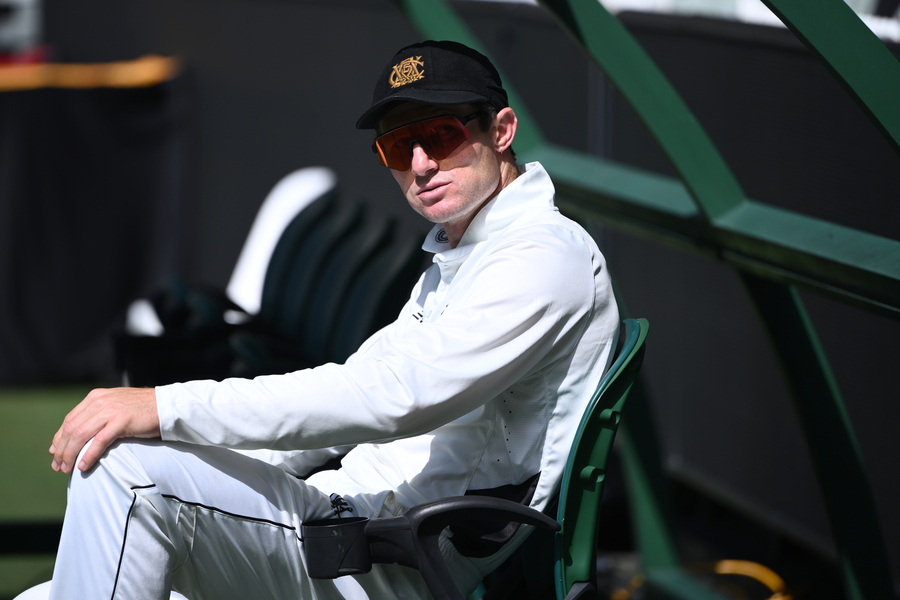
Cameron Bancroft has claimed the entire Australia team knew about sandpapering in 2018. Photo: Joel Carrett/AAP
“Sandpapergate” will be the go-to case study for years at workshops about responsible leadership, ethics, crisis response and whistleblowers. HUGH SELBY explains why…
About nine out of 10 criminal offenders plead guilty: they admit they did wrong.
Hugh Selby.
Such confessions are rare among those who are renowned, be that as politicians, senior levels in public or private employment, or as sporting heroes.
Why is there such a stark difference in “owning up”?
Cricket Australia’s “sandpapergate” will be the “go-to” case study for years at workshops about responsible leadership, ethics in the professions, everyday ethics, crisis response, and whistleblowers. Here’s why.
First, it tells how a misconduct event can be the result of an unremarked but steady erosion of good practice. It happens even when the actors are so skilled (whether that is by talent, experience or both) that there is no justifiable need to depart from the “right way”.
It can be seen among those who fought in Afghanistan, superbly trained to fight as a team, who knew about the unlawful killings, knew that such killing was wrong, but stayed mum.
We may soon know whether within Canberra Health Services there was a deliberate departure from clear policies about managing waiting lists for treatment, a departure which – if proved – will have been a quest for preferment in a health system plagued by scandals caused by government obfuscation and deceit. Suffice to say, “As they lead, others will follow”.
A timeless lesson is that “doing it the right way” does not come naturally. It’s often aspirational. What comes more naturally is: “Can I/we get a better result and get away with doing it the wrong way?”
Second, it demonstrates how “group think” is such a powerful force in suppressing resistance to taking the wrong path. An interesting point in Cameron Banford’s lengthy account of what happened in South Africa in 2018 (see Russell Jackson’s annotated version here) is that the sole, voiced dissenter, was the team’s media manager – a woman, a non-player – who was ignored in an instant.
Third, it shows how the default “harm minimisation” response to the revealed misconduct ensures that the “crisis responsive” investigation is skewed, selective, misleading, with the truth being near irrelevant. The public is wilfully deceived.
Now we know that not all players were interviewed back in the day. That was wilful blindness. Until Cameron Bancroft’s statement this past week most of us would not have known the steady build to infamy from the preceding test match. Those who knew stayed mum.
Fourth, the silence of all those involved is essential for the “outcome” to survive. That silence can be voluntary, or it can be achieved by self-interest and/or intimidation.
The self-interest can be as simple as wanting to be seen, and regarded, as a member of the group. It becomes more complex when future success depends upon repeated future selection – whether that be to a team, a promotions opportunity, or access to restricted benefits.
Another aspect of self-interest is the financial cost of speaking out: for sports people that is endorsements and advertising incomes; for employees it is the chance of higher duties, overtime, promotion; for politicians it is the better pay as a minister or shadow minister.
The intimidation is the power of the leaders to require silence as an unwritten condition for any offering or preferment. That power doesn’t have to be exercised: it is enough if it is understood.
Did anyone who played a part in “sandpapergate” foresee that the game would be up when a participant knew that their time in the sun was over, when their life was taking a new direction?
Usman Khawaja published a memoir. Within it he sets out what he heard and saw. His “self-interest” had moved beyond test cricket selection.
That he didn’t realise what he was unleashing became clear in the aftermath of his comments being reported.
A practical lesson in what not to do
With hindsight one can ponder whether, if Cricket Australia had prior knowledge of his comments, they would have taken action (entreaties or threats) to have him leave out those comments.
Fifth, is the skill set to contain the damage and move everyone’s attention elsewhere. What we’ve seen and heard this past fortnight is a practical lesson in what not to do. Having the captain rubbish Usman’s claims did nothing other than attract a lot more attention to the story.
But then came the tsunami of Cameron’s unexpurgated account: easy to follow, detailed, complete, and – above all – oh, so credible.
He took it for the team until the team kicked him.
Now Cricket Australia has reaffirmed its confidence in the captain. Maybe they mean it, maybe they don’t. Either way, putting up the captain (and now others) to put down the whistleblowers has been a disaster.
Cricket Australia is playing whack-a-mole, badly.
Some of the players have shown that their star talent comes with an ethical black hole.
It would have been best if the truth had come out years ago. But, it’s come out now, chaotically, still better late than never.
Dealing with those crims who own their crimes, and accept the consequences, is so much simpler.
Easier to believe an honest thief than powerful thieves of trust.
Hugh Selby, a former barrister, is the CityNews legal columnist.
"Many of the words now regarded as profane began as ordinary, functional vocabulary. A large number derive from Old English, particularly words connected to bodily functions, sex and reproduction," writes Whimsy columnist CLIVE WILLIAMS.
"On weekday mornings Liz, Marcia, Maizie and I wander behind the counter at the local cafe and get muffins and somebody else’s coffee that resembles more accurately what we want," writes Kindness columnist ANTONIO DI DIO.






Leave a Reply