
By Sarah Spina-Matthews
A former Wallabies star hopes opening up about his family’s extensive history of cancer will help push others to take preventative measures.
Australian international rugby union player Joe Roff was a winger and fullback for the national team from 1995 to 2004, helping the Wallabies win the 1999 Rugby World Cup.
He says 17 members of his extended family, across three generations, carry the BRCA1 gene mutation, which makes them significantly more likely to develop certain cancers.
One of the few lucky members of his family who has not inherited the gene, Mr Roff is encouraging people to have tough conversations about their family medical history as part of a campaign launched in Canberra on Wednesday night.
The 51-year-old’s father was one of six brothers, and the only one not to inherit the gene.
“I’ve been enormously impressed with my uncles, who are part of that generation of men that don’t talk, and the way they’ve addressed this with their families and their children,” Mr Roff told AAP.
After learning they had the gene, one of Mr Roff’s uncles was diagnosed with prostate cancer and one of his cousins with ovarian cancer.
Mr Roff, who heads the medical charity John James Foundation, said knowing they were at higher risk of developing cancer had allowed his relatives to take potentially life-saving precautions.
“In this age of information and misinformation… you need to educate yourself and talk about this and build an awareness,” he said.
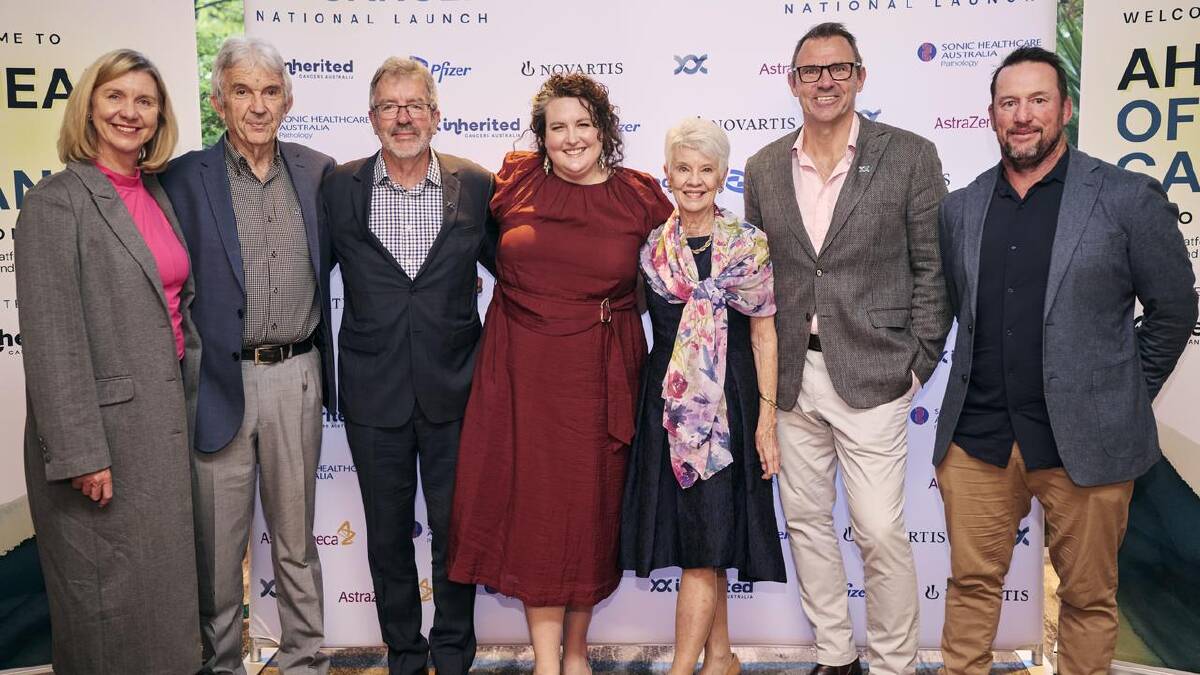
National charity Inherited Cancers Australia’s Ahead of Cancer initiative aims to encourage more people to undergo genetic testing for these kinds of mutations.
Mr Roff’s cousin Kate Roff learned she had inherited the BRCA1 gene mutation – which leads to much higher chances of breast and ovarian cancer in women and prostate cancer in men – after she was advised to get tested because of her family history.
She said the gene mutation means she has an 85 per cent chance of developing breast cancer, compared to the average population baseline of roughly 12 per cent.
The 42-year-old admits it took her time to come to grips with being told she had the high-risk gene mutation.
“It takes … years for that to soak in, and for you to do research, and then meet with medical practitioners and surgeons, and talk about preventative steps that you can take,” she said.
Ms Roff said she hoped her two sons, aged 12 and 14, would one day choose to undergo genetic testing.
Inherited Cancer Australia chief executive Sarah Powell said thousands of Australians with a high inherited cancer risk were falling through the cracks.
“We have spent decades improving how we diagnose and treat cancer, but we haven’t given the same attention to people who know they are at high risk and want to prevent cancer in the first place,” she said.
Beyond awareness about genetic testing, Ms Powell said more support was needed for preventative measures such as surgery.
“We have the knowledge and the tools to prevent some cancers and save lives,” she said.
“What we are missing is a nationally co-ordinated approach to making that prevention possible.”
News all day, every day at CityNewsQBN.com.au.


Leave a Reply