Independent economist Saul Eslake has a different view of the ACT economic situation than Chief Minister Andrew Barr. Imagine that.
“It is clear the conclusions of the expert Mr Eslake are at odds with the ACT Government’s. It is also clear the committee is, unsurprisingly, inclined to accept the expert’s opinion.” JON STANHOPE & KHALID AHMED cheer on some uncomfortable findings against the government.
The ACT Legislative Assembly’s Select Committee recently released an interim report on its inquiry into the fiscal sustainability of the ACT.
The inquiry was triggered by concerns, albeit belated, about the parlous state of the ACT’s finances. Surprisingly, the interim report and its findings do not seem to have attracted the attention of the mainstream media.
The committee received 20 submissions from various organisations including the Productivity Commission, Commonwealth Grants Commission, Independent Health and Aged Care Pricing Authority, CPSU, ACTCOSS, Property Council of Australia (ACT and Canberra Region), local community and advocacy groups, and several individuals. The ACT Government also made a submission. We will discuss the positions and proposals provided in the submissions in a future column.
The Interim Report contains four findings and makes three recommendations. Interested readers can access the report as well the submissions from the Legislative Assembly website.
While the interim report is unsurprising in its findings, it is interesting in its approach and indeed some aspects, particularly those dealing with the government’s position in the submission and hearings, are quite amusing. The committee found that:
- The government is spending more than it is raising in revenue and that this is due largely to decisions to both fund services and pursue major infrastructure projects without an equivalent increase in revenue or taxation.
- The net operating balance went into deficit in 2012-13 and has remained in deficit up to the current year.
- Borrowings and associated interest payments began to increase in 2012-13 when the ACT’s interest became a net expense, and since 2022-23 the trajectory of borrowings and associated interest payments has sharply increased.
- There are justifiable concerns that this trajectory will affect the provision and mix of services that Canberra needs into the future.
There is nothing surprising in these findings, as we have regularly highlighted the unbroken string of deficits, the spiralling debt, the exponential increase in interest costs, and the degradation of essential services since Andrew Barr became Treasurer.
Indeed, the first three findings simply reflect information published by the Australian Bureau of Statistics and that in the audited financial statements of the Territory.
The fourth finding reflects concerns raised in some of the submissions, which are also a logical outcome of the first three findings.
While it is interesting that the committee considered it necessary to put these on the record as “findings”, the potential reasons for this can be found in the public statements by Chief Minister Andrew Barr, not just recently but over the past several years, denying the problem, suggesting that the debt would fix itself and claiming on one occasion that he had actually presented a surplus budget. In reality, the actual result at the end of that year was a large deficit.
An additional submission by late May
In its interim report, the committee has recommended the government respond in detail and directly to the Terms of Reference 4(b) to 4(h) addressing independent economist Saul Eslake’s interim report of February 27, and the S&P Global Ratings report of September, via an additional submission to be provided by May 29.
This would appear odd, particularly to those who are aware of committee and government processes. The committee could have simply written to the chief minister and/or the treasurer inviting or even asking for a submission, or recalled witnesses.
By way of background, the said terms of reference encompass revenue, expenditure, capital works, the effectiveness of the wellbeing framework and any other matters related to financial management.
It is clear that the conclusions of the expert Mr Eslake are at odds with the position espoused by the ACT Government in its submission as well as in hearings.
It is also clear from the discussion in the interim report that the committee is, unsurprisingly, inclined to accept the expert’s opinion.
It also appears to us that the adoption by the committee of a formal recommendation was designed to ensure that the government not only engages with the process, but also with the substance of the matters raised by the expert.
The other two recommendations from the committee are quite specific and relate to the fiscal measures and targets, that:
- The government adopt the cash surplus/deficit (as outlined in the statement of cash flows) as a key measure of fiscal sustainability and given equal prominence to the government’s measures of net operating balance.
- The government develop a more specific fiscal strategy in its budget documents, which sets clear numerical targets and the years by which targets will be met.
The committee noted that these recommendations could be implemented in the upcoming 2026-27 Budget.
We have previously highlighted the vagueness in the fiscal strategy, and the adoption of meaningless measures by the government in earlier columns, and obviously strongly support these recommendations.
However, this represents only a starting point. There are also a range of measures that are either irrelevant or potentially misleading that should be amended to reflect more appropriate measures. The main measure of operating balance, for example, is in fact unique to the ACT and hence different to the nationally agreed measure.
While we commend the committee for its approach, it is yet to be seen whether the government has the inclination or the capacity to undertake the task of budget reform.
Then there’s Shane Rattenbury
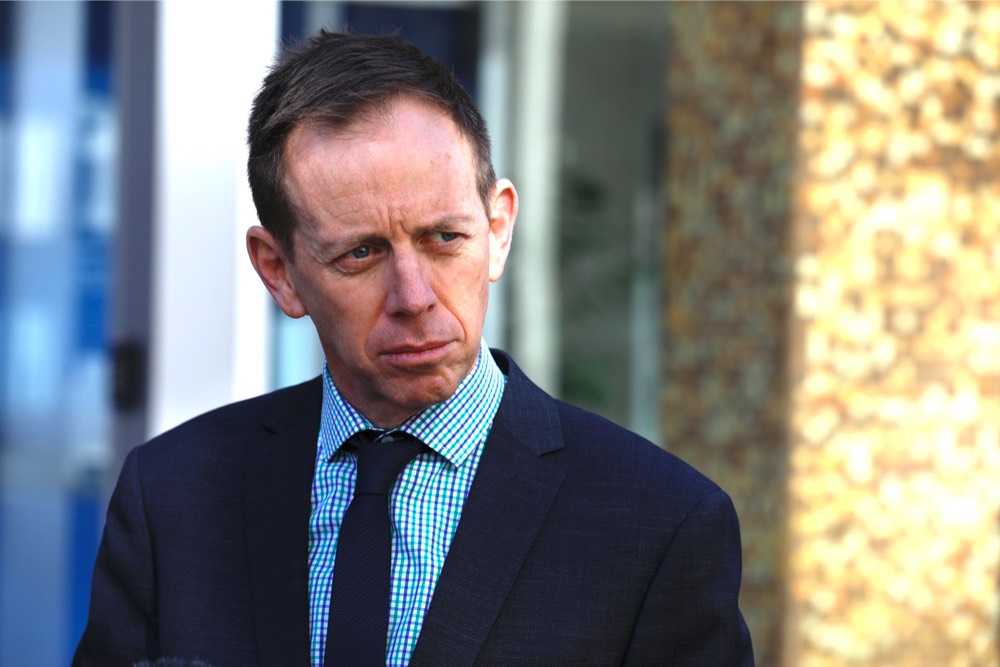
The Greens Leader at the time of the release of the report, Shane Rattenbury, issued a media release that was disturbing and bizarre.
In it he declared “we will not support any move to sacrifice Canberra’s wellbeing to create an idealised Budget”.
It is concerning that it had not occurred to Rattenbury that Canberra’s wellbeing critically depends on the state of the budget.
He went on to say: “[T]his Fiscal Review addresses a problem the Greens have faced both in government and on the crossbench: a constant refrain from Labor treasurers that there isn’t enough money to do important things that would make the ACT more just and sustainable”.
Rattenbury had, at the time, been in cabinet in each of the last three terms from 2012 to 2024. He cannot distance himself from the mess that has been created in those three terms – highest taxes, worst services and a mountain of debt. He appears to have forgotten that Labor is in government at the pleasure of, and beholden to, the Greens.
With regards to “money to do more important things that would make the ACT more just and sustainable”, his and the Greens first power-sharing agreement with Labor increased net debt by $1.6 billion, and operating expenditure by around $80 million.
In addition, Rattenbury was a Greens member of the government and a member of cabinet and hence bears equal responsibility for the decision taken by cabinet, to enter into an agreement with the Commonwealth Government to sell off 1288 public housing dwellings, primarily along Northbourne Avenue, and to allocate the proceeds of the sell-off to fund the tram from Gunghalin to Civic.
Incredibly, the number of units of public housing in Canberra have still not returned to the pre-sell off level.
One is left wondering whether Rattenbury’s musings are a tad hypocritical or rather a somewhat warped view of what is just and sustainable.
Post Script: Shane Rattenbury announced his departure from politics while we were completing this article. We wish him the best in his future endeavours, and will detail his contribution and legacy as a member of the ACT Government and services in a separate article.
Jon Stanhope is a former chief minister of the ACT and Dr Khalid Ahmed a former senior ACT Treasury official.
News all day, every day at CityNewsQBN.com.au.


Leave a Reply