Music / The Green Piper, Apeiron Baroque At Wesley Uniting Church, August 23. Reviewed by GRAHAM McDONALD
As we have come to expect from Apeiron Baroque, this concert was a trip down the back streets and byways of early music.
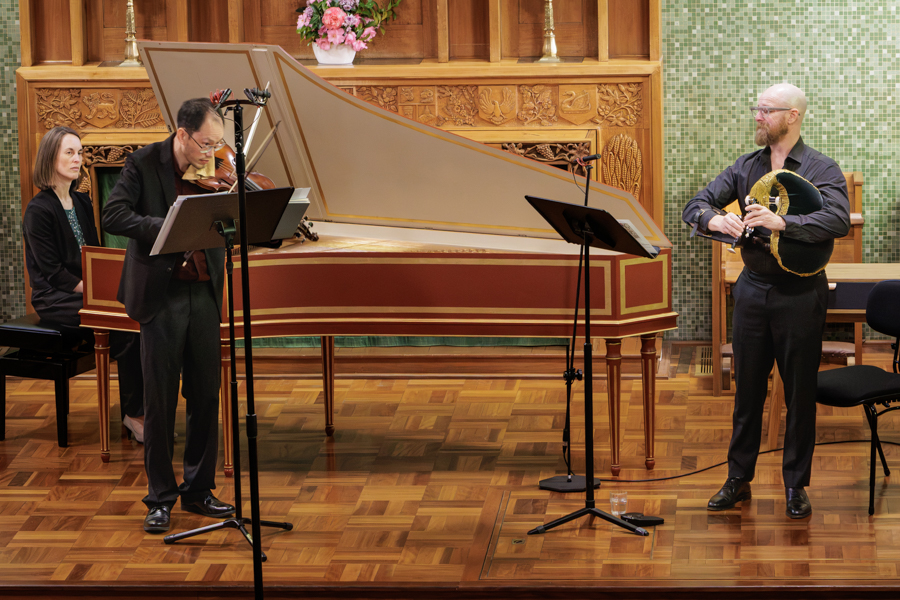
Marie Searles on harpsichord and John Ma on violins and viola were joined by Simon Rickard playing a baroque musette, a small bagpipe popular in the French courts of the 17th and 18th centuries.
The musette is a bellows-blown bagpipe which was developed from simpler folk bagpipes in France and which had become fully chromatic by the middle of the 18th century with a range of nearly two octaves and three different drone notes available. Its use allowed a fantasy life in the French Royal court with the aristos playing at being peasants with music from bagpipes and hurdy-gurdies. Rickard suggested at one point, only slightly tongue in cheek, that the musette might well have been a major cause the French revolution.
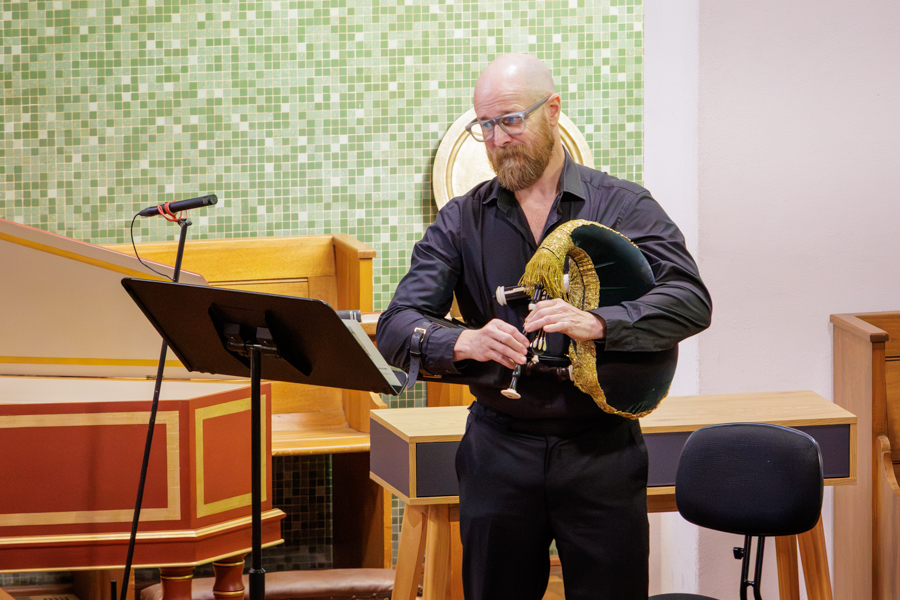
Rickard is a graduate of the Canberra School on Music, and did further study on the baroque bassoon in Europe but these days has a day job as a gardener. His contributions to this concert were several ensemble pieces with Searles and Ma as well as five short lectures that ranged across early music and gardening.
This seemed a bit odd at first, but it gave the duo the opportunity for three longer sonatas for violin and harpsichord which were spaced out by Rickard’s philosophic musings. This allowed time for each one of the sonatas to be appreciated without being crowded together.
There were a couple of particularly attractive works presented by the duo. Lachrimae, by the 17th century German composer Johann Schop had hints of a later piece by the Irish harper Turlough O’Carolan and the Pastorale in ¾ from a sonata by the Italian violinist Michelle Mascitti was very danceable. As always the playing of Searles and Ma was a delight, especially with Searles’ harpsichord blending seamlessly with Ma’s violins and viola.
The concert opened and closed with music by the French composer Joseph de Boismortier for the trio. He was a noted composer for the musette in the first half of the 18th century and the used a slow Prelude at the start and a longer dance suite at the end with shifting rhythms with each new dance tune. This concluded a most enjoyable concert with fine playing all around.
News all day, every day at CityNewsQBN.com.au.


Leave a Reply