Visual arts / World Wide Webs, April Phillips. At Megalo Print Studio, Kingston, until November 28. Reviewed by DAVID WHITBREAD.
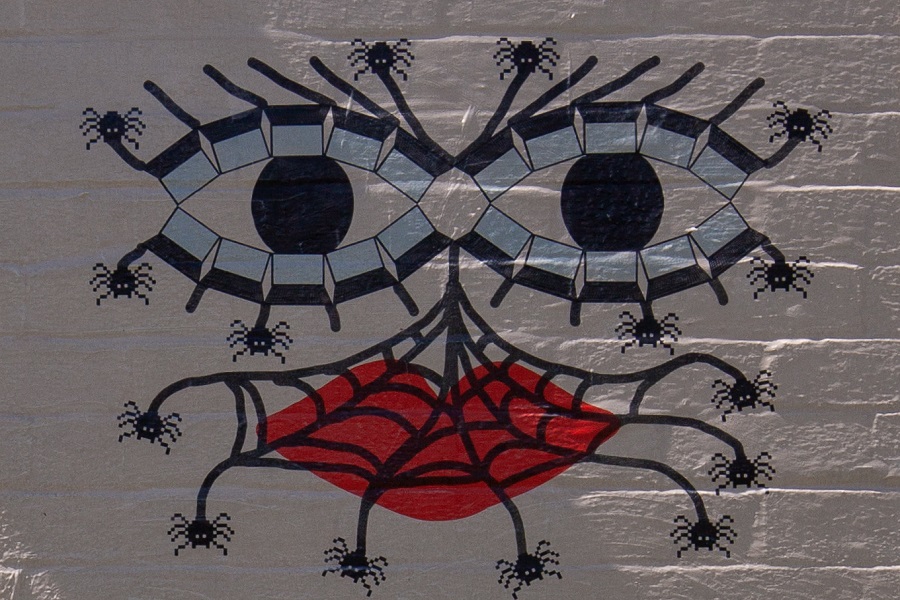
Immaculate hand-printed screen prints pay homage to both digital and analog worlds in an arresting exhibition playing with imagery of spider webs and The Web.
Wiradjuri-Scottish April Phillips lives and works in Canberra and the southern coastal region. In this exhibition, she was ably assisted by screen printer Alex Lundy. Megalo presents this small but mighty exhibition in partnership with Canberra Art Biennial.
Arachnophobes beware. All the imagery features spiders and/or webs. Sometimes like characters from early pixelated computer games. Sometimes naïve as if drawn by a child in crayon. Sometimes grand geometric constructs.
The major work of the exhibition is a massive six-metre wide and 1.5-metre deep screen print in 36 joined frames. Titled Spider Warrior, Girl Protector, Infinite Internet, it takes your breath away as you enter the Megalo exhibition space.
It cleverly uses striking blue subdivided (pixelated?) commercial dishwasher racks as frames for the imagery. But it reads as a whole – a magnificent spider at the centre of a web. Each pixel subdivides into a miniature artwork. Like a fractal. Mostly using a four by four or eight by eight grid. Simple geometric shapes create the patterns that undulate across the composition and read from afar as webs, in which smaller primary coloured compositions of pure red and yellow are caught. These tantalisingly tease as parts of potentially larger images, presumably already devoured by our spider.
The prints themselves are perfectly designed, printed and mounted. The matte black ink has a velvety depth and sits gloriously flat without stretching or rippling the white paper base.
In the other smaller works, Phillips plays with the textures of screens. Printed textures of dots like old comics. Pixelated line screens from early computer graphics. But anybody who lived through those pixelated wonders would quickly suss out that she is using them without the pixel boundaries – so they can lurch at different angles to each other in free form.
All those textures are beautifully realised in screen printing by Lundy’s excellent technique.
The imagery of computers within the prints features familiar keyboard layouts, and what we would consider retro software windows from early paint programs and early drawing tools. The limited print colour palette mimics the limited colour palettes in early computing too.
This is clever referencing and invites the viewer into the images. As you look closer, there’s more to enjoy.
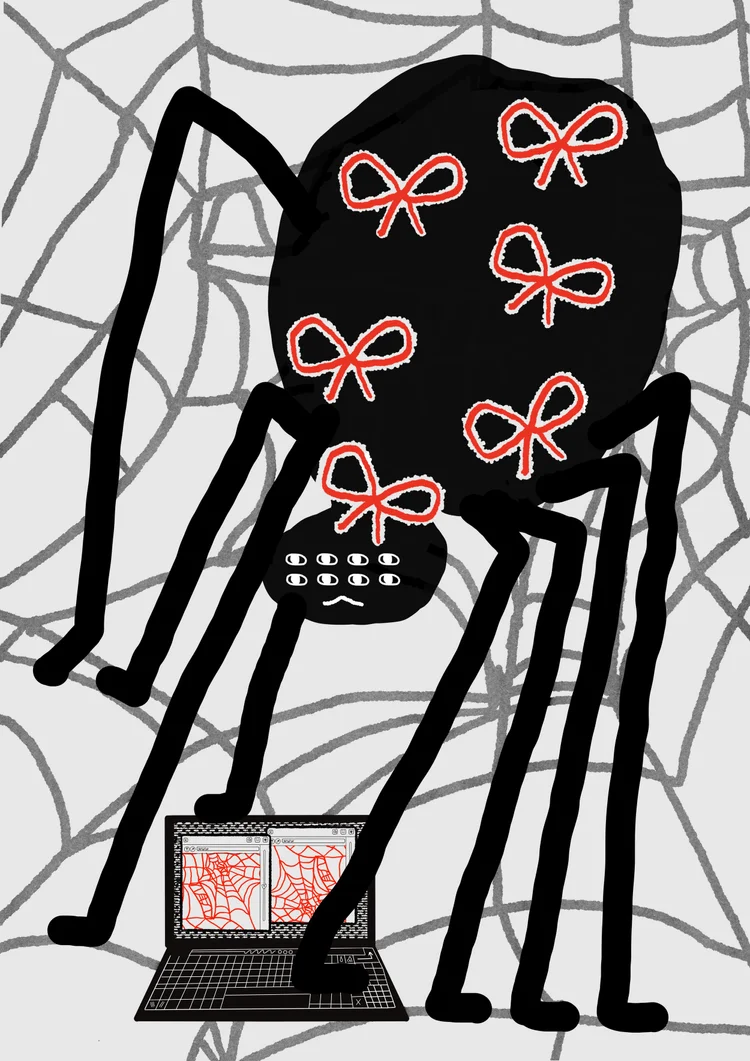
There is a set of three prints titled Internet Spider Girls: Yellow, Red and Blue immaculately printed and double framed in colourful frames to complement the imagery.
These spiders with their crazy coloured hair bows are powerful female images and remind me of early Grrl imagery where early women adopters wanted recognition that women were working in the Internet space, but were largely invisible due to male domination. That is the clear politics here too.
Girlhood Computer Time features young women caught in a web of presumably conversations and interactions with computers and each other. Each interaction in the web net blooming. It is probably the most complex of the images and the polemic.
A thought-provoking graphic exhibition that showcases the craft of screen printing.
News all day, every day at CityNewsQBN.com.au.


Leave a Reply