
Russell Mockridge’s amazing cycling prowess made him a household name here and overseas. Russell who? ROSS FITZGERALD & DICK WHITAKER share the history of this forgotten Australian hero.
Russell Mockridge (1928-1958), a champion cyclist of the late ’40s and ’50s, was one of Australia’s greatest sportsmen with a remarkable record of both track and road racing.
Largely unknown these days, but 75 years ago it was a different story when he became a household name across Australia. He was internationally famous as well and his cycling record still stands as among the best ever for an Australian.
At age 18, Mockridge was a skinny, unco-ordinated lad who lived in Geelong in Victoria. He didn’t play sport, was teetotal, retiring and introspective.
He was also chronically short sighted and wore thick, steel-rimmed spectacles, which prevented him from playing competitive cricket or football.
One Saturday afternoon in September 1946, Mockridge decided, on the spur of the moment, to enter a local bike race, organised by the Geelong Amateur Cycling Club. The race was 38 kilometres (24 miles), run on a handicap system where the best riders started last, on “scratch”, and the less skilled were given “starts” that varied according to the ability of the rider.
His battered old roadster bicycle was anything but a racer, but he turned the handlebars down and dressed in drill shorts, sandshoes and an open-necked shirt.
He was given a generous handicap, an 11-minute start on the scratch men.
The official timekeeper, Alex McPherson, travelling in a car, checked off each cyclist at the halfway mark and then headed off to the finish line to record the times of those who had completed the race. He was surprised to find Mockridge already there, waiting for him, the winner but his time was not recorded.
Mockridge raced the next weekend’s race, but with a smaller handicap. Again he won. He entered a third race a week later, winning this too, but this time starting off scratch.
The most fantastic cycling career Australia ever saw
The cycling club gradually began to realise that despite appearances Mockridge was something special.
This was the beginning of what the famous sportswriter Harry Gordon would later describe as “the most fantastic cycling career Australia ever saw ”.
He knew nothing about such racing basics as repairing punctures, fixing broken chains and race tactics. But as soon as these issues were addressed and after purchasing a real racing machine, there was no stopping him.
Although he looked and sounded “professorial”, with his glasses, longish neck and refined, almost English accent, he also filled out physically, and his legs, in particular, were bulging with muscle that became the powerhouse of his cycling.
Because of his vision impairment he didn’t like to “mix it” with other cyclists and preferred events such as time trials where he raced alone, against the clock. Because of his apparent fragility, he was nicknamed “The China Doll”, but before long became better known as the “The Geelong Flier”.
All through the ’50s, Mockridge won major cycling events both in Australia and overseas, including the 1000-metre sprint and time trial in the 1950 Empire Games and then two gold medals at the 1952 Olympic Games in Helsinki.
In July that year he competed, as an amateur, in the Paris Grand Prix, winning both the amateur and professional sprints, the first cyclist to do so.
In 1953 Mockridge turned professional and on September 26 married Tasmanian Irene Pritchard in south London. The two became inseparable soulmates. Irene was the only romantic relationship of his life, and she always followed him during his road races in their small car.
A major feature of Mockridge’s career was his freakish versatility – he was equally at home on the velodrome and the road.
But on Saturday, September 13, 1958, at the height of his powers, aged 30, tragedy struck. While competing in the Tour of Gippsland he collided with a bus in Clayton North, and was killed instantly.
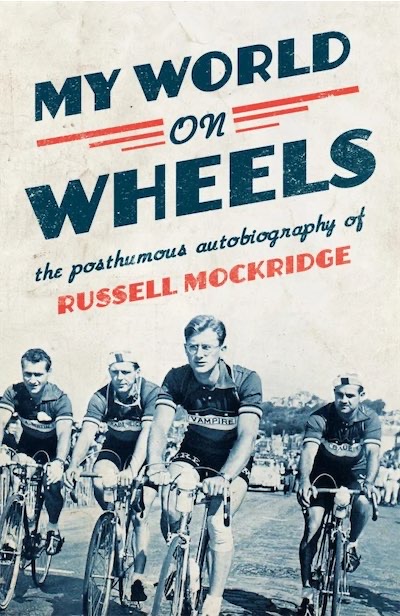
Irene, travelling behind in the family car, saw the entire incident and was understandably traumatised.
As one of Australia’s best-known athletes of the time, the tragedy rapidly became a major news story, and thousands of mourners lined the streets for his funeral, en route to Springvale Crematorium.
As Australia’s first cycling superstar, at the time of his death he was the Australian National Champion in the 125-mile (201 kilometres) professional road race, the 1000-metre sprint and the five mile (eight kilometre) pursuit.
He was also in the process of writing his autobiography My World on Wheels, which was later completed by his friend John Burrowes. Published in 1960, it is still regarded as a cycling classic.
Ross Fitzgerald AM is emeritus professor of history and politics at Griffith University. Dick Whitaker is a widely published author and lecturer in Australian history.
News all day, every day at CityNewsQBN.com.au.




Leave a Reply