By Zac de Silva, Andrew Brown and Callum Godde in Canberra
A group of Islamic State-linked families are edging closer to touching down in Australia as political leaders try to allay safety fears, while experts highlight integration concerns.
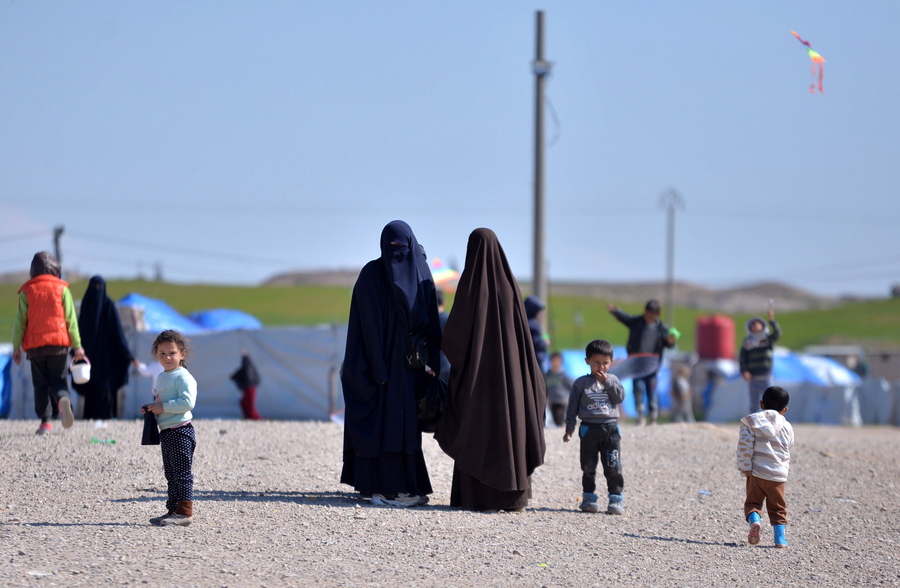
Four women and nine children will arrive in Sydney and Melbourne on Thursday afternoon after years spent in a Syrian refugee camp.
The ABC has published footage of at least three women and five children, accompanied by a man, boarding a connecting flight to Melbourne from Doha.
“We just want our children to be safe … it was like hell (in Syria) for them,” one woman told the national broadcaster.
Another plane bound for Sydney is carrying another member of the so-called “ISIS brides” cohort.
Some of the women face the prospect of being arrested on arrival by police upon landing.
NSW Premier Chris Minns said he didn’t want to “front run” a tactical policing operation, but he castigated the parents for joining a “repugnant, horrible, ideological, violent terrorist organisation”.
“The kids have got nothing to do with this,” he told reporters on Thursday.
“They didn’t make the decision to travel to Syria and the Middle East, and we’ve got an obligation to ensure that they’re safe.
“We’ve got an obligation to make sure that there’s no radicalisation there, and that’s going to be a tricky operation.”
Victoria Police was working with the Australian Federal Police to ensure the safety of all Victorians, Premier Jacinta Allan said.
“Anyone who has broken the law will face its full force,” she said.
“Children will be asked to undertake countering violent extremism programs. That is appropriate.”
While some women travelled willingly to support their partners who wanted to fight for Islamic State, advocates for the group say others were trafficked or only went to the Middle East to keep their family together.
All children in the group of 13 returning home would likely need help integrating into Australian society after years in Syrian camps, while others could need more intensive de-radicalisation support, leading extremism researcher Michele Grossman told AAP.
“This is going to be very much case by case,” the Deakin University professor said.
“We can’t make assumptions that all children will respond equally … to the kinds of indoctrination activities that we know have gone on in those camps.”
Support from the community would be crucial to help them recover from years of trauma, Prof Grossman said.
“If the community is only ever going to turn them away and refuse to have anything to do with them … then what hope are you giving them, and what prospects are you offering them?” she said.
While each child would be different, many would have little memory of what Australia was like, violent extremism specialist Peta Lowe said.
Previously director of countering violent extremism in Youth Justice NSW, Ms Lowe said some of the children might have more complex needs but others might only need a safe environment to allow for reintegration.
The group of women and children are all Australian citizens and government ministers have said there are no measures that can stop their return.
One woman has been barred from entering Australia on national security grounds and the opposition has reiterated its calls for the entire group to be blocked.
The group forms part of a larger cohort of about 30 women and children who have been trying to return from Syria for years after the 2019 toppling of Islamic State.
Education Minister Jason Clare said federal police would be monitoring the cohort closely upon their return and options would be there for children if their mothers were arrested.
“I would expect that they would be cared for by other members of their family,” he said.
News all day, every day at CityNewsQBN.com.au.


Leave a Reply