“I was back in my 1970s bell bottoms (purple!) reading about the plat de pauvre that is fondue, a way the French use up bits of hard, cracked or unattractive cheese,” confesses wine columnist RICHARD CALVER.
The 20th book I’ve read this year is an excellent memoir based around an author’s Francophilia, especially her love of French food.

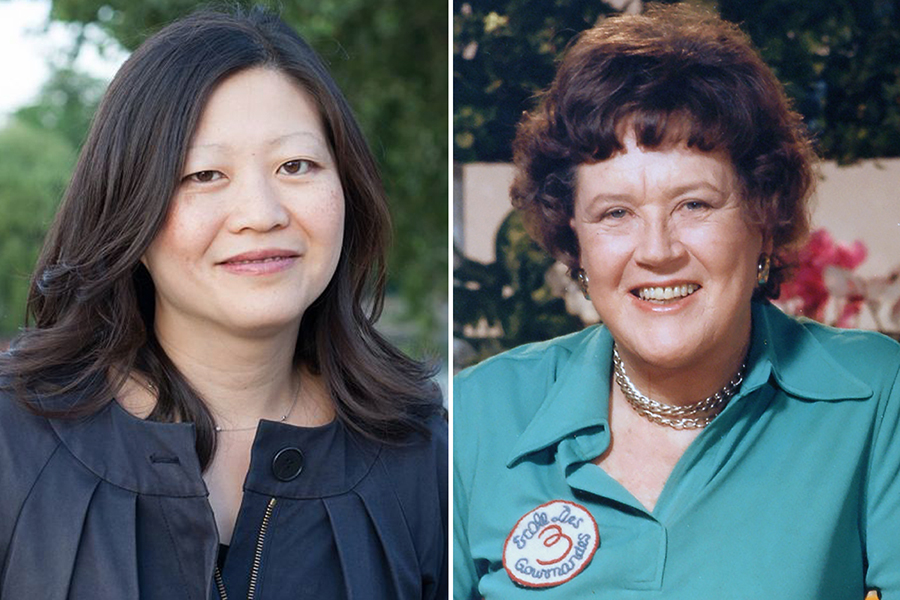
Inspired by Julia Child’s iconic work that introduced English and American people to the basics of French cooking, Ann Mah called her 2013 book Mastering the Art of French Eating. Child’s book was Mastering the Art of French Cooking.
I read Child’s book about 20 years ago. I remember when my jokes weren’t just about nostalgia: those were the days.
Child was engaging in writing and television presentation. While filming an episode of The French Chef in 1963, she accidentally dropped a potato pancake on to the stove.
Without hesitation, she picked it up, brushed it off, and said to the audience: “You can always pick it up if you’re alone in the kitchen”, then carried on cooking as if nothing had happened.
An endearing attitude that’s also a characteristic of Mah’s memoir.
In each chapter Mah focuses on a city or region of France, weaves a personal narrative about her time spent there and ends with a recipe of the region’s signature dish.
Her stories are engaging in large part because of her interactions with others, who are also people who love to eat.
The chapters that spoke to me most were ones where wine was discussed, the chapter about the Savoie and Haute-Savoie regions, the birthplace of fondue and the chapter on Burgundy, where the two products that best illustrate that region, wine and beef, come together in Boeuf Bourguignon. But with all of the recipes, sacre bleu, I think that it would be possible to substitute local products.
I was back in my 1970s bell bottoms (purple!) reading about the plat de pauvre, that is fondue, a way the French use up bits of hard, cracked or unattractive cheese.
At that time in New Zealand, we used up whatever cheese was available, making a slurry of cheese mixed with a cheap white wine to get a gooey melted pot full of molten liquid that could be scooped up on semi-stale bread and drunk with more of the white wine, usually a Ben Ean moselle.
Mah remarks that, of course, the quality of your fondue depends on the quality of the cheese. The recipe that she shares at the end of the chapter combines cheeses from Jura and Savoy in France and Gruyere from Switzerland.
With this sophisticated fondue she suggests drinking a dry white wine, such as an Apremont from Savoy. This area is high altitude. The Savoy geographical denomination Apremont dates from 1973 and is one of the most famous white wines of Savoy, predominantly made from the Jacquere varietal.
You can expect a light wine with minerality and a sweetish, lychee-like finish in this wine. But, I say, use whatever wine you believe goes well with melted cheese.
The chapter on Burgundy is based around Mah following in the footsteps of Thomas Jefferson when he made a 1787 journey through the vineyards of Burgundy.
Here Mah aligns her narrative with that journey but also acknowledges that Child launched her cooking show with the wine-rich beef stew of the region.
The recipe that appears at the end of the chapter calls for the beef, in this case beef-cheeks, to be cooked with 750 millilitres of a “full-bodied” wine. She suggests “a sturdy pinot noir, Cotes du Rhone or similar”. A good Aussie shiraz, I think, does much better.
“It is not a failure to readjust my sails to fit the waters I find myself in.” –Mackenzi Lee
News all day, every day at CityNewsQBN.com.au.




Leave a Reply