By Robyn Wuth in Brisbane
A desert storm is finally starting to weaken after carving a path across the country, cutting off rail networks and communities in the process.
However, a new threat looms in northern Australia as a tropical low gathers strength in the Coral Sea.
North Queensland is bracing for more rain from the potential cyclone just as many across the nation are set to enjoy a reprieve from wild weather.
For the first time in almost two weeks, severe weather warnings of torrential rain and flash flooding have been cancelled by the Bureau of Meteorology.
It is expected to provide welcome respite after inland Australia was hit hard by record rainfall for days.
The country’s freight routes have been devastated by the wild weather across South Australia, western Victoria and southern NSW, according to the Australian Rail Track Corporation.
“Crews and equipment are positioned to support recovery works as soon as it is safe and conditions allow,” the ARTC said.
The Broken Hill and Whyalla lines along with sections of the east-west corridor – critical parts of the national freight network – are closed for assessment.
The Melbourne to Perth corridor has been closed for nine days and is expected to reopen once washaway repair works are complete.
However, the Sydney to Perth corridor is expected to remain closed until Sunday as conditions finally begin to ease.
The Bureau of Meteorology’s Jonathan How said the most remarkable feature of the inland weather system was how long it had lasted.
“We saw the low-pressure system essentially sitting over the desert for one week without weakening and without moving,” he told AAP.
“It drew a lot of tropical moisture from the north and there wasn’t really any mechanism to get it to move on until the last few days.”
The huge storm took a toll, with many regions copping annual rainfall totals in a matter of days.
Sandbagging stations opened in Alice Springs after the usually bone-dry Todd River broke its banks after being inundated with 188mm of rain as the system moved through in February.
At South Australia, rising floodwaters claimed a motorcyclist’s life at Eurelia and triggered rescues including a truck driver winched to safety near the small outback town of Yunta.
Records fell as the system moved across to western Queensland, with Mount Isa hit with 399mm of rain in February – close to its annual average of 471mm.
Flooding swept Australia’s table-grape hub after record rainfall at the peak of harvest season, threatening to inflict major losses to the billion-dollar industry.
Rainfall across Victoria’s fruit bowl broke records that have stood for more than a century, while in western NSW Fowler’s Gap received 188mm over 10 days.
While not unprecedented, the system was definitely unusual, Mr How said.
“The system set-up just aligned – and we know that with climate change, these heavy rainfall events are getting more extreme,” he said.
Another system is now threatening off north Queensland, with a low considered a 25 per cent chance of developing into a cyclone by Thursday.
The system could cross the coast between Cairns and Townsville towards the end of the week.
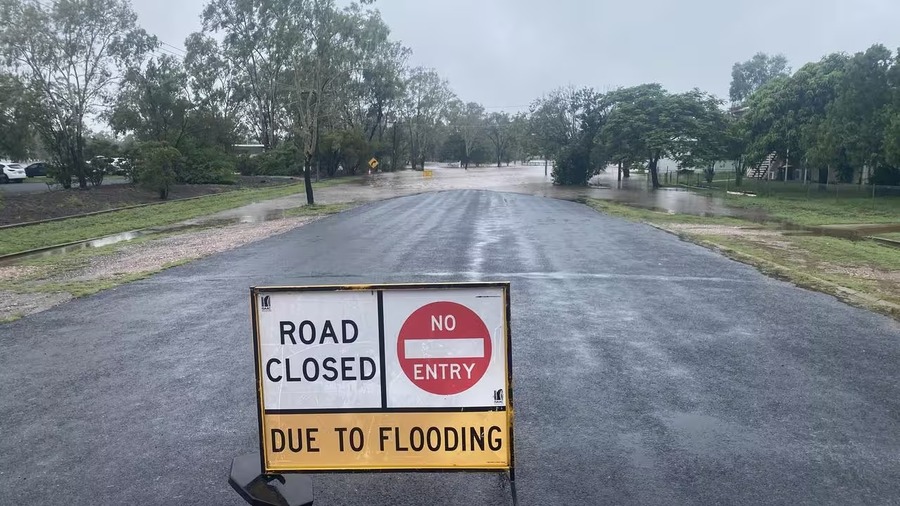
Large areas of the region are on flood watch after heavy rain cut off main arterial Bruce Highway between Cairns and Townsville, which has since reopened to one lane of traffic.
News all day, every day at CityNewsQBN.com.au.





Leave a Reply