By Lucinda Garbutt-Young in Canberra
Australia is defending its leadership efforts at the largest global climate meeting after talks broke down over a draft that didn’t mention fossil fuels.
The COP31 UN summit’s final deal was rejected overnight, following two weeks of negotiations, which ran 44 hours after the summit’s official closure.
In a finale to the talks, which took place in Turkey, the summit’s presidents, including Australia, confirmed they would not put forward another draft plan.
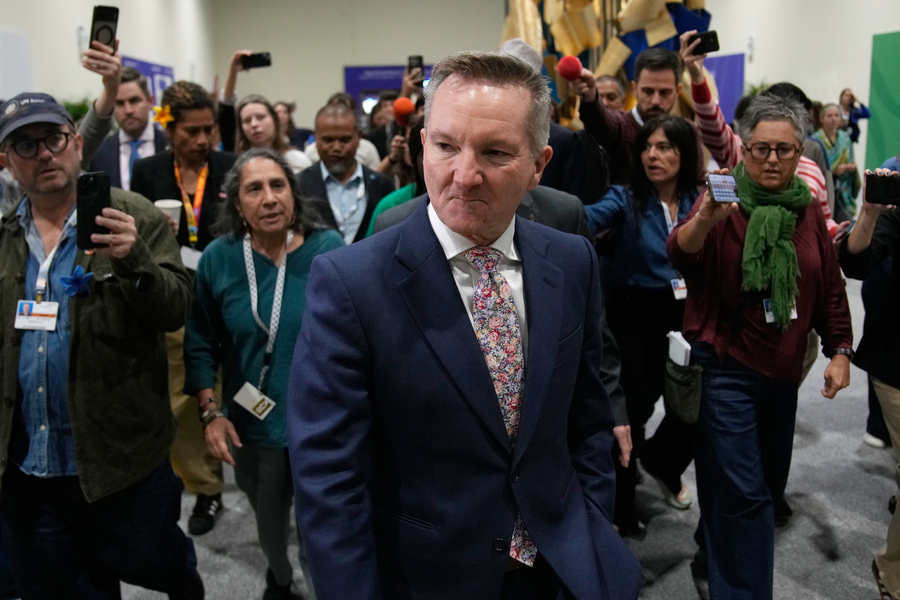
Australia’s Climate Change and Energy Minister Chris Bowen was in charge of negotiations following a hefty fight from the government to get its name on the board.
Mr Bowen said the lack of a deal was “very disappointing”, but Australia had worked its hardest.
“Ultimately, looking back, many parties who are people of good faith had very strong red lines on a couple of key issues, and, despite many, many attempts … those red lines were not able to be met,” he told reporters in Antalya on Sunday local time.
At the centre of the debate was a demand from oil-led countries, largely in the Middle East, that fossil fuels were not included in the deal.
Several countries and the 27-nation European Union said they could not accept the final proposal from the joint Turkish-Australian leadership as it did not mention fossil fuels.
Any pact approved during the summit requires almost unanimous consensus.
Environment and Water Minister Murray Watt backed Mr Bowen.
”What this shows is a very challenging international environment at the moment to reach agreement on almost anything and particularly a situation like this where you’ve got fossil fuel producers on the one hand and other countries that are experiencing very serious impacts from climate change,” Mr Watt told Radio National on Monday.
But Deputy Opposition Leader Jane Hume said Mr Bowen had “failed Australians”, despite the gridlock being largely out of his hands.
“To have no deal at all is quite extraordinary. I think people will be quite disappointed,” she told ABC Radio National.
“Each country is going to work in its own national interest, and that should include Australia … but finding a pathway through is really important.”
The event was viewed by Labor’s rivals as a test of their ability to lead and steward taxpayer money.
Pre-COP, held in Tuvalu earlier in 2026, was intended to be a reinvigoration of the climate movement. Dozens of leaders across the globe pulled out.
Just two from outside the Pacific attended.
Despite the pre-COP meeting, developing countries criticised the sunk deal for not providing sufficient climate finance to help them adapt to global warming.
News all day, every day at CityNewsQBN.com.au.



Leave a Reply