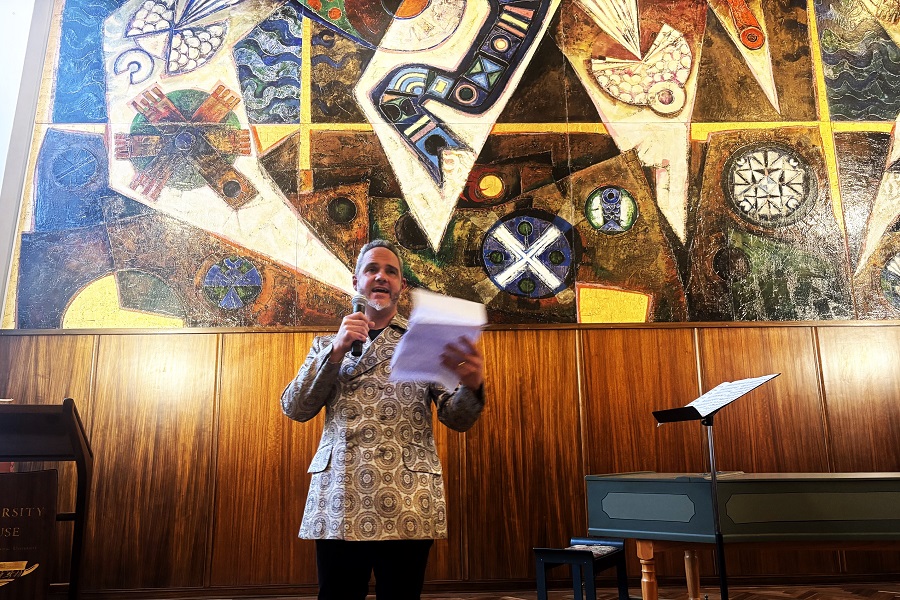
In an inspired move, the Canberra International Music Festival will move to the newly reopened University House in 2027.
The relocation, which will see the house become the festival hub, follows several years of movement between the Fitters’ Workshop and Snow Concert Hall.
But an audience survey, board chair Liesl Centenera told a crowd at the festival launch on Friday, revealed that patrons wanted, above all, a more personal and social experience when they went to concerts. With University House for smaller concerts and Llewellyn Hall close by for larger events, it seemed like the perfect arrangement.
Centenera also told of a solution to the obvious fact that some people like classical music while others prefer original contemporary offerings. The festival will be trying out two new passes in 2027, alongside the standard Festival Pass: the Classical Pass and the Contemporary Pass.
Artistic director Eugene Ughetti said that he, like the board, was listening hard and open to suggestions.
Under the theme Ancestral Songs, this festival, he said, would be very different from his previous two, with a strong focus on the ancient origins of music in birdsong and First Nations cultures right here in Australia. But there would also be 22 overseas visiting musicians and a Czech motif running through the event.
MOSSO (Music in Motion), the festival’s all-day contemporary audiovisual music event at the National Film and Sound Archive, was not yet fully programmed, but Ughetti could tell us about a major festival commission and world premiere, Pipes, at the NFSA on May 8.
That work invites audiences into the sound world of the Australian pied butcherbird, often called “the true magic flute”.
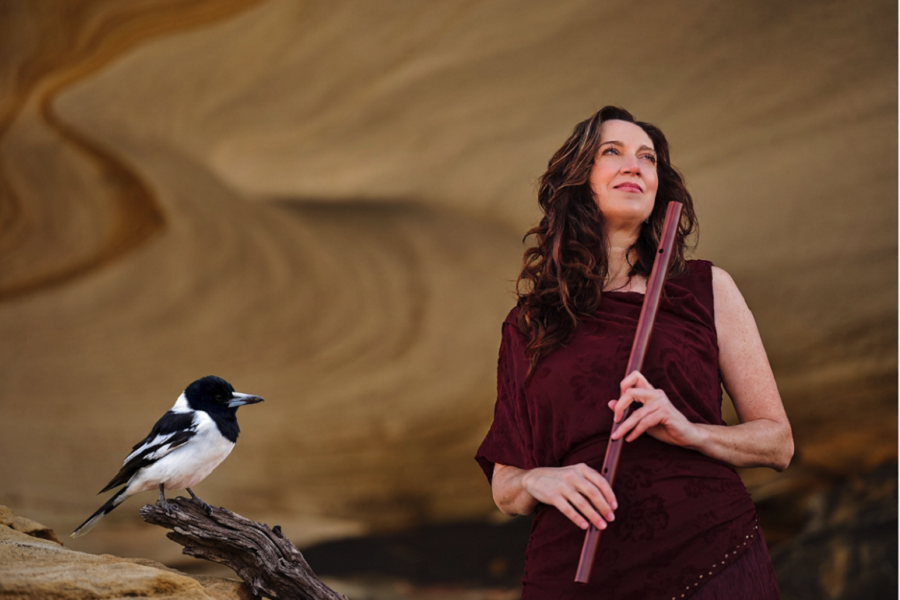
Composer Hollis Taylor celebrates the butcherbirds’ musical achievements on their own terms. For this ambitious 15-movement work, she joins forces with Canberra virtuoso flautist Sally Walker and nearly 50 diverse flute players.
While Ughetti’s program would be taking a dive into deep time, he emphasised that would also be paying attention to German, Byzantine and even Indonesian sacred music, with a gamelan orchestra and a female dalang, or Wayang Kulit puppeteer, travelling from Bali to perform a story from the Mahabharata, another deep dive.
A key aspect of the program, he said, would be anniversaries, including the 200th anniversary of Beethoven’s death.
But most important of these would be the centenary of the birth of the Australian Parliament House in May 1927. To mark that, for the penultimate concert, the festival will take over the Great Hall at Parliament House for a feast of song, Hear, Hear! Two Choirs, Two Chambers: A Century of Parliament in Song.
The real finale, however, to be held in The Hall, University House, on May 9, will be The Aviary and Afterlife. Here international artists, the Kleio Quartet, Sally Walker, Stefan Cassomenos and Nadia Ratsimandresy, will play bird-inspired music by Vivaldi, Messiaen, Rameau, Martinů and Schubert.
All the while, there will be adjunct talks, feasting and listening to give patrons something much more than a concert experience.
Canberra International Music Festival, May 5-9.
News all day, every day at CityNewsQBN.com.au.


Leave a Reply