By Melissa Meehan and Duncan Murray
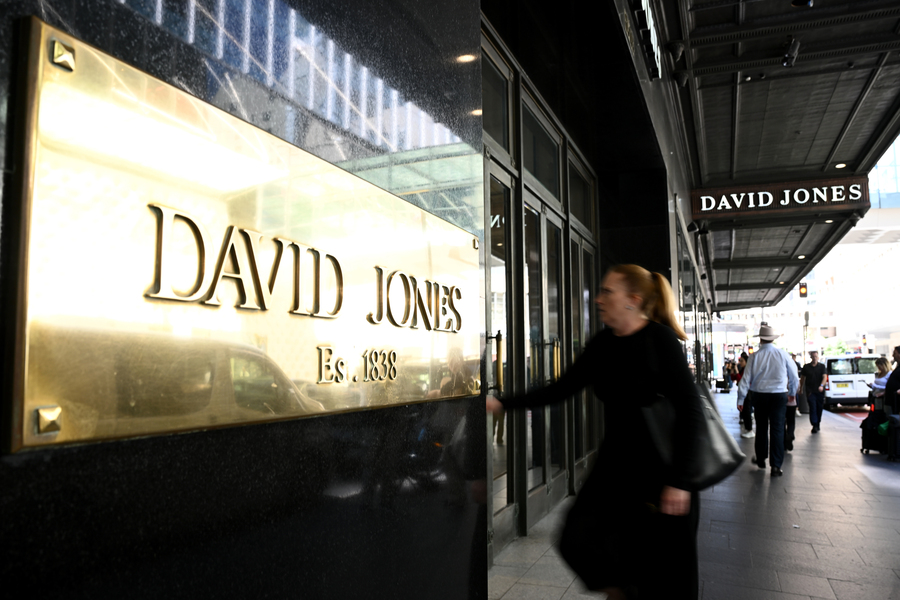
Large brands have started pulling their stock out of David Jones stores, and many small Aussie businesses are in limbo after the celebrated retailer fell into administration.
The once ubiquitous retail giant slipped into voluntary administration on Thursday, unable even to pay rent on many of its stores to its biggest landlord, Westfield owner Scentre Group.
Suppliers from many larger brands scrambled to the stores following the announcement, taking back stock while they could.
But not all brands have enough manpower to recoup all stock, according to K. Juliet owner Chloe Barry-Hang.
Ms Barry-Hang said her brand launched into David Jones just a few weeks ago.
“It was a massive dream of ours to launch with a major retailer in Australia,” she posted on Instagram.
“We are super sad, very disheartened, obviously incredibly stressed.
“If anyone wants to know what it’s like being a business owner, it just goes up and you feel like you’re sky high and then it all comes crashing down.”
David Jones has a network of 38 stores across Australia and New Zealand.
Administrators from McGrathNicol are hoping to facilitate either a recapitalisation of the business or a sale to a potential buyer to save it from disappearing entirely.
Renniks Group director Michael Pitt, whose company supplies David Jones’ home brand Alta Linea with men’s accessories, said the financial trouble the department store found itself in didn’t come as a surprise.
“Their communications are almost non-existent, and we’ve found them overall very, very difficult to deal with,” he told ABC Radio National on Friday.
“And of course, we didn’t want to let it go because they had this beautiful, shining, historic brand that we loved. But over time, that shine really wore off.”
Mr Pitt said David Jones still owed the company $16,000 which it didn’t expect to get back.
“We’ve probably got about $10,000 worth of packaging sitting here in our warehouse. Probably got $30,000 or $40,000 in stock sitting out the back. We may be able to salvage that and rebrand it, but it’s unlikely,” he said.
“I’m just really just disappointed.”
The collapse confirmed what had already been clear for decades about the challenges facing the old guard of retail.
Having opened its doors 188 years ago, David Jones has been dubbed the oldest department store in the world still operating under its original name.
It’s biggest competitor Myer launched its Christmas Windows next door to David Jones in Melbourne’s CBD on Friday.
Myer executive chair Olivia Wirth expressed sympathy for David Jones employees and suppliers, noting Myer’s efforts to support them.
“They’ve been part of Australian life for many years, and it’s really sad for the thousands of people that work there and the suppliers, particularly in the lead up to Christmas,” Ms Wirth told AAP.
“We’re working very closely with suppliers behind the scenes to make sure that we can help. Obviously, it’s a peak time, so any help that we can provide suppliers, we’re absolutely making sure that we can do that.”
No stone should be left unturned by administrators to ensure as many jobs as possible are retained and affected workers receive their full financial and legal entitlements without delay, said Gerard Dwyer, the national secretary of the SDA retail union.
“The SDA is reaching out to our DJs members … to reassure them that we are doing our utmost to protect their entitlements,” he said.
Australian Retail Council CEO Chris Rodwell recognised the significant challenges ahead for David Jones and called for Australians to “back retailers who back Australia”.
The pressures facing Australian retail are not new and we have been sounding the alarm for some time around the challenges Australian retailers are facing,” Mr Rodwell said.
“Business costs keep rising, whether related to leases, transport, supply chains, energy, wages, or government taxes, charges and regulations.”
News all day, every day at CityNewsQBN.com.au.




Leave a Reply