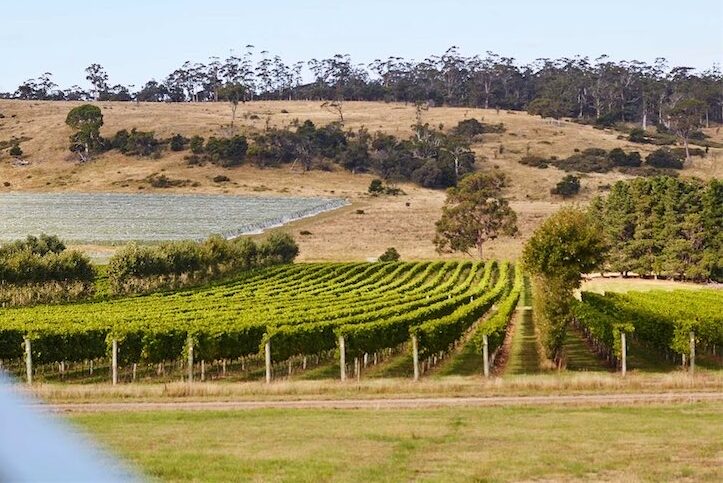
Wine writer RICHARD CALVER returns to Rutherglen to sample the revived Morris wines, but finds its chardonnay wanting compared with a vibrant cool-climate Tasmanian rival.
I returned to Rutherglen recently, inspired to taste, amongst others, the wines of the famed Morris of Rutherglen following an article by the wine writer for The Australian.

The feature told how the Morris business had been brought back from the brink by the Casella family.
The Casella Family Brands own the Yellowtail brand, which has had global success. Although, as a reflection of the growing downturn in the wine industry, for the first time in 2025 domestic sales of the group’s wines exceeded export sales. The company also posted a $5.5 million loss, its first in 13 years.
In any event, it bought Morris of Rutherglen. The newly refurbished tasting room and lunch area on the day we visited was going well, with quite a few people present. The continuation of this brand, which started in 1859, seems assured.
We opted for the five-wine tasting, with a Signature whisky to finish.
The tasting started with a chardonnay 2024. The woman presenting the wines said that the grapes weren’t sourced from the local area where growing chardonnay is challenging.
The climate is hot with a mean January temperature of just under 24C. Chardonnay is able to ripen successfully in warmer regions but its malic acid is often depleted.
Malic and tartaric acid make up about 90 per cent of the grape’s total acid. Winemakers need to control the level of malic acid, as wines with too much of this acid can taste tart. But wines with too little malic acid can be lifeless.
We were told that the chardonnay grapes had been sourced from the King Valley. We anticipated a stone fruit flavour as the bouquet showed an aroma of nectarine. But on taste it was, unfortunately, underwhelming with just a hint of melon and it didn’t finish with any kind of kick. It was flat. My friend whispered: “It tastes of nothing.”
I’ll come back to the other Morris wines and whisky in another article, as they were very good, especially the whisky.
For now, I want to compare the 2024 Morris chardonnay with one from Tassie, as a pointer to the difference a cooler climate makes.
The King Valley has January temperatures that fluctuate between circa 31C and 16.5C. The wine I want to compare with the Morris chardonnay is from Kayena, where the maximum January temperature is around 23C and falls to around 13C at night. That is where the Devil’s Corner winery is located.
The 2025 chardonnay from Devil’s Corner is also made in the style of stone fruit, again displaying an aroma of ripe nectarine.
But the finish and mouth feel on this wine is elevated when compared with the one derived from King Valley grapes. It is a fresh, vibrant wine that has a bright acidity reminiscent of grapefruit.
It has a subtle but compelling texture and went well with the Quiche Lorraine that we had for dinner back in Canberra. It stood up both as a drink on its own and with food.
The Devil’s Corner stood out as the better wine because of its cool-climate acidity, giving it a lovely long finish.
Which reminds me, my friend told me he’d just finished designing a website for an orphanage; it doesn’t have a home page.
News all day, every day at CityNewsQBN.com.au.



Leave a Reply