Visual Arts / Nexus: The Common Piano, Martin Rowney, Rusten House Art Centre. Until October 18. Reviewed by DAVID WHITBREAD
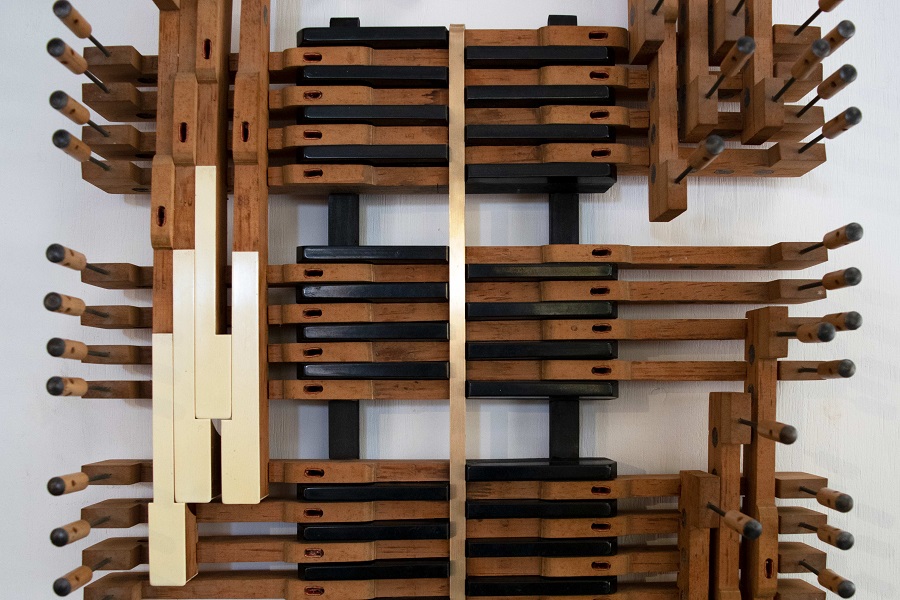
What a mechanical marvel an upright piano is with all its keys, hammers, strings, metal and wooden struts. Now reimagine all those bits reconstituted into often breathtaking works of art.
Martin Rowney looks at the stories behind everyday, often forgotten objects. And makes them new and fascinating. Worth a second look.
When you enter the space, it is filled with wall-mounted sculptures and freestanding sculptures on plinths. Every now and then there is a tantalising quote or mini-story in black on the white walls. Telling stories of pianos and music and community.
A couple of stories convey the flavour: “Barry found it mutually beneficial to compose for the congregation.” and “As the rehearsal pianist, Jan was so fond of the old worn out piano; like a familiar friend.”
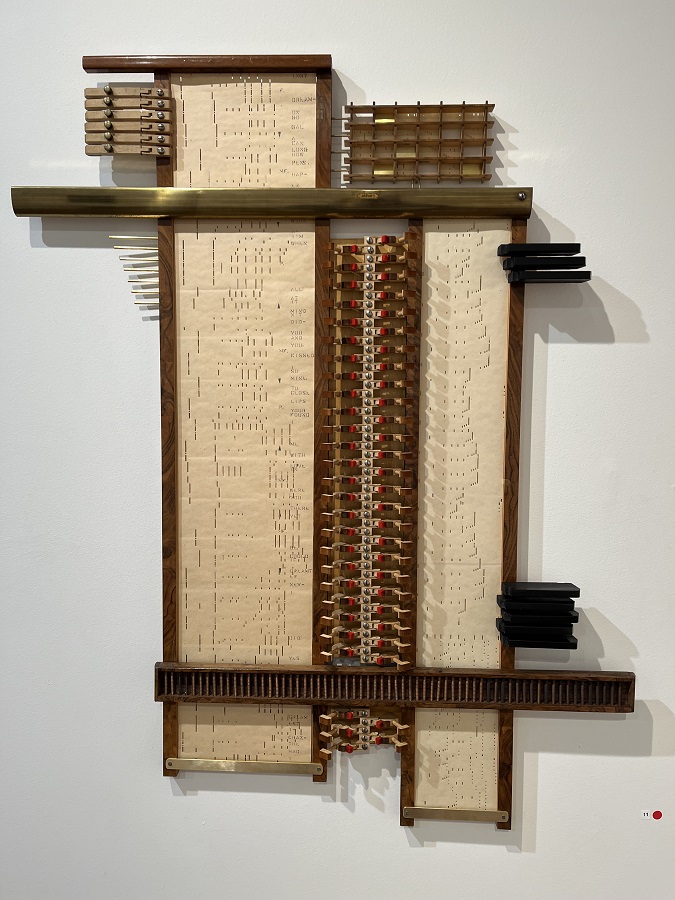
The sculptures are all made with components from two old pianos. There is a soft wooden glow from both the reconfigured lacquered cabinetry and the internal untreated wooden pieces. But with the soft ivory of keys and off-white of old felt dampers and hammers. Black keys and black tuning pins. Golden brass from sound boards.
In one work, Dreamers Club Serenade, the addition of an aged, pierced paper pianola roll is framed with other piano components. It feels like a Japanese screen with a lovely interplay of horizontal and verticals, pattern and stripe. The words, reading from bottom to top like you needed to do as a piano roll progressed, read: “How long can a gal go on dream-ing?” prompted the title of the work.
Another major work, Common Time, also features a piano roll but horizontally with a ground of three horizontal wooden pieces evenly placed across it. This appeared to make a five-line staff against which sideways clusters of piano hammers were suspended like notes in chords. This would be a delightful adornment in any music room.
Then there were the artfully sculpted curved forms. These were deconstructed piano keys with carved notches along their length. Narrow triangular inserts created the subtle sinuous curves that implied moving forms.
These works formed both freestanding works and wall-mounted works, often given dance titles. They cast complex shadows that ingeniously contrasted to the square shadows of many of the other works.
One of the freestanding curved works was Dance Class 3 where the five dancers were grounded by the lovely oak curved feet created from slices of the piano case lid.
Another form explored in a couple of works was evident in One And A Half Octaves, a freestanding balanced spiral made from hammer butts. It felt like one of those insane moving machines. It was intriguing again due to its unexpected curvilinear form.
This is an instantly likeable exhibition of imaginative sculptural works. Anyone who likes machinery would be entertained by these quirky works. And of course any musician – or anyone who remembers going to grandma’s house and playing the pianola in the loungeroom.
News all day, every day at CityNewsQBN.com.au.




Leave a Reply