“While smart glasses offer genuine benefits in business, accessibility and daily life, they also raise a challenging question: How do schools maintain fair examinations when AI becomes almost invisible?” Letter writer DONALD THOMAS raises an interesting issue.
When mobile phones first appeared in our schools, education authorities faced a new challenge.
Write to editor@citynews.com.au
Students suddenly had access to information, communication, cameras, and recording devices, all carried in a pocket. Schools adapted.
Now another technological shift is approaching, and this one may prove far more difficult to manage.
Artificial intelligence is rapidly finding its way into wearable devices, including smart glasses that can discreetly capture images, analyse information, and provide real-time assistance to the wearer. While these devices offer genuine benefits in business, accessibility and daily life, they also raise a challenging question: How do schools maintain fair examinations when AI becomes almost invisible?
Traditional exam supervision relies on observation. Invigilators look for phones, notes, textbooks, communication between students, and other obvious signs of misconduct. But emerging AI eyewear changes the equation because the device may look little different from ordinary spectacles.
A student wearing such glasses could potentially photograph exam questions, seek AI-generated assistance, or receive information without any visible screen or handheld device. Even if current models have limitations, the technology is improving rapidly.
The concern is not that students are suddenly becoming less honest. Most are not. The issue extends beyond cheating.
The concern is that education systems may be unprepared for how quickly this technology is developing.
The purpose of raising this issue is not to oppose innovation. Australia benefits when young people engage confidently with emerging technologies. AI will almost certainly become an important educational and professional tool.
However, enthusiasm for innovation should not prevent us from asking difficult questions.
The technology is no longer science fiction. The real question is whether our policies will keep pace with it.
Donald Thomas, Queanbeyan
The shame goes both ways
In his address to the United Nations Israeli Prime Minister Netanyahu, in response to comments by New York mayor Mandani, stated: “Shame on you for distorting the facts. Shame on you for inverting the victim and aggressor. Shame on you for spitting in the face of truth.”
These words could accurately apply to the contents of Netanyahu’s address.
Shame on all the actors involved for diminishing the plight of the Palestinians.
Mike Quirk, Garran
Construction noise is rocking residents
For many months hundreds of residents (and animals) in Barton have endured construction work noise from the building site at 10 Brisbane Avenue.
While construction noise is permitted by the ACT EPA (six days a week between 7am and 6pm, this is NOT normal construction site noise (it’s set to continue for two years!)
Deep rock excavation for three levels of basement parking has blasted away continuously for nine hours a day. It can be heard in Kingston, more than two kilometres away. Recent work included overnight excavation without notification to residents.
As the area is a “mixed zone”, residential and offices are affected but workers can relocate (and they have), residents cannot and many residents need to work from home.
Private profit from this under-regulated construction boom comes at a massive cost to our health, residents’ property sales and the local wildlife and companion pets .
We have had no luck with the NCA, ACT government or the builders (who could look at noise-mitigation measures).
It would be simple to establish a code of practice for construction noise, which has legal force. The City of Sydney has had one for decades.
The ACT Legislative Assembly could redress this balance .
Gillian Jewell, Barton
Is Hanson true to her young constituents?
I agree with columnist Robert McMahon that the attack on Andrew Hastie as a “traitor” was appalling (“‘Traitor’ slurs – how dare you, Pauline Hanson!”, CN August 24).
Hanson denies personally calling Hastie a traitor, but she posted and retained a One Nation cartoon that repeatedly labelled him one because he gave evidence in the Roberts-Smith defamation case. Hers is a cowardly defence.
A traitor is someone who betrays their country or an allegiance they owe. By that definition, perhaps we should ask a different question.
Hanson has repeatedly described climate change as a “hoax”, including at her June 2026 National Press Club address.
What does that say about her responsibility to the young Queenslanders she represents, who will live longest with the consequences of a warming climate?
Calling a fellow Australian a traitor is easy. The harder question is whether politicians are being faithful to the interests of the people they represent.
Ray Peck, Hawthorn, Victoria
No reason a council wouldn’t work
Errol Good’s letter (“Local council deserves serious consideration”, CN September 10) is flawless.
In addition, one only has to look at Townsville, Cairns, Newcastle, greater Sydney, Albury/Wodonga, Wollongong or other centres such as Wagga and Goulburn.
In the mix of those and many other locations the council form of government operates successfully, but it hits a stumbling block when it comes to Canberra’s prima donnas.
The crowd here, who are looking to expand our system, remind me of a Monty Python special or a scene from Yes Minister or a rehash of Peter Sellers’ The Mouse that Roared.
There is no reason why a council form of government wouldn’t work.
If egos and bank balances get bent, so be it. Ultimately, the bottom line is “better government”.
John Lawrence via email
Role of citizens in science is well proven
It was delightful to read that volunteers have dug “60 salty ponds and built 180 frog saunas” across 15 Canberra wetlands to help bring back the green and golden bell frog from extinction (“‘Spas’ give threatened frogs a fighting chance”, CN September 24).
The role of citizens in science is well proven. The 11-year-old boy who wrote to frog scientist Anke Maria Hoefer asking to join the Frogwatch training is likely a batrachiologist of the future.
Given that Australia has 53 frog species officially listed as threatened under national environmental law, and climate change is intensifying pressures from drought and bushfire, we need all the young scientists we can inspire.
Karen Lamb, North Geelong
Two fast-train terminus locations
The ACT Strategic Policy Plan indicates two possible locations for Canberra’s terminus-type very fast train station.
One is in the heart of Civic involving a tunnel under Mt Ainslie and the length of Ainslie Avenue, and was recommended as the best location out of several, in the most recent comprehensive VFT design report (prepared back when Anthony Albanese was Transport Minister).
Reasons included the avoidance of expensive Canberra land purchase for the trainline’s urban and suburban sections, quietness, arrival experience, proximity of the station to central public transport systems, hotels, etcetera, and train arrival and departure speed.
The report examined several locations including the second one suggested in the policy plan – at the airport.
It is redolent of the type of neo-liberal private-sector control over public-facility development that has caused so much economic and social hardship over the last few decades (especially in housing land development), and would involve significant ACT land acquisition, road and other infrastructure modifications, and expensive public transport installations, car parking etcetera.
Jack Kershaw, Kambah
It’s Haskins who should apologise
I refer to Janine Haskins’ letter (“Mental jibe deserved an apology” CN September 24) in which she admits to watching the Logies but objected to hearing Dave Hughes speak about his mental uncle.
This was very confusing, because Hughes wasn’t at the Logies and never spoke about a mental uncle. An online Google explanation refers to “complaint letter confusion” and explains some jokes compere Robert Irwin made about Dave Hughes and Karl Stefanovic (also absent). Google goes on to explain that the confused viewer blended the jokes together “in her mind” mistakenly believing that Hughes had taken to the stage to make offensive comments regarding a “mental” uncle.
In her letter, Haskins called the comments offensive, stigmatising and derogatory and said that Hughes should have apologised. It isJanine Haskins, who has taken the moral high ground, who should do the apologising.
Paul Temby, via email
And she does: “My bad. I think I must stand corrected – embarrassing. I am so sorry.”
Meet new columnist HAMOUDI AL-SAGHIR, a remarkable young Syrian refugee with a terrible story of survival. In his first column, he shares a glimpse of his confronting past and his youthful optimism as he thrives at studying law at the ANU.
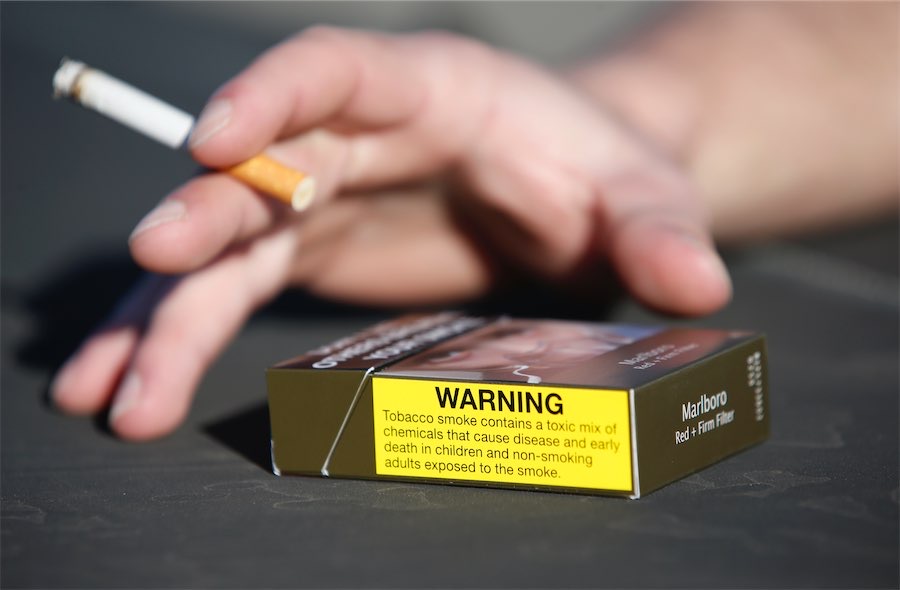
Almost one in five Australians who smoke report going without essentials because of the cost. CORAL GARTNER and ARA CHO explain why cheaper cigarettes aren't necessarily the answer.
The Medicare breach wasn't carried out by a conventional hacker but by an AI agent. MEENA JHA explains what the incident reveals about protecting government systems in the age of AI.






Leave a Reply