By Noah Secomb and Lucinda Garbutt-Young in Canberra
Exactly how many Australians received an emergency warning test on their phones is unclear, as the government heralds the test a success.
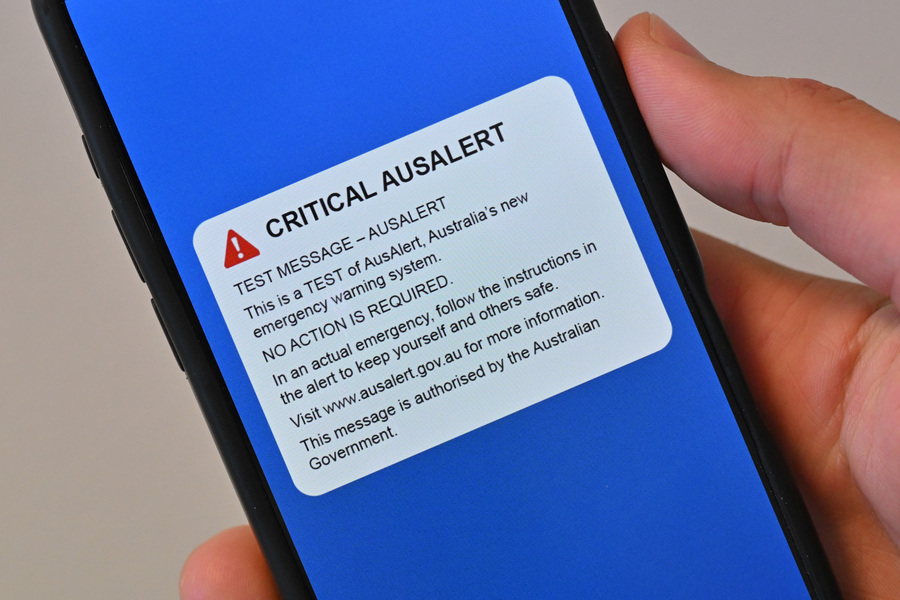
The AusAlert test, which involved a 10-second siren blaring from mobile phones on Monday afternoon, was broadcast from 94 per cent of targeted cell towers nationwide, exceeding the National Emergency Management Agency’s target.
Emergency Management Minister Kristy McBain told reporters the test was effective across all states and territories and said not to worry if anyone had not received an alert.
“It is not the only thing that we do in an emergency,” Ms McBain said.
“This is just another tool that we have for emergency agencies to use in times of natural disaster or police incidents where we might want to get messages out quickly.
“There is no one avenue of communication that we have that is 100 per cent successful.”
Authorities will continue to use existing warning channels such as websites, radio, social media, television and community outreach, in addition to the AusAlert system.
Mobile phones out of service range or with out-of-date software did not receive the alert.
Ms McBain has encouraged Australians to lodge their feedback on the AusAlert website.
Agency interim co-ordinator Patrick Hetherington said the test would inform any changes needed to the system before it went live in October.
“State and territory emergency management agencies will have access to AusAlert and the existing text-based system until at least July 2027,” Mr Hetherington said.
Anyone experiencing family or domestic violence is urged to keep secret phones off following the alert test for up to 24 hours out of “an abundance of caution”, Ms McBain said.
Drivers were also urged not to touch their phones when the alert sounded.
“Mobile phone laws still apply. Don’t read or respond to the alert while moving. Only check the message when your vehicle is turned off and it is safe and legal to do so,” the AusAlert website said.
The AusAlert national emergency alert system is due to replace the current national warning system from October, providing alerts for bushfires, floods and other natural disasters.
The test was classed as a “critical alert”, meaning devices vibrate or make the sound even if they are in silent or do not disturb modes.
“This system is much more accurate than the current system,” Ms McBain told ABC News Breakfast on Monday, following several outages from major telco companies in recent months that left hundreds of people unable to access triple zero.
“It doesn’t rely on any one telco provider, it’s not subject to network congestion, and we can geolocate an alert down to 160 metres of where an incident is actually occurring.”
The system was created following the 2020 Royal Commission into Natural Disaster Management to patch gaps in existing state-based emergency alerts.
“In an actual event, an AusAlert will tell you what the type of emergency is, where it’s located and how serious it is,” Ms McBain said.
While it is designed to operate as a standalone national system, some states and territories will continue to use their alerts when AusAlert comes into effect in October.
Some jurisdictions have raised concerns, including how those reliant on landlines and non-English speaking households will be protected.
News all day, every day at CityNewsQBN.com.au.




Leave a Reply