By Stephanie Gardiner
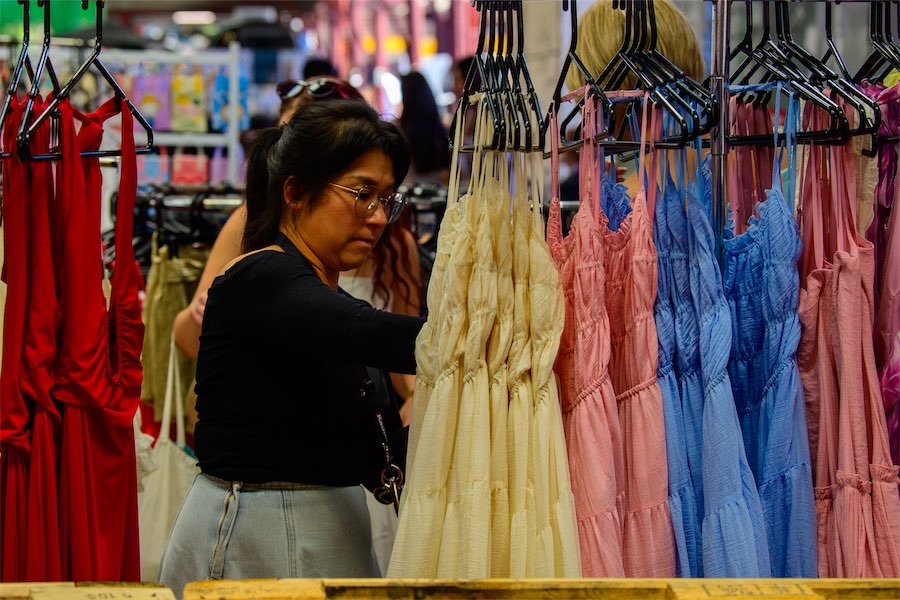
Embroidered doilies transformed into glamorous strappy tops, floral tablecloths re-imagined as dainty swing skirts and tartan picnic blankets fashioned into cosy vests.
These are just some of the whimsical garments adorning the racks at Annie Parker Upcycling, a rural clothing label sold at markets across South Australia.
The 72-year-old designer’s ethos is taking “the forlorn, forgotten and abandoned” and making it lovable again.
“The blankets that I make coats out of might be 50 or 60 years old,” Ms Parker told AAP from her farmhouse 200km north of Adelaide.
“I say to people, ‘this is a 50-year-old blanket. Look after it and it will outlive you’.”
Using fabric salvaged from op-shops, Ms Parker hopes her work raises awareness about reducing waste and discourages fast fashion.
Australians are among the worst offenders for discarded clothing, with an average shopper buying 27kg of new apparel every year while tossing out 23kg, according to research.
“When I was growing up, you didn’t have to wear something new every time you went out,” Ms Parker said.
“You had a good dress and that’s what you wore to Sunday school, you wore it to engagement parties and weddings.
“You only had one, you only needed one.”
While Australian garment makers can voluntarily join a scheme aiming to divert clothing from landfill, there has long been limited knowledge about consumer behaviour.
So Adelaide University researcher Kate Sansome interviewed nearly 600 shoppers and people in the fashion industry about their wardrobe cycles.
The top reasons for discarding clothes was poor fit, passing trends or being “bored” with an item.
That likely reflected an already fast-fashion cycle being accelerated by social media, Dr Sansome said.
“Something can start to get a little bit popular on TikTok and then it’s suddenly in Kmart, or in Glassons,” she told AAP.
“Ten years ago that fashion cycle wasn’t as fast and it had a longer time to trickle down into those fast-fashion stores.
“So clothing might have had a longer wearability before it became mainstream.”
Her study found nearly 90 per cent of clothing was bought new, with only one-in-10 items repaired.
Repairs extended a garment’s use by roughly 2.5 years and those who mended their clothes were likely to be older.
Important practical skills were lost as some schools phased out home economics subjects, Dr Sansome believed.
“Even with food waste, that’s because people have lost skills in terms of cooking and food preservation,” she said.
Second-hand shopping was unappealing among some of the study’s subjects, with one saying: “I don’t know where it’s been or what it’s touched.”
The study revealed an important factor in clothing longevity was “emotional durability”.
That heartfelt attachment was most likely with gifted clothing, heirlooms and sports and music merchandise.
The research recommended campaigns linking clothing care with environmental and economic benefits, while also normalising second-hand shopping, repair and upcycling.
For Ms Parker, being unique never goes out of style.
“Fashion is just the manufacturers dictating to you what you should be wearing,” she said.
“There’s enough clothes in the world that you can develop your own style and wear whatever you like.”
News all day, every day at CityNewsQBN.com.au.




Leave a Reply