
Two ultimately feel-good novels from Matt Haig and Jessy Wu comprise COLIN STEELE’s latest book reviews.
Matt Haig’s The Midnight Train follows his global best seller, The Midnight Library (2020), in which a woman explores alternate versions of her life through a mysterious library.
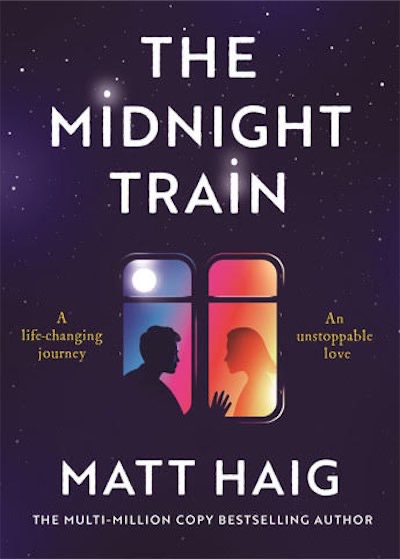
The Midnight Train (Canongate. $34.99) takes place on a parallel track, even a steam train one.
Haig has said of his latest book: “It’s not really a sequel. It comes to a completely different conclusion to The Midnight Library, which asks what other lives you could have lived. The Midnight Train asks what you actually did with the one you have.”
In The Midnight Train, 81-year-old Wilbur Budd, wealthy from running a major bookshop chain, living alone in a large house, dies of a heart attack.
Cue Charles Dickens’ A Christmas Carol, as Wilbur gets a chance to revisit the main events of his life. After dying, Wilbur finds himself on a train platform, boarding a midnight steam train, being mentored by a ghost guide, Agnes Bagdale, former owner of the Sheffield bookshop, from which Wilbur’s bookselling empire evolved.
Wilbur relives his impoverished childhood, his father having died in World War II, family traumas, lonely teenage years immersed in books and then marrying Maggie with a 1974 honeymoon in Venice. However, his marriage deteriorates as he becomes a workaholic obsessed with building his bookselling network, thereby neglecting, ultimately losing Maggie.
Wilbur now realises what a mistake that was. However, Wilbur is told by Agnes that if he interferes with events, he risks his place in eternity. Agnes warns: “No meddling, no tinkering, no fiddling with time. It’s impossibly dangerous”.
Wilbur responds: “But, Agnes, I can see it now, I squandered love, I squandered time”.
Anges responds: “You have no choice. This train has one route and one destination”.
Nonetheless, Wilbur wonders if he can alter time to get Maggie back, but if he breaks the rules of the train what will the repercussions be and will he lose everything? At this point, the novel finds its emotional centre, but no spoilers here as to Haig’s conclusion.
Adopting Søren Kierkegaard’s adage, “Life can only be understood backward; but it must be lived forward”, Haig offers readers an opportunity to reflect on life’s achievements and failures and what really matters in life, particularly “not to neglect those closest to us as we get caught up in our careers and ambition”.
ANU alumna Jessy Wu is a Sydney-based writer and entrepreneur, who has worked in venture capital.
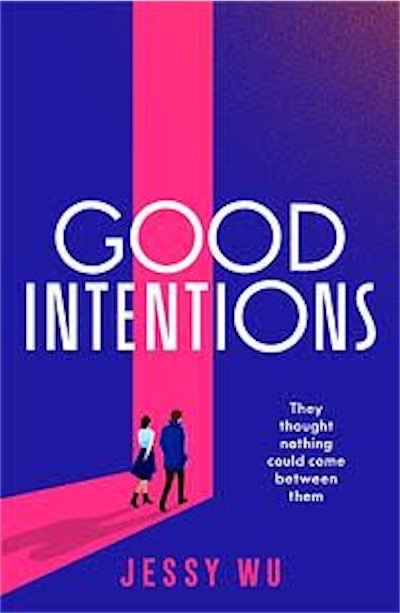
Her debut novel Good Intentions (Macmillan, $34.95), which she began writing two years ago when she was 29, has already had US rights sold and been optioned by an Australian TV production firm.
The novel begins with the two main characters Nadia Kuan and Jake Sullivan, working at the Sydney University student newspaper, exposing university executive corruption.
They slowly fall in love, but their relationship ends when Nadia leaves for New York after graduation to work in venture capitalism. Jake remains in Sydney becoming an investigative journalist on a major Sydney newspaper.
Wu says: “Nadia and Jake don’t get their happily-ever-after straight after university, because I also wanted to explore what it’s like to not end up with your first love.”
Nadia, after being “ensnared by the machinery of capitalism”, returns after a decade to Sydney as head of Pacific Operations for Henderson Global, unaware that Jake has been investigating the firm for both illegal recruitment of people trialling new peptide treatments to combat Alzheimer’s and paying participants who suffer unexpected side-effects. Jake’s paper is then sued by Henderson Global for “injurious falsehood”, which “damaged our reputation and caused us to suffer economic harm”.
Jake and Nadia both end up on opposite sides in the court case.
Wu has said she “wanted to render how people carry the moral charge of truth-telling into adulthood, in a world where the truth is so often inconvenient, and where complicity is sometimes necessary for survival.” What will Nadia, who had no idea of the allegations before taking up the Sydney position, decide to do, when she becomes aware of problems within the firm and the role of her managing director.
Wu’s gripping and empathetic narrative delivers a last-minute dramatic court twist that will change everything for Nadia and Jake, as they each aspire, as Wu states in an author’s note, “to be a good person in a morally grey world”.
News all day, every day at CityNewsQBN.com.au.





Leave a Reply