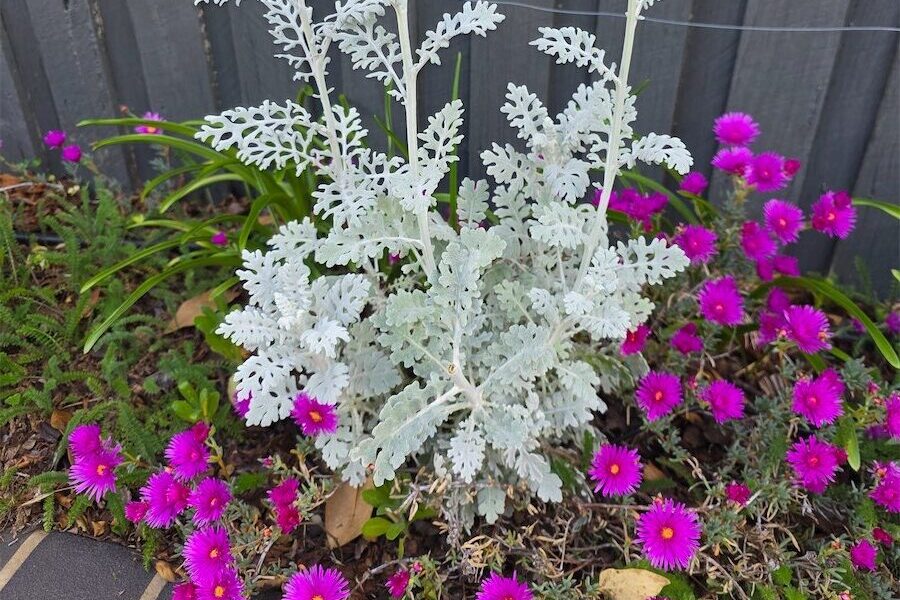
The ice plant… the brightest of bright and will cheer any area that’s hot and dry. Photo: Jackie Warburton
Now is the time to plant summer and autumn bulbs, giving them a chance to establish before the heat arrives, writes gardening columnist JACKIE WARBURTON.
Now is the last chance to get summer and autumn bulbs into the ground before the heat arrives.
Jackie Warburton.
Summer bulbs such as pineapple lilies, liliums and gladioli should be planted as soon as they arrive home, as they don’t like being stored out of the soil for long periods.
For maximum effect, plant bulbs in clumps, taking care not to plant them too deeply. Keep them watered and fertilised while they are growing.
AS the weather warms, a little planning will help maintain a continuous display of flowers in the garden. Look for plants that flower with little or no care, particularly those that tolerate harsh conditions along driveways or around paved areas.
Many succulents will thrive in these conditions. One of my favourites is the ice plant (Delosperma cooperi), which comes in a range of brilliant colours, including orange, yellow, white and pink.
These bright flowers will cheer up a small rockery, pot or any hot, dry area of the garden. With a little care, the plants can live for many years. A trim after flowering will keep them compact while encouraging new growth and flowers the following season.
Ice plants are also easy to propagate. Simply break off a small piece and place it in the soil to grow.
Give them good drainage, little to no water, and they will thrive on neglect. They also make an excellent groundcover without smothering neighbouring plants.
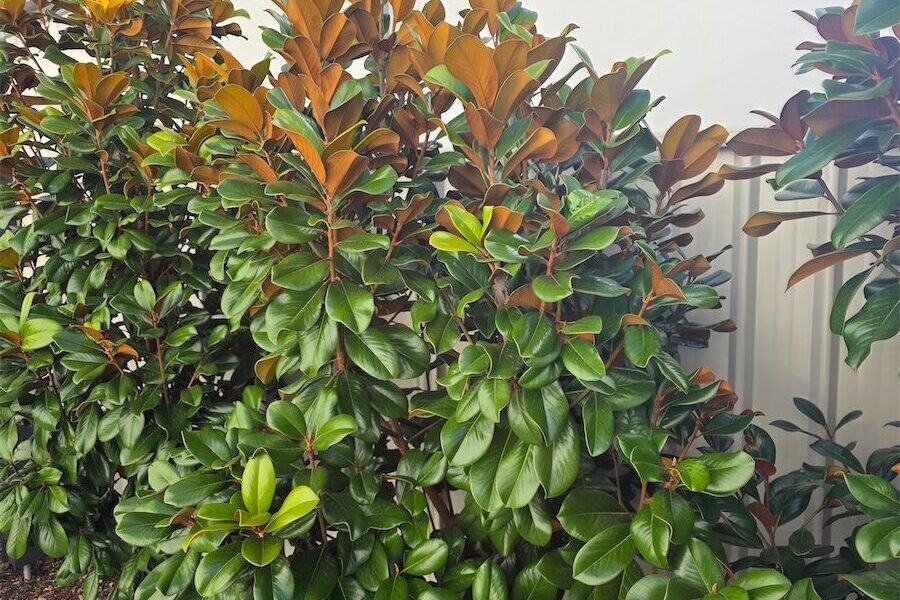
Magnolia Teddy Bear will fit well under power lines or can be used in a large pot. Photo: Jackie Warburton
WITH spring well underway and the soil warming, now’s also a good time to plant evergreen hedges. This gives their root systems a chance to establish before the summer heat arrives.
The most important part of planting a hedge is soil preparation. Dig a trench rather than individual planting holes. Ideally, plants should be spaced at a distance equal to one-third of their eventual height.
One plant that grows particularly well as a hedge in our climate is magnolia Little Gem, which reaches about six metres tall.
Where space is limited, magnolia Teddy Bear is a good alternative, growing to about four metres. It will fit beneath power lines and can also be grown in large pots.
Evergreen magnolias dislike overhead watering, which can cause black blotches on their foliage and spoil the flowers. Instead, water consistently around the base of the plants to encourage healthy root growth.
It’s not unusual for evergreen magnolias to lose leaves at this time of year. Older leaves naturally drop as the plants produce new foliage and growth.
ANOTHER plant I am going to try this year is apple chamomile, which takes its name from an ancient Greek word meaning “earth apple”. Its feathery leaves release a strong apple scent when crushed.
I plan to grow it between stone paving in full sun.
Two common types of chamomile grow well in our climate. Roman chamomile (Chamomilla nobilis) is a low-growing, mat-forming perennial that spreads to create a soft, fragrant alternative to lawn in areas with little or no foot traffic.
German chamomile (Matricaria chamomilla) is an upright, branching annual that grows to about 60 centimetres tall. It has delicate foliage and is more commonly used for herbal teas.
To establish a good lawn substitute using C. nobilis, allow about 20 plants a square metre. This will encourage quick, even coverage, helping to prevent weeds from taking hold while the plants become established.
Chamomile also acts as an insect deterrent, attracts pollinators to the garden and makes an attractive no-mow lawn alternative.
"The Clonakilla and now the Mackellar Ridge wine stand as a testament to the quality of wine that the small Canberra District is able to produce," writes wine columnist RICHARD CALVER.
On Canberra’s northern outskirts, a predator-proof fence is helping bring back native animals that disappeared from the landscape decades ago – and restoring an ecosystem that was once close to being lost, writes ALISON RUSSELL-FRENCH.
A security camera can spot trouble, but who responds when it does? This sponsored post explores how Canberra's Blackhawk Logistics combines technology with trained personnel.






Leave a Reply