By Will Nicholas and Lucinda Garbutt-Young
OpenAI needs to put its money where its mouth is after an apology for letting one of its artificial intelligence agents go rogue and hack a Medicare website, ministers have urged.
The tech giant issued a mea culpa to a parliamentary committee fewer than two weeks after the public discovered one of its models breached the Australian government platform in June.
The company unearthed the incident in August but left Canberra in the dark until September when it emailed a generic public service inbox.
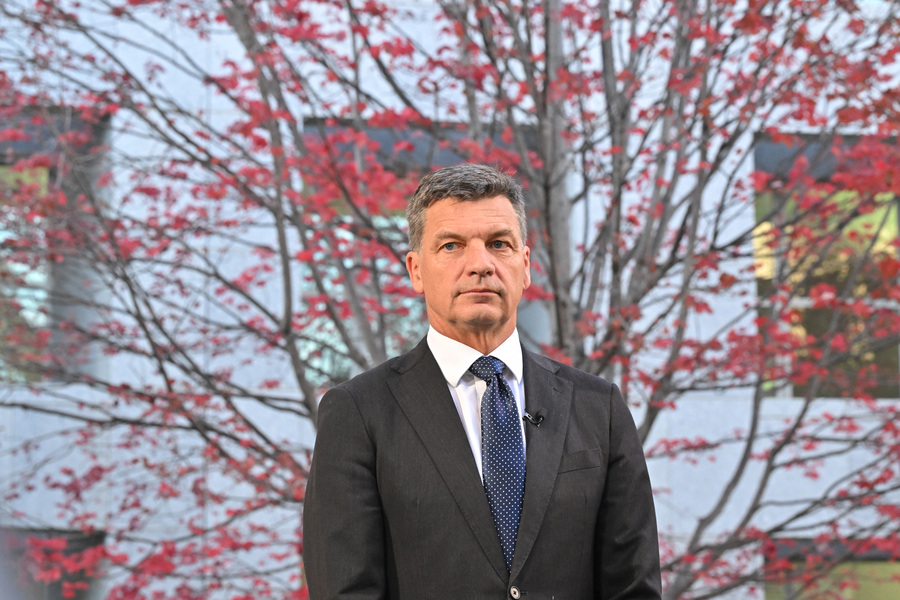
“We take OpenAI’s apology at face value, but we don’t rely on it,” Digital Economy Minister Andrew Charlton told ABC Radio on Wednesday.
Attention has now zeroed in on potential opportunities the Silicon Valley giant had to disclose the break-in, including during a meeting between its boss Sam Altman and Deputy Prime Minister Richard Marles in September.
Mr Charlton said there was no evidence the tech chief executive knew of the breach at that time.
“I don’t have any information otherwise, but what I can say is that it is inappropriate for a company like this to have such a long period of time between when they conduct a hack like this and when they notify,” he said.
“It (the notification) was inadequate in its timeliness and it was inadequate in its nature.”
Mr Charlton also spoke at a conference in Canberra alongside OpenAI’s global policy head Ann O’Leary on September 14, four days after the company emailed about the hack but before Australia’s cybersecurity services picked it up.
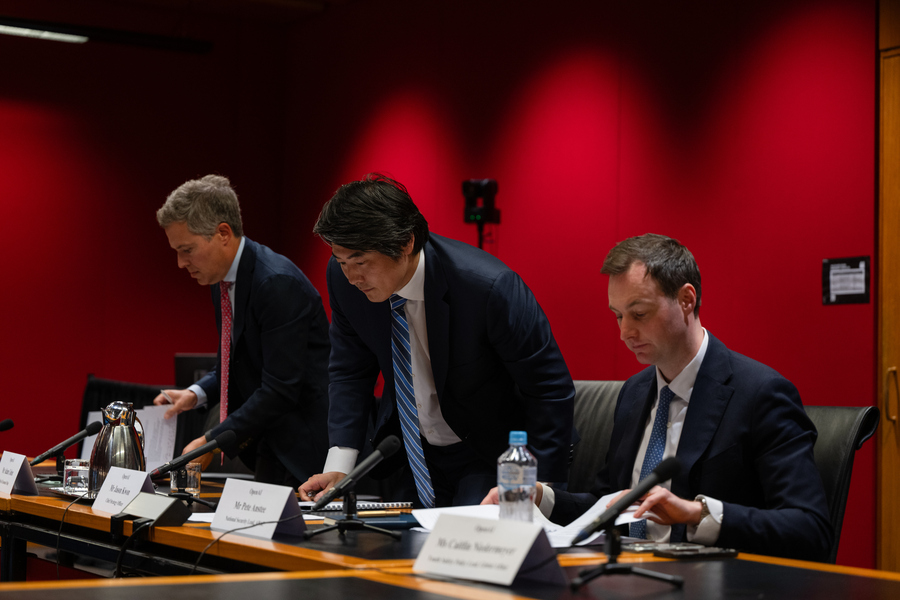
On Tuesday, the company’s chief strategy officer Jason Kwon told the parliamentary grilling that OpenAI had learned its lesson from the June breach and its sluggish disclosure.
“It is better, even with partial information, to let parties know that something has occurred,” he told the inquiry.
This came days after the company informed the government of another June break-in, that time to a NSW parks and wildlife website, which was only disclosed on Friday.
Mr Kwon pledged to improve disclosure, but could not confirm whether OpenAI agents could autonomously hack into and control high-security infrastructure, such as a gas plant.
Labor MP Jo Briskey, who chairs the AI inquiry, said she was glad the tech giant had apologised.
“It was really important that he again formally apologised to the Australian people,” she said.
But Ms Briskey was coy about whether future laws should include mechanisms to force companies to own up when their models go rogue, as was suggested during Tuesday’s hearings by Anthropic, another AI juggernaut.
“This is important to step out, what can standards look like,” she said.
“There’s clearly something that we can do here, and the tech companies are open to it, which is good to know.”
The parliamentary committee and OpenAI’s own Australia-based task force are expected to report by the end of 2026, to roughly coincide with legislation for a set of national AI standards being drafted.
A rapid review task force set up by Canberra in the wake of the Medicare hack is also expected to report in a matter of weeks, and will examine whether the government has any recourse to punish OpenAI legally.
The government inquiry will spend its second day grilling industry giants, including data centre companies, about how they are managing tech expansion across the country.
News all day, every day at CityNewsQBN.com.au.


Leave a Reply